Tuesday, September 21, 2010

Pastorius,Milkowski,and Rosenwinkel: Not A Law Firm

My son Liam, giving me some lessons
First of all, my apologies to fans of jazztruth. Ever since my wife and 9-month old son have arrived in Winnipeg, I have, shall we say, had other things to attend to besides the state of the jazz world. And keep in mind I am teaching full time at the University of Manitoba and the fall semester has just begun. All that, plus minor gum surgery, has kept me from updating my precious blog. However,  I assure you I have a plethora of ideas and recorded interviews waiting in the wings. So don't despair, gentle readers: I will post as much as physically possible. Even if it means just posting pictures of my son banging on his toy xylophone every week! And yes, my son can already play Coltrane's solo on Giant Steps, but not up to tempo. Plus, he usually needs a diaper change afterwards. (I'm sure you've been in the same situation after you've played Giant Steps.)

Some of my previous posts have been quite lengthy and verbose. This time, I thought I would just give you the highlights of what I have been checking out. I admit, it can be hard to stay focused in this youtube- itunes-futuristic-information-superhighway kind of world we live in. Not to mention my students are always reminding me of some album or musician that I haven't listened to in a while, or perhaps some prog rock band that I need to check out. So at times, I find I'm all over the map when it comes to my "research". But here are a couple of things that I found some time to focus on more this week.

Jaco Pastorius
Jaco Pastorius is and was thought of by many (including himself, R.I.P) as " The World's Greatest Bass Player." I think without question he should be regarded as an important innovator of the electric bass and an icon in jazz fusion. He is frequently compared to bebop sage Charlie Parker,  not only because he revolutionized the bass technically and conceptually (as did  Parker with the alto saxophone), but he also had a tormented, drug addicted personal life which led to his demise much too early. His short burst of life is well documented by Bill Milkowski, one of my favorite music journalists, in Jaco: The Extraordinary and Tragic Life of Jaco Pastorius. This book came out about 15 years ago; I had read parts of it before, but I finally got to read the whole thing cover to cover. It's a fantastic read (I read it in about a day, which is a good sign regarding whether I like a book or not. Let's just say I have NOT finished Paris Hilton's Confessions Of An Heiress, although I plan on sitting down to read it as soon as HELL FREEZES OVER!).

author Bill Milkowski
Many times, I couldn't help but wonder if anyone ever considered writing a screenplay based on this compelling biography. Milkowski writes not only as a knowledgeable, experienced journalist and music lover, but he was actually friends with Pastorius, which gives the book a very intimate mood. (I also enjoy reading about the musicians and haunts of the New York Jazz scene in the mid 1980's, a good ten years before I moved to the city.)  The consensus, especially from those who were interviewed by Milkowski, seems to be that Pastorius was a colorful character, to say the least; indeed, colorful characters bring their share of positives and negatives. Jaco, at the height of his power, was a musical god, with huge success as a solo artist and a member of legendary fusion band Weather Report. At his lowest, he was panhandling, sleeping on basketball courts and hanging out with the bums and drug addicts on West 4th Street.

While the brutal, honest portrayal of Jaco's substance abuse and mental illness is sad and unflattering (and I am aware, controversial to some), it doesn't diminish Jaco's greatness or importance: I came away from the book inspired to search for my own innovations, and to channel my own inner Jaco, so to speak. I also can't help but think that if Jaco had come up more recently, maybe he wouldn't have been as tempted by drugs or alcohol; since musicians are generally living healthier lives these days-not to mention that there is much more awareness of mental illness like Jaco's. (My own experience with people with these kinds of conditions is that they tend to self medicate if they are undiagnosed.)

Milkowski's final paragraph, regarding which song he thought of first after Jaco's untimely death, is particularly touching to me; Three Views Of A Secret is, for Milkowski is " the one song that best captures the complexity of Jaco's character and the depth of his soul. In the course of six minutes,[this tune] reveals more about Jaco's character than any other piece he ever wrote. It's as if he had composed his own requiem." I've been a fan of that piece for a long time, and I actually play a solo piano arrangement of it. (I recorded it on my second Criss Cross release, Past Present Future.) I believe it has many emotional layers, and composing like that elevates Jaco from merely a bass prodigy up higher to the level of true artist.


Moving on: speaking of true artists, the great jazz guitarist Kurt Rosenwinkel has a new CD out entitled Our Secret World. If you are already a fan of Rosenwinkel, you will delight in hearing this virtuoso composer and improviser in a surprising context: in front of a big band. The Orquestra Jazz De Matosinhos (OJM) from Portugal does a fine job in backing Rosenwinkel, and the arrangements definitely do justice to the original compositions. The sound is quite lush and modern-highly appropriate for this cross section of Rosenwinkel's music. While some might lament the lack of small group interaction, I compare it to Herbie Hancock's Speak Like A Child or Inventions and Dimensions; albums which seem to truly feature Herbie and his writing more than any other players. If you are a first time Rosenwinkel listener, hopefully this enjoyable collection will inspire you to investigate his many earlier recordings.

Sunday, September 12, 2010

The Alex Norris Interview

Alex Norris

When I was a young middle school trumpet player in Columbia, MD, Alex Norris was kind of a musical legend around Howard County. Not only was he arguably the best trumpeter in the state, but he could play funk electric bass, and he could also play guitar like Jimi Hendrix! We both attended Peabody Conservatory together, and Norris was highly responsible for much of my musical development. Norris has gone on to become one of the great jazz trumpet players as well as a highly respected educator; after a stint at the University of Miami, Norris will begin this fall as an instructor at our alma mater, Peabody Conservatory.  I sat down with him in New York to talk to him about his beginnings and musical philosophies.


GC: We are sitting here with Alex Norris, one of the greatest jazz trumpet players that you have probably never heard of. Part of the goal of these interviews is to make people aware of musicians like yourself, who are out here on the scene, plugging away, regardless of the level of hype. Why don't you start from the very beginning: How did you get into music?

AN: My father was an amateur classical pianist, and he and my mother sang in the church choir, and they played classical music in the house all the time. They played WGMS, the classical station in the Washington, D.C. area, all the time. Later on, through some other family members and friends, I was exposed to rock and roll: The Beatles, The Moody Blues, some of the hard rock bands of the 70's. I was a big KISS fan back then. I took piano lessons when I was very young, but I got fired by two piano teachers because I didn't show any interest. 

Which member of KISS played trumpet?
Then in third grade, I would notice that there would be kids with instrument cases always getting out of class. "Where are you going?" I would ask. " Oh, we have to go to band practice." So I thought that was kind of cool, to be able to get out of class like that. So the next year, I decided I was going to join the school band. I wasn't sure what instrument I was going to play, but I knew that it would be either trumpet, saxophone, or drums; only because I thought those were the cool boy type instruments. It's happenstance that the first instrument that the band director called out was the trumpet. So I just shouted, "I'll play trumpet!" 

So It went from there, and unfortunately for about two years I kind of stunk! But my parents would force me to practice, only because they figured if they had paid for the trumpet, then I should be practicing. Also, my father had a lot of sheet music lying around, and he happened to have the music for "Trumpet Voluntary". My father made me practice it. I didn't sound very good playing it, but I would play it while my father accompanied me, you know, for friends who would come over. 

And then one day, during a lull in band practice at school, I started playing "Trumpet Voluntary", and the band director was surprised. " I didn't know you could play that!" he said. "Let's make you First Trumpet!" So from then on, my identity was as the guy who could play the trumpet well. And then I took private lessons from the band director, who was named Bob Barrett. I got much better throughout middle school, and I started playing out of the Arban's book, and a lot of classical stuff. I was doing All State Band and Solo Festivals, and so forth.

But I was still listening to a lot of funk and rock and roll, which I think is what ended up leading me to jazz.
The technical proficiency required to play classical and the groove aspect of funk and rock and roll made me interested in jazz.

GC: How did you get into guitar?
AN: I saw how popular other kids were who played guitar. I bugged my father to get me one, so I was playing guitar at the same time. I just played it incessantly. I took private lessons in high school. I guess you can see that music became an all-consuming thing for me. I think high school is where you real can establish an identity. Music was my identity. I became " King Band Geek"! (laughter)

And I was in the jazz ensemble. I didn't really know how to solo, but I would read the written solo in these big band charts, and then I would start to embellish them. I also figured out that the letter of the chord was the root of the chord, and then I would figure out the third. And also, my older brother, who was a classical violinist, had taken music theory; he would pass along knowledge to me. That's how I learned how the numbers of the notes corresponded with the chord. 

GC: So how did you make the transition from merely embellishing to really being comfortable with the jazz language?
Dizzy Gillespie
AN: I guess at first it was just gaining confidence from changing the written solos. It was like," It's okay to change the music." So from there I just being more creative, making my own melodies. Still, the only opportunity I had to improvise was in the high school big band. We had an arrangement of Dizzy Gillespie's "Manteca", and unfortunately, no one could solo over the bridge, because the chord changes were too complicated. But I would just solo over the Bb7 chord for the longest time, just trying to come up with ideas. That was fun; to explore the possibilities.

Hank Mobley
Later on, a friend of mine who was going to Berklee exposed me to Miles Davis and Dizzy Gillespie. And then I got into Maynard Ferguson, which is common for trumpet players. Maynard was so accessible. I could never get those kind of high notes, so I was more into Miles Davis for that reason. Dizzy Gillespie was also a strong high note player in his early career...

GC: Sometimes your playing now reminds me of Dizzy, because it has the fluidity of a saxophone player. Many trumpet players have a very trumpet-like quality, but players like Dizzy, Booker Little, Kenny Wheeler, Randy Brecker, Woody Shaw, and yourself, remind me of saxophones because of the flowing  linear virtuosity.

AN:  All those people you mentioned have endless musical ideas! Yes, I try to play long phrases. This is jumping ahead to college, but in retrospect, I think it was good that I went to Peabody Conservatory and didn't experience a structured jazz program; I was mostly on my own with jazz. And that was when I decided I wanted to be more influenced by saxophone players than trumpet players. Bird, Cannonball, Trane, Hank  Mobley. They were all big influences.

GC: I think one of the cool things about jazz is that we are all playing the same language in a sense; so for that reason, a jazz trumpet player can be influenced by saxophone players, a jazz pianist can be influenced by vocalists, etc.....Do you think the same idea exists in classical music? In classical music programs? My first instinct is to say no.

AN: Classical instrumentalists tend to be boxed into the world of their instrument. Not all of them. But many of them.
Miles Davis
GC: Getting back to Miles and Dizzy Gillespie...
AN: Something about Miles that really appealed to me, I hate to use the cliche of cool, but Miles seemed cool, which can be appealing to a high school person. Miles to me was the antithesis of the football jock. Although I found his playing to be extroverted.

GC: How did you get into playing electric bass?

AN: I love playing bass. I wanted to play with the rock bands around school, and they needed a bass player. I don't get to play bass much now, but I love being part of the rhythm section.

GC: When did you realize you had perfect pitch?

AN: In middle school, I could pick out melodies easily, and I just always remember that I could call out the notes, like "that's an A, that's a Bb, etc...". I think that was the point when I realized that I had some aptitude for music...and the  encouragement of knowing that I had the talent.

GC: Skipping to college, when you went to Peabody, did you feel overwhelmed by the greater number of excellent musicians in Baltimore?
Gary Thomas
AN: Somewhat...I knew there were a lot of great musicians around in Baltimore. People like Gary Bartz and Gary Thomas, and also pianists Bob Butta and Tim Murphy were really important. I wasn't as aware of other jazz trumpet players in Baltimore, except for Tom Williams, who was a big influence. Also, some of my teachers at Peabody were big influences. To be clear, classical teachers and musicians have greatly impacted my jazz playing, for sure.

GC: Talk a little bit about the Peabody Underground.
AN: Well, when you and I were students at Peabody, there was no jazz program, so we started something that was off the beaten path. You and I, saxophonist Richard Dorsey, drummer Jeremy Blynn, and Will McDonald, we were doing something that for Peabody might as well have been avant-garde. Looking back, that was a huge experience, because we were playing jazz on a regular basis, and we really cut our teeth. It made me realize that you can practice the syntax of jazz as much as you want at home, but if you don't apply it in a real situation, you aren't going to develop in the same way. Just playing all the time, chorus after chorus, making mistakes, trying not to repeat yourself......this only comes from having a band and playing a lot of gigs.

GC: Now, twenty years later, as someone who is a serious jazz educator, do you think that today's students are getting the same kinds of experiences?
AN: It seems as though there is a lot of emphasis on classes in jazz programs, but there are not enough experiences where students are playing all the time. That needs to change. But some students take the initiative, and they do flourish because of that.

GC: Talk a little about some of the great sideman experiences you have had in New York.
Betty Carter
AN: Well, initially, I toured with some bands like the Glen Miller Band, which was actually a great experience. And I lived in London for a while because I was working with a band called Incognito. I was part of Betty Carter's Jazz Ahead , and I was a part of that up until she died, and I was music director for that eventually. Being on the scene at the club Augie's, which is now Smoke, I got to play with a bunch of great musicians, like Joel Fromm, Joe Strasser, Sam Yahel. I did a gig with Carl Allen's quintet, I was with Avishai Cohen's International Vamp Band. I played with Greg Tardy's quintet for a while. 

I neglected to mention that one great band that I worked with in Baltimore was the Rhumba Club; through working with that band, I met the great bassist Andy Gonzales, whom Rhumba Club had hired as a producer. So Andy later hired me to play with Manny Oquendo and Libre. And that led to a lot of other Latin Jazz experiences; playing with Marlon Simon's group,and  with Ralph Irizzary and Timbalaye, which I played with for a long time.

I replaced trumpeter Jeremy Pelt in bassist Lonnie Plaxico's band, which was extremely challenging. His compositions were so difficult, but I made playing his music a part of my daily practice routine. Not only is his music physically challenging on the trumpet, but harmonically it doesn't really lend itself to traditional types of chord notation.There might be ten chords in one bar, so it's difficult to really make the changes. Lonnie would give me a piano chart, and I would improvise using that as a guide. But also, interestingly enough, it forced me to use some old school techniques: The New Orleans players, didn't just use the chords to improvise; they used the melody and what the rhythm section was playing to improvise. So Lonnie's music forced me to think outside the box of just playing the chord changes.


Here is a link to an Alex Norris myspace page:

http://www.myspace.com/alexpopenorris


And here is a youtube link to some of the music from Alex Norris' CD A New Beginning
http://www.youtube.com/watch?v=hFOxqYob8Mo 


Friday, September 10, 2010

Jazz Anecdotes To Brighten Your Day

My high school band director, Jack Schwalm, sent me these anecdotes. It's perfect timing, because a good friend of mine gave me a copy of Jazz Anecdotes by Bill Crowe; I read it years ago, and I'm looking forward to reading it again. But these are funny:


1. This is a true story from a  drummer named Hank Glass.  He was set up to play a gig and no other musicians from the band had shown up yet.  It was time for the downbeat, so he started playing, drums only.  Someone from the audience approached him and asked if he could play "Smoke Gets In Your Eyes".  To which he replied:  "That's what I'm playing."


2. A jazz trio is playing a gig at an upscale nightclub. They play a classic bebop tune at a fleet tempo with grace and ease. Then comes a Wayne Shorter composition filled with mysterious harmonies, poignant melodies and daring improvisations. Next they present a medley of lesser known Harold Arlen songs that only a connoisseur would recognize, again played with elegant styling and exquisite taste.

The whole evening has been one dazzling performance after another. Though the trio is playing background music and not a formal concert, the audience can sense that the musical display they are witnessing is of such a high caliber that the musicians should be allowed to perform as they please without interference.

Then a well-dressed middle-aged man approaches the bandstand and asks the pianist "Can you play Laura's Theme from Dr. Zhivago?" The pianist tells the man that they are jazz musicians, and that they usually don't take requests of that sort. The man reaches into his coat pocket and pulls out three one hundred dollar bills which he lays out on the piano. The pianist looks at the bass player and drummer and says, "Laura's Theme in G." They play the tune in the fashion of the original version, the pianist emulating the Balalaika textures with a delicate upper register tremolo. The song obviously does not present the same level of difficulty that the trio is accustomed to dealing with.

As the pianist plays, he absent-mindedly gazes at the soundboard of his ebony Steinway B and wonders about the grain in the wood. "How would the tonal characteristics be altered if the grain of the soundboard ran perpendicular to the strings rather than parallel", he silently asks himself.

The bass player amuses himself with an assortment of well-placed double-stops and harmonics. He daydreams as he looks at the top of his mid-nineteenth century double bass made by French master, Paul Claudot, and wonders "How many times has the top been varnished, how did the varnish of past years differ from
today's, how would the resonance properties be affected if there were no varnish at all?"

The drummer gazes down onto the single ply, medium weight head of his 1950\'s vintage black oyster pearl snare drum and thinks to himself "One, two, three, one, two, three, one, two, three".....


one, two, three, one, two, three....

Monday, September 6, 2010

Mulgrew Miller: Classic Perfection

Mulgrew Miller
A friend of mine, pianist Dave Stoler, recently facebooked me (can I use facebook as a verb?) regarding a new solo recording from the great pianist Mulgrew Miller, one of the great living jazz musicians. Miller has always been a favorite player of mine. I have listened to him in many contexts; as a sideman on the countless sessions he has recorded, as a leader in trio and quintet, in duo with Kenny Barron, in a group with three other pianists (the Contemporary Piano Ensemble, featuring James Williams, Harold Mabern, and Geoffrey Keezer). I've gotten to hear him live many times over the years, mostly with his own groups. I even got to play opposite him at the Blue Note a few years ago; he was with the Ron Carter Golden Striker Trio, while I was with the Christian McBride Trio featuring Billy Hart. I've spoken to Miller on a number of occasions, and he once confided that he was hesitant to do a solo recording, and joked that "maybe if he was drunk one night" he would head over to a favorite studio and lay down some tracks. So when I heard about this live solo recording, I dropped everything and downloaded it immediately.

Miller has a quiet confidence in his piano playing. It's unapologetic traditional meat-and-potatoes straight-ahead jazz, with a maturity that comes from countless experiences as an accompanist to everyone from Wallace Roney to Art Blakey. But within that is a rich approach to harmony and melody. There is a tendency for lesser solo pianists to descend into virtuosic show-off territory when they are alone, mostly because they are uncomfortable with the space of having no bassist and drums to hide behind. This is never the case with Miller, who is totally at ease with the "man-on-the-highwire" aspect of solo piano playing. There is also a tendency for the inexperienced pianists to let the tempo drift. Nevertheless, Miller's time is impeccable. His right hand lines on "Jordu" are driving and and clear. But the left hand is stoically solid. You don't miss a rhythm section one bit. It's very Bud Powell-ish in approach, but the double-time lines are signature Mulgrew Miller.

Furthermore, Miller can also be rubato and lyrical with the best of them. Case in point: I remember my favorite recording of "Old Folks" used to be from a cassette tape I had of Miller playing a solo version from some live Art Blakey recording. Similarly here, his intro to Dizzy Gillespie's "Con Alma" is beautiful and flowing, and he eventually finds a kind of contrapuntal straight eighth groove. His original composition "Carousel" is also introduced in a sensitive way, but eventually the waltz tempo is set. (I find that this is the mark of a real professional pianist; they make a strong distinction between a grooving time and rubato. It's never wishy-washy.)

Mulgrew Miller always has a very distinct,dark, consummate type of piano touch; it's round, it's got a pop to it, but it's dependable. I love the sound of the piano on this CD; it sounds alive, perhaps very close-miked, so you can really hear the sound of the strings, not just the hall sound. Every note he plays is a crystal glass, shining in the sunlight. And there is never a moment of insecurity. Sometimes, I like to hear musicians take a risk and play some wrong notes. However, on this disc, Miller is incapable of missing anything, which is also satisfying to listen to.

"Dreamsville" is one of my favorite  Henry Mancini tunes (I learned it from saxophonist Jed Levy) and Miller interprets it delightfully. His version of "Yardbird Suite" is quite magnificent. Here the musical language is bebop, but in Miller's hands, it sounds contemporary enough to be an exceptionally enjoyable performance. "Body and Soul" shows his mastery of thirds, inner voices, arpeggios, and alternate passing harmonies. "Giant Steps" is also quite masterful; the melodic lines are impeccable, and the left hand supports the right hand perfectly. Again, Miller puts his unique linear "stamp"on this performance.

If you want to hear modern mainstream at it's finest, check out this Mulgrew Miller "Solo" piano CD. It's a clear representation of a seasoned artist at his powerful musical peak.

Saturday, September 4, 2010

My Article for Keyboard Magazine on Kenny Kirkland,Etc.....

The great Kenny Kirkland
I've been a long time reader of Keyboard Magazine. I read it mostly for gear reviews; you might find descriptions of anything from actual hardware keyboards to virtual keyboards and software synthesizers to keyboard amplifiers. I used to enjoy their annual segment on comparing the latest Hammond B-3 Organ simulators (like comparing the Nord C1 to the Korg C3,etc... real keyboard geek stuff). This year, I've been asked by Jon Regen(who is an editor and contributor to Keyboard, and also a performer in his own right) to also contribute some lessons on  salient characteristics of various important jazz pianists. I've done two so far; the first was an article on the great McCoy Tyner, which can be found here:
http://www.keyboardmag.com/article/5-ways-to/June-2010/114009

and the latest is an article on a pianist who was and still is a huge inspiration, Kenny Kirkland:
http://www.keyboardmag.com/article/5-ways-to/September-2010/119093


I'll start work on another lesson for Keyboard soon. I was going to do John Tesh, but I don't know if I have the skills to tackle such a huge musical force. 


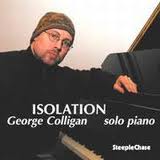
While we are on the subject of mediocrity, I have a new CD which is coming out (my 20th as a leader-impressed?), if it's not already out, on the Steeplechase label.(I think it's definitely on Itunes at the moment.) It's called Isolation, and I recorded it in January of 2009 in Copenhagen. I recorded it in about two hours on producer Nils Winther's lovely Fazioli grand piano. I had recorded two solo and two duo CDs (with Danish bassist Jesper Bodilsen) on the same instrument, and it was wonderful to return to this piano after many years. I'll probably never be able to afford a Fazioli
piano of my own, but it's a remarkable instrument. It plays, as they say in Brooklyn, "like buttah!" The CD is made up of all originals, many of which were written in the early 90's. However,some of the tunes were inspired by a week-long workshop that I did in Englesholm Castle, in another part of Denmark. It was one of the best teaching experiences I have had, and it greatly inspired me. Hopefully that inspiration comes through the music on the CD. 


I'm old enough to know that
George Colligan sounds like crap!
Finally, if you happen to live in Winnipeg, I will be appearing this Tuesday at the Centre Culturel Franco-Manitobain in St. Boniface. It's a little different from my usual trio gigs. I will be doing solo piano, then a trio featuring myself on drums, the great Steve Kirby on bass and the incredible Jimmy Greene on saxophone. And then, I will be back on piano doing some originals and some French music in a duo with the talented and up-and-coming vocalist Rayannah Kroeker. Should be fun for the whole family; unless your family is one that  does not enjoy music...

Thursday, September 2, 2010

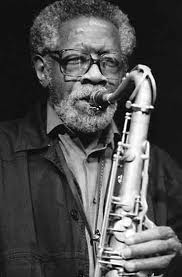
The Greg Tardy Interview


This past August, I did a concert with The Greg Tardy Quintet at Small's Jazz Club in New York City. The performance was significant in that it was the first time(except for one other gig earlier in the month) that I had shared the stage with tenor saxophonist Tardy in nearly a decade. I decided that he was a musician who would be interesting to interview for jazztruth, so I arranged to meet him before the gig. We sat down in the back office of Small's to discuss the past, present, and future.

GC: We are here with Greg Tardy at Smalls. Just to let you know that my interview style is in the development stage, so it's pretty loose.....so I will mostly just let you talk about whatever you want....

GT: Uh-oh! (laughter)
GC: So you had a hiatus from playing jazz?

GT: Yes, that's correct. I had about three and a half years off the scene....I took a little bit of time off, and to make a long story short, anybody who is familiar with my music knows that I am deeply a follower of Jesus(Yeshua). And for years I had felt like I wanted to get deeper into Christian ministry, so I spent some years involved in a music ministry at a mega-church in Times Square. But I found that over time I was being led to get back to the jazz. Also, I had a major injury to my hands- some Carpal Tunnel Syndrome in both hands-which made it impossible to do the work at the church anyway. So it seemed like everything was pointing me back towards playing, so I'm very happy to be back.
GC: Did you go through any kind of musical withdrawal?

GT: Yes, the whole time! I'm a jazz musician. I love jazz, and I never stopped loving it. I was just trying to go the direction in which I felt God was leading me to go, and that's where I was supposed to be for a while. Now he's got me back on the jazz scene,and I'm very happy about it. Sometimes it's good to take time off! It's a chance to re-think things and to get re-energized. I feel more psyched about the music now than when I stopped. 

Israel Houghton
And also, I never totally stopped playing, because at the mega- church, I was doing a lot of contemporary gospel stuff like Israel Houghton, and I was transcribing a lot of gospel music. That helped me to learn more about composition.... about contemporary writing. So It wasn't a total throwaway, musically speaking . There are a lot of high level musicians playing gospel music these days. So even though I wasn't playing my horn outside of services, I was still immersed in music- just a different kind of music.
GC: You are recording for the Danish jazz label Steeplechase. You've done how many CDs for them?

GT: I've done four CDs for Steeplechase. The latest is going to be released within the next month. And we'll probably do another one soon. Hopefully you'll be on it! (laughing)
GC: We'll talk about that! But I remember a long time ago, we spoke a bit about your experience with a major label, on Impulse. I don't think there is any musician now who has not been affected by the changes in the music industry.  And I think it's interesting that you have so many determined musicians who are still making music despite the challenges. I have personally never recorded for a major label as a leader, but I'm curious : what did it feel like to record for a major company, to have it come to an end, and to press on regardless of the setback?

GT: It was a real blow to me after getting dropped by the label. I did one CD with Impulse, and "The Hidden Light" was going to be the follow-up, but we were fortunate to be able to do it for the J-Curve label. But  I learned that the music business is not necessarily about music!

I felt good about my Impulse CD, "Serendipity", it was a strong CD,and we had good backing. The label supported it, and we did some touring. But the business changed. Impulse and Verve merged, and half of the jazz label musicians got dropped. I think it made some people some more money, but it also hurt a lot of young up-and -coming musicians who needed to be heard. And the way the labels are now is so different....I actually feel blessed to have recorded anything at this point. But recording for a major, if anything, helps to get your name out there. Unfortunately, a lot of great players , who deserved to be heard by a larger audience never got that opportunity. So I'm not that sour about it: I'm counting my blessings.

Jazz is definitely going through a rough time but I believe the music will survive. There are so, so many musicians who should be getting more attention, young musicians and old. And I believe that eventually something is going to happen that will put Jazz back out there in the public arena again. What will it take? I don't know, but I'm expecting some kind of change.
GC: When are you going back out on the road with a band?

GT: Actually, I just accepted a teaching position out at the University of Knoxville. So I'm teaching a lot more these days. During the semesters, I'll be mostly busy with that. But during the summer break and the winter break, I really would love to get some tours happening. I just gotta make it happen....
GC: Are you going to book the gigs yourself, or get someone to help you? Maybe enlist your wife to help?

GT: (laughter) Actually , she's too busy raising our kids! It looks like it's gonna be on me. I'll have to squeeze it into the cracks in my schedule. But hey, I've done it before, and until somebody else signs up for the job of my booking agent....
GC: Do you have any memories our the tour we did together in 1998 for 6 weeks in Europe? With Sean Conly on bass and Woody Williams (Kinah Boto) on drums? 

Sean Conly
Woody Williams
(Kinah Boto)
GT: Sure! We made some great music! I'm glad we got one CD out of it, "Abundance" on the Palmetto label, but I wish we could have continued on. The tour was the first time we played together, and then the CD, maybe 6 months after the tour, was unfortunately the last time. But it was a phenomenal group, there was a lot of potential there. It would be great to put it together again somehow, God willing. Actually, tonight is the closest we have come to playing together in that context......Although tonight we have the great Jameo Brown on drums.
GC: I find Jameo to be quite a different type of player than Woody.  Obviously there are similarities. What are some things you like about Jameo's playing? 

GT: I like Jameo's flexibility. We did a Steeplechase CD called "Steps Of Faith." And on that CD, we did a whole lotta different types of things. We did some free stuff, we did some really pocket groove type stuff, we did some swing, some really eclectic stuff. Every single song, he was able to really catch the character of what I was looking for, and play with integrity, and still sound like himself. He's a very supportive drummer, and I love it. And same with you and Sean, that's what I love about your playing! You guys aren't locked into any one way to play. 

Joe Henderson
I'll put it like this: easily, my favorite tenor saxophonist is Joe Henderson, and you could take him, or even somebody like Branford Marsalis, and put him in any kind of circumstance: Joe Henderson can play on anything....some wide open stuff with Alice Coltrane, or "Red Clay" with Freddie Hubbard, or his own "Page One" , or some pop oriented stuff: but Henderson always sounds like himself, whether it's bebop, or free- it always sounds like the idiom, and he always understands his role in the music. 

So that's what I look for in musicians to play with- people that have a strong voice but aren't locked into something. I like people who understand the tradition but aren't so stuck in a traditional style so much that if you threw something funky at them, they would be up on the bandstand fishing, not knowing what to do, etc....I like musicians who have the flexibility to make any musical situation work.
Andrew Hill
GC: Some people might categorize you as a New Orleans musician, because you are from New Orleans, however, you have played with musicians like Andrew Hill and Dave Douglas for example. Do you find that, when playing in different situations, you have to change your musical mindset at all, or a little, or a lot?

GT: I actually try to think about whatever the drummer is doing. The drums can drastically change the character of whatever is happening musically.  But in general, I try to adapt to whatever is happening on the bandstand. I try to be intelligent about it: if I'm playing with a piano player who doesn't leave a lot of space, then I want to try to fit with that- there is no need for both of us to clutter up the space. I try to figure out "What does this particular music need from me?" And all of that without trying to sound different from what I normally do.
GC: How has having children affected your music?

GT: It has, from a business perspective. I have to think about money a little bit more than I used to. Before, if somebody called me for a gig that paid 15 dollars, I would do it! Just to play.....It used to drive my wife crazy. But when the kids came along, then obviously I couldn't do that,  because my kids are depending on me. So I had to be more selective about what gigs I would do.

GC: So you're saying that you children became more of your priority?
GT: Oh, yes! God has entrusted me with these precious souls. It's my job to make them into people that God would be happy with, and to make sure that they are properly cared for. And I think about my father, who sacrificed greatly for me. You know, he was a phenomenal Opera singer, who could have had a great career. (Actually I wanted to document his singing......I documented my mother on some of my CDs......but I really wanted to document my father. Unfortunately he has emphysema now, so it's harder for him to sing.) But he knew his responsibility in raising me and my brother and my sister. So he worked in the same cab company for most of my adult life. He made it possible for me and my siblings and my mother to have some things that we would not have had otherwise. My father is a huge role model for me, and I don't want to do any less for my kids.

GC: What advice would you give your students to survive in the jazz business?
GT: Be flexible. This isn't 1940! And even back then, musicians had their art music, and then they worked in bands to make a living...until they were at the point where could totally pursue their art. And I had to do that for years: I worked in funk bands, rock bands, punk rock bands,rap bands... I did a lot of second line stuff in New Orleans...fusion bands...

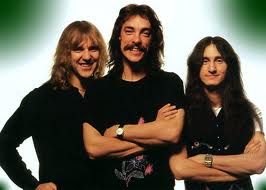
GC: Do you care if people know that you, a jazz saxophonist, are a RUSH fan?
RUSH: Alex Lifeson,Neil Peart,Geddy Lee
GT: (laughter) Well.....yeah, OK, it's out there now! There was a time when I was a RUSH fanatic.  Geddy Lee, Alex Lifeson, and Neil Peart. I thought it was great on that tour in 1998 when halfway through the tour, we discovered that you, me, Sean, and Woody were all RUSH fans. We were quoting little licks from "Permanent Waves"......that was fun.

GC: Where do you see yourself in 10 years?
GT: Well, hopefully alive with my back still working!(laughter) It's all God's will. I mean, wherever he wants me. I never thought I'd be working at a mega-church years ago, and never thought I'd be leaving when I did. I hope I'm still alive and playing, and if not....I'll be in the kingdom.

GC: What are your thoughts regarding the election of Barak Obama?
GT: I think it's a real blessing that my parents, who had to drink at separate drinking fountains from white people, who had to sit at the back of the bus, who had to cross the street if a white person was walking down the street-I'm glad that they lived to see that, that they deserved to see that. Also, I'm glad that kids now have a role model in the White House, someone who is not advocating destructive lifestyles, who is a family man, who started in difficult circumstances, worked his way up to become the first African-American President of the United States. That's really phenomenal.