Monday, December 29, 2014

The 2014 First Annual Colligan Awards

Since I've been on the subject of movies lately, one great film I saw recently was "Birdman," an incredible vehicle for Michael Keaton, who plays a former action star trying to produce a darkly serious play while trying to keep his dark mental difficulties at bay. The acting by Keaton and co-stars which include Edward Norton, Zach Galafanakis, and Emma Stone, is solid. However, the cinematography and special effects are absolutely amazing. Furthermore, the musical score, which is mostly solo drum set, really blew me away. It sounds somewhat improvised, but it really fits the emotion of the story, as any good score should. ( When I think of my disappointment with "Whiplash," it's nice to hear truly great drumming in a movie.)

I recently discovered that jazz great Antonio Sanchez is responsible for the score for
"Birdman." I also discovered that his score was rejected by the Academy of Motion Pictures for consideration for an Academy Award. Sanchez' fans are wondering why. The reasons the Academy gives have to do with the amount of original music related to known songs, I think bottom line it's because the Academy is stupid. And racist. And just plain evil. Do I think the Academy and it's members are worse than Hitler? That would be pushing it a bit too far. So then the answer is yes. 

Antonio Sanchez is an incredible drummer, having played with Pat Metheny, Chick Corea, Miguel Zenon, and plenty more of the heavyweights. He's very successful as a musician, so I'm betting that he could probably care less about whether he is snubbed by the aforementioned Worse-Than-Hitler-Academy of Motion Pictures. However, since so many of these awards are so pointless and arbitrary, I'm starting my own Awards.

Good Evening And Welcome to the The 2014 First Annual Colligan Awards. I'm your host, Ellen DeGeneres. We have a really great show for you. We have many special guest, and so many great song and dance number. I have lots of great joke(Rim Shot)......ahem..... Moving right along, presenting the award for Best Musical Score is Jack Black.

Jack Black: ( In a loud, rock and roll type voice) Hey everybody, the nominees for Best Musical Score are:

Antonio Sanchez for "Birdman"(Roll Clip)
"Birdman," Antonio Sanchez (Roll Clip)
(Roll Different Clip)
" Big Momma's House 13," Kanye West ( Roll Clip.....Ugh..)
" Indian Jones and the Quest To Find A Good Hip Replacement Surgeon," John Williams( Roll Clip, I guess...)
Antonio Sanchez for "Birdman"(Roll Clip)

And the Colligan Award goes to......
Antonio Sanchez for "Birdman!" 

( This is Antonio Sanchez' first Colligan Award....)

Anyway, I have a vivid imagination. I recommend the film, Antonio Sanchez got robbed, and F the Academy. 


“What's with all these awards? They're always giving out awards. Best Fascist Dictator: Adolf Hitler.”
Annie Hall (1977) – Alvy Singer (Woody Allen)


Awards are like hemorrhoids. Sooner or later every asshole gets one.”
Swimming Pool (2003) – Sarah Morton (Charlotte Rampling)


Sunday, December 28, 2014

There Is No Theory......Only Sound


"Man those cats be playing some THEORY!"
I'm finding that one of the huge challenges for teaching jazz at the higher levels is as follows; how do you teach skills, the history and the rules while also getting students to think for themselves, think outside the box, and be creative? I find that all of us may tend towards one side of the brain or the other. I'm left handed, so they say that I'm most likely more right brained, which is the creative side of the brain. I've always felt that the piano for me was more of a vehicle to find something new rather than try to play all of the existing repertoire. I try to practice classical pieces, but lately, they just make me think about how to let those pieces inspire me to write my own music. Yet I find myself stressing skills to many of my students. I have so many students that need to focus on sound, reading, knowing tunes, jazz vocabulary, rhythm. A lot of these things are pretty concrete. I believe that the skill side is needed as a foundation for creativity. However, I acknowledge that it's possible to get bogged down in the technique and never learn or love to be truly creative.

Music theory is not music. Theory is how we analyze and understand music. How do we get beyond the rules? Sometimes breaking the rules is not only acceptable, it's essential to making good music.
This recent video made me think about this:
Ok, Marta Altesa is cute, let's move on from that. The cool thing about this Jamiroquai song is what? Well, the bass line is killing for sure. The groove is great, it's got a nice melody and a catchy hook. But it occurred to me that the harmonic movements are actually the best part about it for me.
The song starts in D minor and simmers there for a while. Then we jump to Fminor, with one of those sort of reverse progressions you hear in R&B often: F minor, C minor,7 Bb minor7,  Gbmaj7, Fmaj7, Bb minor 7 Eb7, Abmin7, Db7, Gmin 7, F#7( or C7 at the end of the phrase). And then it jumps back to Bb7 to D minor. Later the verse has the progression G-7 to A7 ( altered I think) and then F min7. This really lifts the song for me.

But wait a minute. A7 to F minor7. When was the last time you studied a progression like that in theory class? Usually we spend so much time on ii V I's and their variations. Everything has to be justified as a substitution of something. A7 to F minor 7 is a pretty jagged movement. It's particularly jagged because many of the other chords are rather functional. But for me, it's the best part of the song. It's the hippest part of the whole thing, for me.

So why don't we teach that in theory class? Why don't we start with A7 to F minor?


Saturday, December 27, 2014

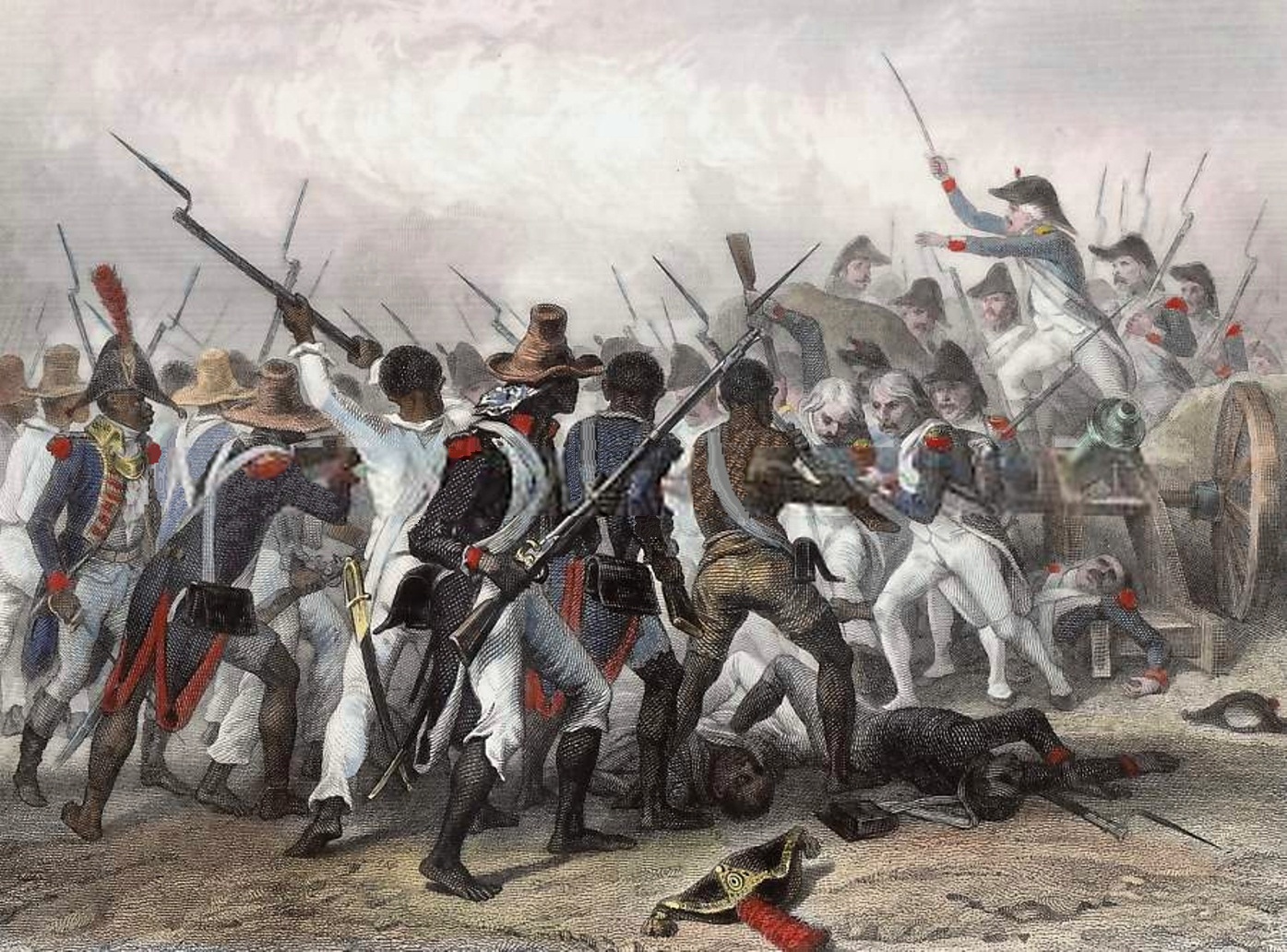
Haitian Fight Song


Chris Rock in "Top Five"
I recently wrote about my disappointment in regards to a movie I went to see with my wife; part of my lament was that I don't get to actually go to the movies often. Well, I actually was able to get out again to see "Top Five," a hilarious film starring one of my favorite comedians of all time, Chris Rock. I was a fan of his HBO program in the late 90's, although he hasn't made a ton of great films. I really enjoyed this one, especially one scene with a famous rapper surprising us with some of his "unknown" talent( don't want to spoil it for you). Rock  and supporting actors Rosario Dawson, JB Smoove as well as a host of other surprise comedians really made this one work for me.

Rock is great with observational humor, but he's not afraid to push the political envelope. Rock's character, Andre Allen, is a comedian turned actor who had financial success with a string of "Hammy The Bear" films. Allen, a recovering alcoholic, decides he wants to make "serious films" (perhaps a nod to one of my favorite Woody Allen films, "Stardust Memories") and ends up starring in "Uprize," a movie about the Haitian Slave Revolt of 1791-1804 in which thousands died and Haiti gained independence from France. It's amazing to me how Chris Rock is able to make the idea of this film ( which I'm fairly sure no one, even a Hollywood superstar would have an easy time financing) into something hilarious. It's kind of a complex idea; it's funny because it's such an intense departure from the silly "Hammy The Bear" character; it would be like Tyler Perry doing a movie about Nat Turner.....( actually I would pay to see that!) During a scene where Allen sneaks into a theater to see whether people like his new movie,  I was pleasantly surprised to hear Charles Mingus' "Haitian Fight
Song" as the background music. ( I wonder if Questlove, who is credited with the score, was responsible for that choice?)


All levity aside, the Haitian Revolution was no joke; considered the most successful rebellion in history, it culminated in driving out the French and appointing governor-general Jean-Jaques
Haitian Rebellion
Dessalines
, who in 1804 ordered the massacre of almost all of the remaining whites on the island. I guess I can't help but wonder why we study the French Revolution, the American Revolution, and the Russian Revolution in school- but not the Haitian Revolution? It seems like this would have been interesting to mention.....

In the fake "Uprize" movie within a movie, the Allen character plays Dutty Boukman ( which I hate to say but it sounds like somebody from the Pootie Tang bits from the Chris Rock Show......never mind, I'll be quiet...) who was a voodoo priest and leader of the Maroon slaves. Haitian voodoo religion originates in Africa and uses mystical dance and music ceremonies where spirit possession is involved. This reminded me of a recent performance I saw while visiting Birmingham, U.K. A young composer named Bobby Avey recently released an album entitled "Authority Melts From Me." This is a large form suite which is inspired by the Haitian Uprising; Avey actually traveled to Haiti and recorded actual voodoo ceremonies, transcribed them, and used the musical and political inspiration to create some incredibly intense music. Pianist Avey and his all star band of Miguel Zenon on alto saxophone, Ben Monder on guitar, Jordan Perlson on drums, and bassist Michael Janisch created a dense musical jungle full of dense chromaticism and brain-bending odd meters; the severity of the music made me see things differently upon completion of the performance. 


I need time to study the Haitian Rebellion. I think it's strange that such a striking and significant event seems to be relatively forgotten. I'm under the impression that the tragedy of modern day Haiti may have a lot to do with the circumstances under which it became a nation. I didn't expect a history lesson this evening, but I'm glad to get to laugh and also learn something.

Hey, what about Tyler Perry as W.E.B. Du Bois? Ok, never mind, I'll shut up.....

Letter from Richard Dorsey


Couldn't find any photos of Richard, but this is his family business  where we worked for years
Richard Dorsey, a wonderful tenor sax player Baltimore native was the first great jazz saxophonist with whom I got to play. He recently sent me this written recounting our first meeting in the late 80's.


Recently I came across a blog post about George Colligan's first gig. I was amused and entertained by his well-written recollection. What a surprise to find out the first time he and I played together was his first job as a pianist. As I read about it didn't take long to start wondering if I had  tapes of any of those nights. I knew I recorded at least the first night at J-K's Pub in Columbia, Md., a place I characterized as a "fern bar", regardless of whether it had ferns or not. That term was still in use in 1988, referring to attractive places just like J-K's Pub. Clean walls. Neon lights. Up-scale pick-up bars in upscale areas, with background music like Christopher Cross and Journey. I have not much against all that....not entirely, anyway. But it seemed an unlikely place to have a welcome mat out for the brew of music I was carrying in the front door.

I recall those gigs at J-K's Pub pretty clearly. It was the first time meeting George and bassist David Ephross. I had met drummer Chris Perry socially, and always liked him, but had never played with him.


I'm pretty sure David secured that playing job, then got my number from someone in town and called me. When David phoned he said he couldn't decide which of two pianists to get. He said one guy was a pianist. I thought to myself, "That's good, isn't a pianist what we need?". David made even less sense when he stated the second option, saying that the other choice was a trumpet major at Peabody Conservatory who was learning piano. OH MY GOD! I had visions of a serious crash and burn gig. Not only did it sound like there was this trumpeter, someone who might not actually play piano, but also that the bassist, the leader David, might not know the difference whether this trumpeter could play piano. The scene was highly suspect at that moment.

At that point on the phone I said to Dave, kind of firmly, "NOOOOOOOOO! Get the first pianist, not someone just starting !" or something like that, something driven by deep fear from the way I heard David present the options. It seemed apparent to me that David was going through a thought process involving me looking toward getting the answer he wanted. It was evident that Dave had made the decision for George to command the piano chair.  As my phone call with David was coming to a close he held his ground for George as the pianist, sticking with it so firmly that he convinced me of the choice.

Arriving at the gig I saw drummer Chris Perry. I decided no matter what happened we would lock in and keep it together. George and Dave seemed friendly and confident.  We started with Coltrane's "Moment's Notice". I thought in case there might not be much piano solo time taken I would stretch out from the start and assure a reasonable song length. Perhaps I did play 25 choruses. Then everything rolled along smoothly. George played without incident, the way it always was thereafter. It sure seemed like he'd done this all before. I wasn't wiser, just somewhat older. I quickly realized not only his skill, but David's bass playing acumen as well. We played that same gig, well, perhaps three, four times. That was at least more than I thought we were going to. Termination came not as much of a surprise as being there at all. After all, though, we jazz musicians play wherever we get the chance.

Starting shortly after this, I was happy and fortunate to play with George over the next four-five years with a group that included Alex Norris called the Peabody Underground. On and off. The usual opportunities. We had a year-long weekly (mostly) gig at Chambers in Baltimore that people seemed to like and talked about. Of course, not like they talk about George nowadays. And along the way I learned another thing: George could also play the trumpet pretty darn well.


Richard Dorsey

December 11th, 2014
Baltimore, Maryland

Friday, December 26, 2014

Kansas City Lightning: The Rise And Times of Charlie Parker


Say what you want about Stanley Crouch's opinions on jazz; I've always been impressed with Crouch's writing. "Kansas City Lightning: The Rise And Times of Charlie Parker" is an enthralling read. It's history that reads like fiction. Crouch gives an intimate account of the humble beginnings of Parker, arguably one of the most if not THE most important early figure in jazz. Crouch is so descriptive, you feel like you are actually there in depression era Kansas City. Many books on jazz history can be dull, easily getting bogged down with names and dates. Crouch's presentation draws you in not only to the twists and turns of the life of a troubled genius, but he also helps us understand the foundation on which Parker's genius was built in terms of jazz before bebop: why Kansas City was important in the development of blues and swing in jazz, why musicians like Walter Page, Jay McShann, Count Basie, and Buster Smith were essential to the next step in the development of the music.

Reading about music and musicians can often make one want to put down the books and listen to the music instead. Crouch may assume that the reader is already aware of Parker's musical genius. Crouch's in depth descriptions of the drama of Parker's personal turmoil, whether with drugs or his first wife Rebecca or his yearning to be a great musician beyond Kansas City, will hopefully make the jazz novice seek out recordings and make jazz aficionados revisit Parker's music. I've definitely gained more detailed inspiration for my jazz history classes from this book. "Kansas City Lightning: The Rise And Times of Charlie Parker" will make you look at the transition of jazz from swing to Bebop in a whole new way.


Thursday, December 25, 2014

Jazz Is The Worst: LMAO


Musicians have been telling me about jazzistheworst for a while. I've read it a few times, but the one I read today made we want to comment on it. "How To Become A Successful Jazz Musician in 2015" is presented with bone dry sarcasm; it made me laugh, although it's so funny because it's so true. This blog, somewhat reminiscent of Seattle based jazz pianist Bill Anschell's hilarious " Mr. P.C.'s Guide Jazz Etiquette and Bandstand Decorum" column, is anonymously written, although some jazz insiders claim it's author is the brilliant trumpeter Ambrose Akinmusire, possibly because the first review on the blog was Akinmusire's CD. I only have hearsay and conjecture as evidence. Be that as it may, "How To Become A Successful Jazz Musician in 2015" , for somebody like me who would love to be successful in 2015, is right on point. 

jazzistheworst calls out Nicholas Payton for alienating his audience, Steve Lehman for his "Liminality as a Framework for Composition: Rhythmic Thresholds, Spectral Harmonies and Afrological Improvisation" being too abstract for audiences, Vijay Iyer for his "selfies with famous people,", and various successful female musicians for, well, being female. The anonymous author also skewers the posers who

 "adopt a southern accent, a soulful old timey persona and just go back to being as 'roots' as you can.  Talk about "The Tradition" as much as possible.  Bring up 'The Blues' until people start becoming annoyed with you.  Ignore any cultural, musical or societal changes that have occurred in the last 60 years." 

Finally, he mentions "publicists," affirming my belief that 

"Regardless of your musical ability, you can still become a famous Jazz musician if you have enough money.  Unfortunately most people don't have enough money to afford a career in Jazz.  You'll just need the right publicist(there's actually only one.)"
 Regardless of your musical ability, you can still become a famous Jazz musician if you have enough money.  Unfortunately most people don't have enough money to afford a career in Jazz.  You'll just need the right publicist(there's actually only one.)

Whoever this blogger is, I suspect he or she is someone who is inside the industry in some capacity. 
 Whether this is true or not, I appreciate the honest perspective. I'm going to go back and check out some other posts from this blog.