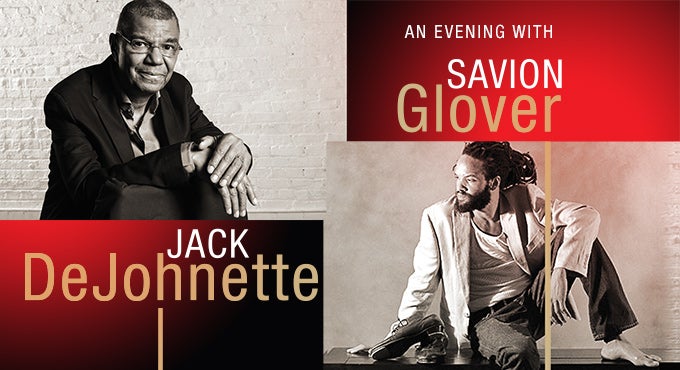
Although the bulk of my time these days is spent in Portland either teaching or spending time with my family, I'm getting a few chances to travel and perform this year. A nice handful of those chances is with a project called, "An Evening with Jack DeJohnette and Savion Glover." Jazz musicians are most likely familiar with drumming icon DeJohnette, and hopefully you have at the very least heard of tap dance wizard Savion Glover. Mr. Glover may be best known for his work in "Bring in 'da Noise/Bring in 'da Funk", but he has been working on Broadway since his debut at 12 years of age in "The Tap Dance Kid." Gregory Hines, no slouch of a dancer himself, described Glover as " possibly the greatest tap dancer who has ever lived." Glover style is quite revolutionary, but at the same time pays homage to the past, and incorporates many different styles of music into his dance. If you've never witness the genius of Savion Glover, check out some youtube videos and you'll see what I mean by "revolutionary."
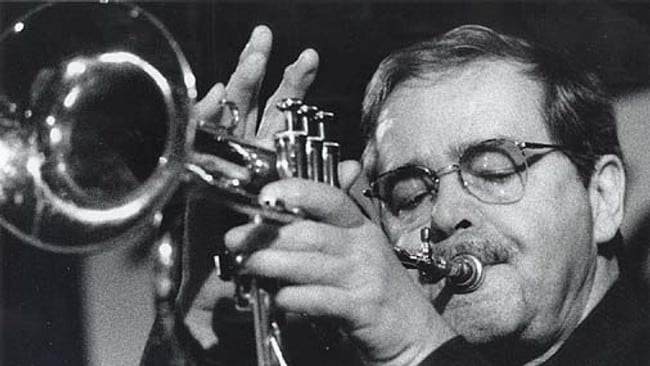
Jack DeJohnette
The first time we did this presentation was actually a few years ago; we did a one-off concert in Albany, NY at The Egg, a well known concert hall. Apparently, Mr. Glover really liked the unique collaboration and asked Mr. DeJohnette if they could take it on the road. We've had spot dates in the U.S. and there are some more upcoming in May and June. The show is in roughly four parts; Glover (and sometimes dance collaborator Marshall Davis) do a free form set, then the Jack DeJohnette Trio(including your truly and bassist Jerome Harris) do a set( fresh off a solo piano tour, DeJohnette has been playing more piano, which gives me an opportunity to play drums and pocket trumpet). Glover and DeJohnette will then do another duo set, and finally, I and Harris join them for a final number.
It's interesting because much of the show is totally improvised. One would assume that this could potentially turn off today's typical audience; however, we've had nothing but great responses at every show. The shows have typically run between two and a half to three hours; it seems as though the crowds are hungry for this type of energy. I've personally never witnessed any dancer with the stamina of Savion Glover; it seems as though his endurance has no limit. Furthermore, improvising with him is like improvising with another musician; he reacts with the same type of intuition and rhythmic interplay as an extremely hip drummer. ( As we discovered in a recent soundcheck, Mr. Glover can actually play the drum set more than excellently; hearing the drums from backstage, I
assumed it was Mr. DeJohnette on the drums until I walked back out to see differently!)
It's inspiring for me to be around people who are the best in the world. DeJohnette and Glover are more than the best; they are completely unique. One of the things that makes them unique is that they both have unlimited passion for creativity. It's a true privilege to witness it and to try to take the inspiration home with me. It's too bad we won't play in Portland, so my students will just have to take my word for it. I'm looking forward to more chances to be a part of this historic one of a kind collaboration later this year.
I just received a nice surprise in the mail; direct from Japan, a brand new melodica! The Yamaha P37D Pianica( it's a melodica, or whatever you like to call it) was highly recommended by a website I recently discovered called melodicaworld.com. ( I actually ordered another recommended model, the Suzuki M-37C Melodion, but as it is also coming from Japan, I don't expect it for another few weeks.) I've been playing melodicas since 2010 when I discovered how much fun it was to play something that used piano keys and air like a wind instrument. Clearly, melodicas are not everyone's cup of tea, and in some ways, they are more of a novelty instrument. However, I enjoy the advantages of the melodica: it's more portable than a piano or a keyboard, it's actually an acoustic instrument, it can sustain notes with the air, and it's almost like the harmonica of Stevie Wonder! ( Well, maybe that last one was a stretch.) I played a Hammond 44 Melodion a lot until one of the reeds stop working and the intonation went really bad (which seems to happen on all of them, even expensive ones). I am too busy/ fearful/ lazy to try to fix it myself, and I can't seem to find anyone else who can repair them. I also frequently play a Suzuki Pro 37; in fact, I used it on my album entitled " The Endless Mysteries.
The Suzuki Pro 37 which I still like alot
The Suzuki Pro 37 is a bit of a different sound than the Hammond 44( although they are made, or were made by the same company); it's rather bright, but it's still more interesting than most cheap toy melodicas, and it cuts through in a jam session. Honestly, I hadn't really had the opportunity to play melodica in quite awhile, and after seeing the Yamaha and the other Suzuki model reviewed on melodicaworld.com, I decided that maybe a new instrument or two might inspire me. Since both of these were around 100 bucks or less, I thought that it was worth the risk.
The Hammond 44, which is amazing but 5 times the price of most other melodicas
My first impression of the Yamaha P37D is that it's a pro level sounding instrument; it's in tune, it's a warm, healthy sound which can bite if you push some air. It feels pretty sturdy and the keys, while maybe not as smooth as the Hammond 44, are still pretty good.
I'm looking forward to messing with it some more in the new year. In the meantime, I made a little youtube review. I think it gives a good example of the sound. I would be playing it some more, but my infant Jordan is asleep and Liam, Kerry, and I are spending our New Year's Eve watching a movie about a rat who gets flushed down the toilet and ends up in an underground rat civilization. Hopefully we'll be in bed by 10pm. Happy New Year!
I recently performed at Jimmy Mak's in Portland with trombonist Steve Turre. In addition to having drummer Charlie Doggett on the bandstand, our bassist was the great Chuck Israels. During the soundcheck, Turre and Israels were trading great stories. One story came up regarding the fact that Israels had recorded with Cecil Taylor. I said, "Really?" Israels elaborated on a record date from 1958, when Israels was 18 years old. The recording, now known as "Coltrane Time," was actually originally released under Cecil Taylor's name in 1959 as "Hard Driving Jazz." The line up is Israels on bass, John Coltrane, Cecil Taylor, Kenny Dorham on trumpet, and Louis Hayes on drums.
What? That is an INSANE line up. I had never heard this recording. I can only imagine what it would be like for an 18 year old bassist, to get to record with these legends. I looked up the recording on wikipedia, and there is mention of a "tension filled" recording session. " Everyone says that there was tension, but it's not true," said Israels. " Everyone was very nice and it was a surprisingly smooth date." Israels
Chuck Israels
mentioned that it took a minute to adjust to Cecil Taylor's comping, which, if you take a listen, is definitely providing some rhythmic tension, but the contrast in personal styles is fascinating. When I went home and checked out the recording, I was surprised at how " inside" Cecil Taylor sounds; he's making the form and the changes, but in a very abstract way. " They even recorded my tune, 'Double Clutching,' which was a contrapuntal exercise."
If you get a minute, give this one a listen. Musicians often joke about putting together strange rhythm sections and collections of players( for example, " Hey, what about a band with Kenny G on sax, Al Hirt on trumpet, Wynton Kelly on piano, Henry Grimes on bass, and Alex Van Halen on drums? Totally RAD, dude!"). However, all kidding aside, sometimes weird line ups of musicians that might seem like an odd fit can produce intriguing results.
As a full time music teacher and father of 2, I have time finding the time to practice. I used to play and tour constantly, and I'm doing less of that these days. Before I was lucky enough to get called for gigs, I played a lot with the Jamey Aebersold Play A-Long recordings; I still recommend this great series to my students. The recordings feature world class rhythm sections and are a great way to practice keeping time as well as form. It's definitely more fun to play along with an Aebersold recording than a metronome.
Recently, someone recommended a phone app called Drum Genius. It's an app which has an entire menu of jazz drum loops which I believe are either samples or reproductions of loops from players like Philly Joe Jones, Max Roach, Jack DeJohnette, Bill Stewart, and many others. There are many different styles and tempos. When I have a few spare moments, I put on Medium Swing or Fast Swing or Very Fast Swing, and it helps keep my chops up. Obviously, it's not as satisfying as playing with a real band, but it makes practicing way more enjoyable.
I made a little video to demonstrate. I highly recommend this app; I have barely explored it and it's already been inspirational. Check it out!
I've had a busy May in terms of playing. I did a Northwest "tour" with my band Theoretical Planets; we did a cool night at Tula's in Seattle, Washington and then rounded back for an evening at Girasole, a venue in North Portland. Then I headed to Europe for a short tour with guitarist extraordinaire Tom Guarna; we did two nights in Rome at Gregory's, one great concert in Muri, Switzerland, and then a nice gig at A-Trane in Berlin. With little time to rest, I went into the studio with my former student and young saxophone phenom Nicole Glover to record her debut CD as a leader; we had a fun two day session at Kung Fu Bakery. In addition to some trio gigs at Jo Bar, I did a house concert and a night at Wine Up on Williams with another saxophone phenom, Rob Scheps. We had a nice trio with Paul Gabrielson on bass; Scheps had me playing piano, drums, pocket trumpet, and on one tune, drums AND pocket trumpet at the same time. (I didn't shy away from the challenge of playing one handed trumpet, riding with my left hand, and transposing a concert chart on Homecoming by Dave Holland, but if you didn't hear it, I'm cool with that. ) On the house concert, we had a special guest named John Moak, an outstanding trombonist who really knocked me out! I also got to play some drums with a nice trio consisting of piano phenom Dan Gaynor, who is one of Portland's most unsung musicians, and Jon Lakey, a great bassist and musician. We had a nice hit down in Eugene at Roaring Rapids Pizza, one of the best places to play in Oregon. Finally, I got to play on a Master's recital at Michelle's Pianos; Melissa Carroll did a great job with her repertoire selection and her performance of some challenging Lennie Tristano and Lee Konitz tunes. It didn't feel like a recital- it felt like a gig! ( Which is what it;s supposed to feel like!)
But perhaps the stand out of the month so far has been two concerts with Danish vocalist Sinne Eeg. I met Eeg in 2008 in a week-long jazz camp in Denmark. We jammed a bit and hit it off musically. We did a tour of Denmark in 2009, and one other hit at the Rochester Jazz Festival in 2011. But I hadn't seen her in a while. She has been staying in Los Angeles recently, so I thought it would be cool to have her come up to Oregon to do some duo playing. We had a really nice concert here at PSU; I think our jazz vocal students were quite impressed.
Sinne Eeg is in some ways a traditional jazz singer; her roots are in Ella Fitzgerald and Carmen McCrae. However, she has been writing a lot of her own music, which not only reflects a more forward looking harmonic sense but is also reflective of her own life, which is what artistry is supposed to be, in my opinion. Furthermore, Eeg has been developing her sense of the blues, which was evident in her " I'm An Evil Girl" performance. There's a maturity in her approach that I'm more impressed with now that we are collaborating again after a few years of hiatus. We also got in our two favorite Bonnie Raitt tunes, " I Can't Make You Love Me, " and " I Ain't Gonna Let You Break My Heart Again."
The day after the PSU concert, Sinne Eeg and I drove to sunny Eugene where we performed at the Broadway House Concert series. Paul and Peggy Bodin open their home to the public for jazz concerts which mostly feature musicians from Eugene but occasionally have some out-of-towners like me and Eeg. These days, the lack of venues and lack of support force people to take matters into their own hands, and I'm always interested in supporting grass roots efforts to keep the music alive and keep musicians working. We sold out the "house" and judging from the attentiveness of the audience, I think we were a hit. Hopefully it won't be another 4 years before I hit with Sinne Eeg again!
Saxophonist Joe Manis turned me on to this video. Vocalist Joyce Kwon has done more than simply learn John Coltrane's solo on his classic "Crescent" recording; she put lyrics to almost every note. It's already impressive that she is making all of the notes and rhythms and phrasing. Her lyrics tell a very odd story, one which I would be more accustomed to seeing in one of my son's bedtime books than embedded within a Coltrane solo. The "Crescent" solo becomes " Crescent The Chromatic Bear:" it's kind of like the famous "Twisted," which is Annie Ross' lyrical treatment of Wardell Gray's tune and improvised solo.
Joyce Kwon's creation on "Crescent" is vocalese on steriods. Or perhaps crack cocaine. There's a lot of technical and creative brilliance in her arrangement, but I wondered as I listened if Kwon was a madwoman. There are a lot of great artists out there and it's always refreshing to find somebody who has the chops but also has that extra artistic gear, when they can tap into that deep place in their psyche and bring their music to that next "insane" level.
Kwon has some other cool arrangements on youtube; she did a "cover" of the Danish-Norwegian pop group Aqua's 1997 mega -hit " Barbie Girl." If you don't know the song, look it up on youtube. Check out Kwon's descent into madness at the end of the tune....
If you still aren't intrigued, check out this microtonal serenade to a poor sense of food combining:
Portland State was recently lucky to have the great pianist and educator Hal Galper for a masterclass. Galper paid his dues as a member of the Cannonball Adderly group for three years and then the Phil Woods group for about ten years. He's made some great albums as a leader ("Speak With A Single Voice" being my favorite) and has been working steadily with his trio of Jeff Johnson on bass and John Bishop on drums for many years. Galper has also written a number of great books on jazz, including " The Art Of Comping" and " Forward Motion."
Galper didn't play much during the class, but he spoke and took questions for two solid hours. One of the things that really rang true with me is when I asked him, " In the absence of the apprenticeship system, with the lack of true bandstand opportunities like what you had in the 60's and 70's, how do we recreate that in the academic environment? " Galper responded, "Teachers have to play with their students." He went on to talk about non-verbal instruction, and how oftentimes academia is skeptical of this type of teaching and learning. " Every master teacher should have his own band with students playing in it. This is the best way for young players to learn."
Indeed, I spent most of my early career playing with older musicians from whom I could learn. So much of today's landscape is students playing with their classmates, and then getting out of school and playing with their peers. There are few comparable bandstand " schools" like Art Blakey, Betty Carter, Horace Silver, and so forth, working today. There's nothing wrong with peers playing together, however, musicians of the same level( especially of lower experience levels) playing together tends to become an echo chamber with no perspective beyond their own limited experience and wisdom.
I personally would never compare myself to Art Blakey, Betty Carter, Horace Silver, and so forth; however, since I've been a teacher, I've tried to find opportunities for my students who I felt were ready to go to the next level. My latest CD, "Risky Notion" ( available on Itunes, people, how's THAT for shameful self promotion....) features two of my best students from PSU; saxophonist Nicole Glover and bassist Jon Lakey. I don't believe I'm being presumptuous by saying that Glover and Lakey have learned a ton from playing and recording with this group. I think it's also been good for saxophonist Glover to play alongside Joe Manis. Manis is kind of a beast on the tenor and it's been interesting to see how Glover has been inspired by his abilities without making every song into a "cutting contest." It's made her solidify her own concept even more.
Galper also had some interesting advice about becoming a professional musician in this day and age: " I tell all my students to quit! I say you should only do this if you have no choice. If you do have a choice, meaning you have options, eventually, you will make the choice not to do it anymore. But if you just HAVE to play music, then you should." I know that a lot of the students present got a lot out of that kernel of wisdom, as did I. Believe me, sometimes I think I should finally get my Real Estate license and leave the dream of jazz behind. But for the time being, I'm still have the compulsion to play and work on music. Thanks, professor Galper, for giving us the truth.
When I was starting out as a pianist in Baltimore and Washington D.C., I worked with quit a few singers. I never considered myself a " singer's pianist," however, I learned a lot just from working with so many different kinds of jazz singers. I think it's interesting that with so many jazz programs flourishing, it seems that the subtle art of accompanying singers is becoming a lost art. It's a very different endeavor compared to plowing through small group jazz; the head-20 minute solo-head concept doesn't often work with singers. Playing intros and outros, really getting a feel for rubato accompaniment, dynamics, transposing to find the key that is comfortable for different male and female vocal ranges, as well as knowing repertoire and being able to read charts are all part of the landscape. Some of it is common sense, but if singers and pianists or rhythm sections don't play together on a regular basis, they don't develop the skills to do all of these things on the fly.
I believe that becoming a good accompanist for singers will make you a better accompanist in general. You have to be selfless to a point when you accompany another musician. You make it about letting them shine rather than worrying about what you sound like. Furthermore, you making someone else sound good is really the reason they would call you for another gig; it's not necessarily that you took great solos on your own. Some singers I worked with barely gave me any solos( maybe half a chorus if that even) but that's also a challenge: how to take a great solo within a chorus or less.
Recently, I met a young lady from Armenia ( by way of New Jersey-- not sure which exit....) named Lucy Yeghiazaryan. She was in Portland for a visit and I got to hear her and I was surely impressed. We had a free afternoon and we got some videos just for a lark. She's got a marvelous instrument and really has a great feel for the jazz tradition. I try to keep my accompanist's chops up and I thought this was a good chance. I figure I should document something with Yeghiazaryan before she becomes famous! Please enjoy the music!
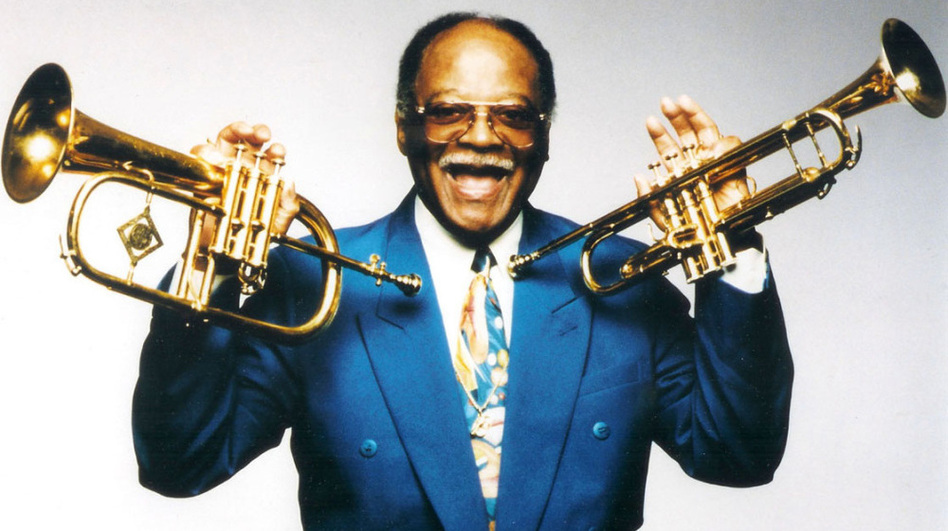
The jazz community is saddened by the loss of the great trumpeter Clark Terry. One of the first jazz trumpeters I ever heard as a middle school student, Terry has been an inspiration to so many. He's underrated in someways, but he had an extremely long career( so many trumpeters in jazz seemed to die young) and played a very physical instrument extremely well even as the rest of his body failed him. He was 94 years old! Terry played with Duke Ellington AND Count Basie, which is pretty impressive on it's own. Miles Davis looked up to him, and Terry was one of the first great flugelhorn players.He was the first African American musician to be on staff at NBC in 1960. Truly a great muscian, he also had his humorous side; if you haven't heard his "Mumbles, " you are in for a treat.
There is a recent film about Terry called " Keep On Keepin' On" which I haven't seen yet. ( I'm sure it's better than Whiplash.) I'm glad they were able to get it done before he passed. Let's remember Terry by listening to his music.
It's a few weeks to go until Spring Break, and I can feel the home stretch. I am enjoying my teaching; many of my students are really impressing me with their improvements. I'm hoping to make improvements of my own as well. I'm determined to find time each day to practice a least a little so I can hopefully make similar strides as my students have made. I also have a number of gigs coming up, for which I would like to sound somewhat prepared. I'll get to that in a minute.
Because I've been so busy I have not been able to blog about my gigs as I have in years past, but I wanted to make brief mention of them, lest ye think I've been put out to Jazz Edumacator Pasture! During the fall I did a number of things. I booked my own tour of Europe and went to Iceland, Denmark, Sweden, and Austria. I recorded another organ trio project with tenor saxophonist Joe Manis. I was invited to perform for 4 nights at Jazz Alley in Seattle with fusion legends Lenny White, Victor Bailey, and Larry Coryell. I played a bunch of gigs with Chris Brown's Quartet and his crazy arrangements of 80's pop tunes. We did a number of Portland State recruiting performances and visits all over the state. I went to Novasibirsk, Siberia( Russia) for the
Novosibirsk has some big statues!
first time with Lenny White's band ( quite a long trip for ONE HOUR OF MUSIC!). I brought in two New York special guests for masterclasses and performances: alto saxophonist Jim Snidero and flautist and composer Jamie Baum. I played a bunch of gigs in Eugene; Roaring Rapids Pizza, The Jazz Station, Broadway House Concerts- the audiences were wonderful. I took a trip east to hit the newest spot in New York- Mezzrow, run by Spike Wilner who also runs Small's across the street. Then I headed down to Baltimore to play trio with Warren Wolf and Tom Baldwin at Jazzway 6004( one of my favorite places to play on the east coast!) Beating the Thanksgiving traffic back to Newark, I then flew even more east to Birmingham, U.K. to do a week long residency at the Birmingham Conservatoire. ( It's always a pleasure to teach and play here- the students are at a super high level and even 6 hours straight of combo coaching leaves me energized!) Portland wise, not only did I bring two of my groups( Theoretical Planets, the group in which I play drums, but also my quartet with Tom Guarna, Damian Erskine and Reinhard Melz, which has a new recording under Erskine's name which will be out soon.)into Jimmy Mak's after a very long hiatus, I started playing at Wine Up on Williams, which is a great help to a scene which is hurting for jazz venues at the moment. Lastly, one of my pieces entitled "Existence" was premiered by the Portland State New Music Ensemble under the direction of Ken Selden. ( I got to play some pocket trumpet on it...)
Jordan Gregory Colligan
Although January 4th brought Jordan Gregory Colligan into my life, I still made time to release my Theoretical Planets recording on the Origin Label ( Risky Notion is the title) and it's available on Itunes. I also got to do two nights with the great trumpeter Randy Brecker in Bend, Oregon. I did some really nice gigs in Maryland; one was a CD release at Peabody Conservatory in Baltimore( my alma mater) with Alex Norris, Gary Thomas and Rudy Royston( I played Hammond B3), the other was a gig at Blues Alley in DC with clarinetist Todd Marcus( featuring Warren Wolf on drums and Kris Funn on bass, who really blew me away!) I also did a really nice concert at the Mennonite Church in Southeast Portland with the great tenor saxophonist Rob Scheps and Paul Gabrielson on bass.
I did want to mention first off that this coming weekend Sunday, February 22nd from 7-9), I have a gig at Corkscrew(1665 SE Bybee Ave 503.239.WINE)
in Sellwood; I'm performing as a singer songwriter. Bassist Jon Lakey will be joining me. I haven't been doing this live so much lately, although I actually have an entire album of songs in the can ready to be released. I performed all the instrumental tracks and vocal tracks and recorded it all myself. ( I need help from Adam Brock on mixing and Dana White on mastering.) Come by if you want a taste of the material!
A couple of things to which I'm really looking forward. First, my band Theoretical Planets will be at Wine Up on Williams(3037 N. Williams Ave) on March 6th at 8pm. Come by and buy a CD!
The same band will be at Christo's (1108 Broadway St Ne Salem, OR) on March 12th ( I think we start at 7). My spring break will be spent touring the midwest with the great alto and soprano saxophonist Steve Wilson; the band will feature Ugonna Okegwo on bass and Bill Stewart on drums. It should be quite amazing!
April will be busy as well. I have solo piano engagement at The Jazz Station ( 124 W. Broadway, Eugene, OR) starting at 8. This is going to act as part of a warm up for a solo piano tour that I am doing in June on the east coast. April 11th with be my CD release for "Risky Notion" and it will feature not only Theoretical Planets( Joe Manis, Nicole Glover, Jon Lakey) but also my trio with Chris Brown and Chris Higgins. This will be at Michelle's Piano's ( 600 Se Stark St, Portland, OR) and I guarantee it will be awesome.
That's all for now. I promise next blog time to have more jazz nerd stuff like patterns or CD reviews.....
I'm finding that one of the huge challenges for teaching jazz at the higher levels is as follows; how do you teach skills, the history and the rules while also getting students to think for themselves, think outside the box, and be creative? I find that all of us may tend towards one side of the brain or the other. I'm left handed, so they say that I'm most likely more right brained, which is the creative side of the brain. I've always felt that the piano for me was more of a vehicle to find something new rather than try to play all of the existing repertoire. I try to practice classical pieces, but lately, they just make me think about how to let those pieces inspire me to write my own music. Yet I find myself stressing skills to many of my students. I have so many students that need to focus on sound, reading, knowing tunes, jazz vocabulary, rhythm. A lot of these things are pretty concrete. I believe that the skill side is needed as a foundation for creativity. However, I acknowledge that it's possible to get bogged down in the technique and never learn or love to be truly creative.
Music theory is not music. Theory is how we analyze and understand music. How do we get beyond the rules? Sometimes breaking the rules is not only acceptable, it's essential to making good music.
This recent video made me think about this:
Ok, Marta Altesa is cute, let's move on from that. The cool thing about this Jamiroquai song is what? Well, the bass line is killing for sure. The groove is great, it's got a nice melody and a catchy hook. But it occurred to me that the harmonic movements are actually the best part about it for me.
The song starts in D minor and simmers there for a while. Then we jump to Fminor, with one of those sort of reverse progressions you hear in R&B often: F minor, C minor,7 Bb minor7, Gbmaj7, Fmaj7, Bb minor 7 Eb7, Abmin7, Db7, Gmin 7, F#7( or C7 at the end of the phrase). And then it jumps back to Bb7 to D minor. Later the verse has the progression G-7 to A7 ( altered I think) and then F min7. This really lifts the song for me.
But wait a minute. A7 to F minor7. When was the last time you studied a progression like that in theory class? Usually we spend so much time on ii V I's and their variations. Everything has to be justified as a substitution of something. A7 to F minor 7 is a pretty jagged movement. It's particularly jagged because many of the other chords are rather functional. But for me, it's the best part of the song. It's the hippest part of the whole thing, for me.
So why don't we teach that in theory class? Why don't we start with A7 to F minor?
I recently wrote about my disappointment in regards to a movie I went to see with my wife; part of my lament was that I don't get to actually go to the movies often. Well, I actually was able to get out again to see "Top Five," a hilarious film starring one of my favorite comedians of all time, Chris Rock. I was a fan of his HBO program in the late 90's, although he hasn't made a ton of great films. I really enjoyed this one, especially one scene with a famous rapper surprising us with some of his "unknown" talent( don't want to spoil it for you). Rock and supporting actors Rosario Dawson, JB Smoove as well as a host of other surprise comedians really made this one work for me.
Rock is great with observational humor, but he's not afraid to push the political envelope. Rock's character, Andre Allen, is a comedian turned actor who had financial success with a string of "Hammy The Bear" films. Allen, a recovering alcoholic, decides he wants to make "serious films" (perhaps a nod to one of my favorite Woody Allen films, "Stardust Memories") and ends up starring in "Uprize," a movie about the Haitian Slave Revolt of 1791-1804 in which thousands died and Haiti gained independence from France. It's amazing to me how Chris Rock is able to make the idea of this film ( which I'm fairly sure no one, even a Hollywood superstar would have an easy time financing) into something hilarious. It's kind of a complex idea; it's funny because it's such an intense departure from the silly "Hammy The Bear" character; it would be like Tyler Perry doing a movie about Nat Turner.....( actually I would pay to see that!) During a scene where Allen sneaks into a theater to see whether people like his new movie, I was pleasantly surprised to hear Charles Mingus' "Haitian Fight
Song" as the background music. ( I wonder if Questlove, who is credited with the score, was responsible for that choice?)
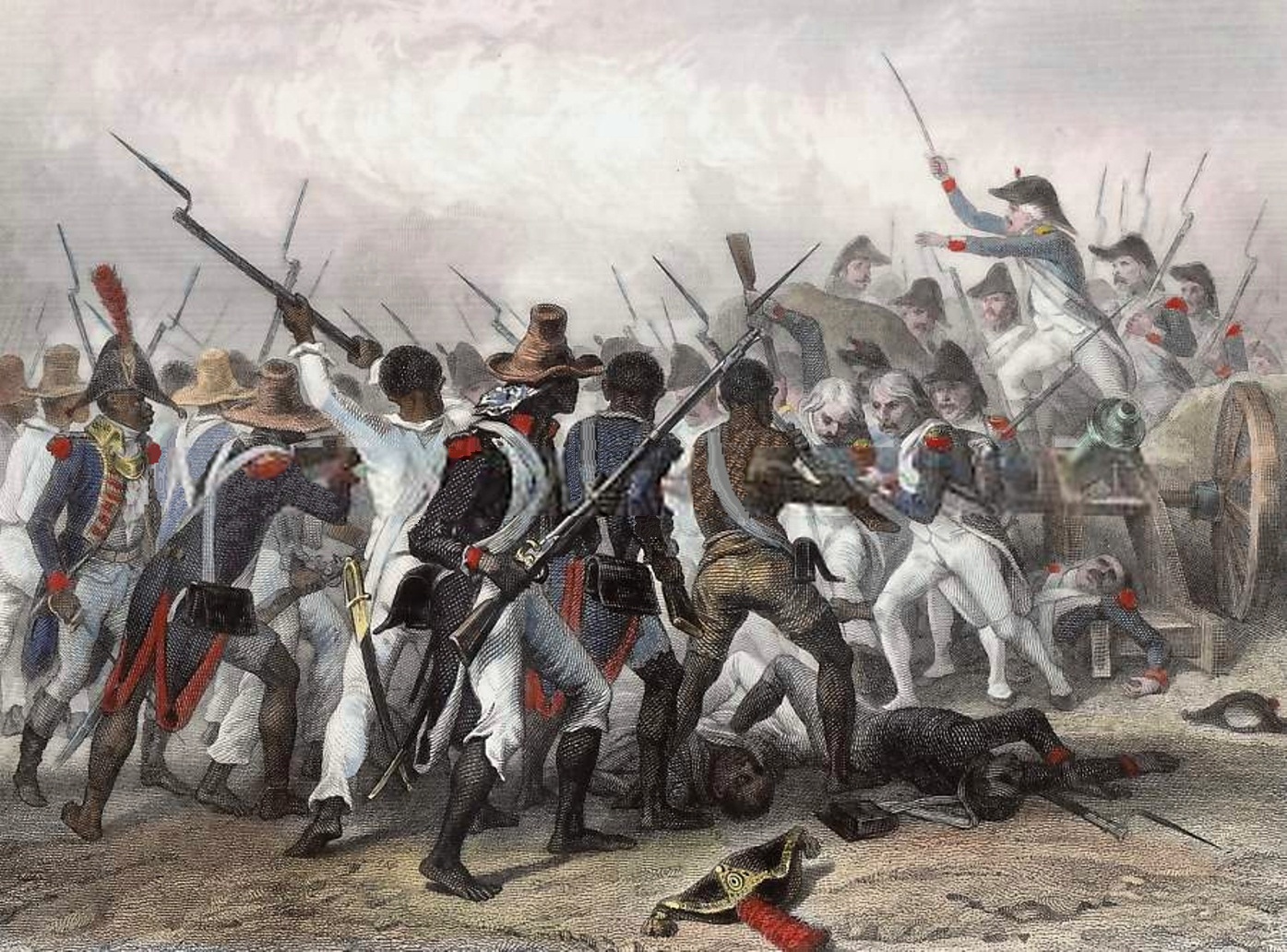
All levity aside, the Haitian Revolution was no joke; considered the most successful rebellion in history, it culminated in driving out the French and appointing governor-general Jean-Jaques
Haitian Rebellion
Dessalines, who in 1804 ordered the massacre of almost all of the remaining whites on the island. I guess I can't help but wonder why we study the French Revolution, the American Revolution, and the Russian Revolution in school- but not the Haitian Revolution? It seems like this would have been interesting to mention.....
In the fake "Uprize" movie within a movie, the Allen character plays Dutty Boukman ( which I hate to say but it sounds like somebody from the Pootie Tang bits from the Chris Rock Show......never mind, I'll be quiet...) who was a voodoo priest and leader of the Maroon slaves. Haitian voodoo religion originates in Africa and uses mystical dance and music ceremonies where spirit possession is involved. This reminded me of a recent performance I saw while visiting Birmingham, U.K. A young composer named Bobby Avey recently released an album entitled "Authority Melts From Me." This is a large form suite which is inspired by the Haitian Uprising; Avey actually traveled to Haiti and recorded actual voodoo ceremonies, transcribed them, and used the musical and political inspiration to create some incredibly intense music. Pianist Avey and his all star band of Miguel Zenon on alto saxophone, Ben Monder on guitar, Jordan Perlson on drums, and bassist Michael Janisch created a dense musical jungle full of dense chromaticism and brain-bending odd meters; the severity of the music made me see things differently upon completion of the performance.
I need time to study the Haitian Rebellion. I think it's strange that such a striking and significant event seems to be relatively forgotten. I'm under the impression that the tragedy of modern day Haiti may have a lot to do with the circumstances under which it became a nation. I didn't expect a history lesson this evening, but I'm glad to get to laugh and also learn something.
Hey, what about Tyler Perry as W.E.B. Du Bois? Ok, never mind, I'll shut up.....
The older I get, the less I care about what others think of me. I'm not saying I don't care at all; I'm saying that it concerns me a lot less than in years past. It's also kind of a relief to accept that there are always going to be people that just don't like you and never will, regardless of how many Hallmark cards you send them. Although my 4,967 friends on Facebook( ha!) might make you think I'm universally well liked, I do think some folks think I'm somewhat negative at times. I wouldn't consider myself to be a negative person in general, although I do go on about negative things, whether in my blog, on facebook, or even in conversation. Hey, why spend the time and money whining to a therapist when I can whine to the person I'm talking to right now!
I suppose it would be logical to say that we don't tend to gravitate towards negative people. Indeed, the Saturday Night Live sketch " Debbie Downer" shows the epitome of this type of person. You might be enjoying your birthday at Disneyland, and Debbie Downer can't stop talking about the nuclear disaster in North Korea......( Actually, this sketch is great not only because of the character and the great performance by Rachel Dratch, but also because of the trombone sound effect, plus the fact that Dratch and company couldn't stop laughing...)
I suppose we have all had friends like this. It's never really bothered me. I would rather talk about reality than try to pretend that life is always a bowl of cherries. Obviously, we want to acknowledge our good fortunes. I think it's only human nature to see both sides of the coin.
I remember one tour where one of my band mates chastised me for being too negative. " Man, you are always talking s*$t about something." OK. I decided then that my friend would only see the "positive" side of me....
Hey, good morning! I slept so well, did you? You look rested. Have you been outside? It's such a beautiful day. We are so blessed to have the sun shining today. I'm so glad we are on the road together. You are one of my favorite drummers, did you know that? Do you realize how lucky we are to get to play music together? I'm so glad we are friends. Here, come here, I want to give you a hug.....
After a few hours of that, the consensus all around was that I should " go back to being normal."
I think negativity is normal. But don't just take it from me. The New York Times recently ran an article called " The Problem With Positive Thinking." According to the research done by author Gabriele Oettingen, women who tried to think positively about themselves lost less weight than ones who were less positive about their ability to lose weight.
Fantasizing about happy outcomes — about smoothly attaining your wishes —
didn’t help. Indeed, it hindered people from realizing their dreams.
Positive thinking fools our minds into perceiving that we’ve already attained our goal, slackening our readiness to pursue it.
The article doesn't recommend a Debbie Downer approach; actually, the hybrid approach is better. Think about your goals, clearly see what stands in the way, and figure out what you can do to remove the obstacles. I think of this as "honesty" or "realism." The truth shall set you free. Some people can't handle the truth. I think it's better to get to the truth sooner rather than later. To solve problems and improve, we must be honest with ourselves.
This is how I approach teaching. This week, I was a guest teacher and performer at the Birmingham Conservatoire in the U.K. I told the student ensembles that I would be positive first, and then give them the bad news. All of the students were very cool with it, and it made for an incredibly satisfying performance. It's not negativity, it's just honesty. I don't want to bum anyone out the way Debbie Downer does. However, I will continue to "be real" with things as much as I can. Of course, someone may give me constructive criticism about this. I'm willing to take the lumps.
We've lost a number of greats in jazz recently( Charlie Haden, Joe Sample, Horace Silver, Gerald Wilson), but I wanted to mention the death of trumpeter and composer Kenny Wheeler. A huge influence on many modern musicians, Wheeler had an unmistakable trumpet sound as well as a distinctive compositional style. I was fortunate to study with him at the 1990 Banff Summer Jazz Workshop. Wheeler, humble to a fault, and quite a contrast from artistic director Steve Coleman, was incredible to be around. I was fortunate to get play in the trumpet section in the rehearsals for his Large Ensemble suite.
I remember signing out "Deer Wan," one of Wheeler's classic records from the library in the early 80's. I believe for most musicians, "Gnu High" is a standout recording( I found it ironic that pianist Allyn Johnson had just received his copy of "Gnu High" on vinyl in the mail on the same day of Wheeler's passing.) Some of Wheeler's tunes than are often played include "Everyone's Song But My Own," " For Jan," "Smatter," and "Consolation." Indeed, listening to a bit of "Smatter" gives me chills...
I remember two things about Mr. Wheeler at Banff. He coached my ensemble( I was playing trumpet back then), and during the rehearsal, I left to use the bathroom. When I returned, Wheeler was in my spot, reading the chart( it was an arrangement of his tune, "Mark Time." When he saw me, he demurred the spot to me. But I looked at him and said, " No, you can play!" He shrugged as if he was completely unworthy. He then proceeded to take a trumpet solo that just obliterated! There was another moment when a student came in who didn't recognize Wheeler. He was just sitting in a chair, looking extremely unassuming. " Oh, are you auditing this class?" she inquired. " Oh, actually I own all of these facilities, " he said in a quiet deadpan. " I'm Mr. Banff!"
I was sincerely shocked to hear of the recent death of pianist Kenny Drew Jr. I was aware that Drew had a number of health problems, but I didn't know how serious. I don't really know what the details are but I think he was found in his home. He was only 56 years old.
I remember the first time I heard Kenny Drew Jr.; it was in the 90's at The One Step Down in Washington, D.C. Guitarist Larry Camp had been telling me about Drew; " This guy is incredible; he can just look at a piece of music and memorize it!" I had to hear what this was all about. I'll never forget hearing Drew play "Donna Lee"; he played the double octaves probably better than anybody ever has. It was quite overwhelming from a technical standpoint. I went out and bought some of his CDs after that; I used to listen to " A Look Inside" quite a bit.
I remember running into Drew on the D train coming from Brooklyn in 1995; he was on his way to play at Visiones, and he was looking at sheet music. I remember he seemed like a cool guy- very talkative. I was a bit intimidated; the music he was looking at appeared to be pretty difficult.
I gained an even better appreciation of Drew when we worked together with the Mingus Epitaph Orchestra in 2007. I got more chances to talk to Drew in the period of time during the rehearsals and performances. Drew was fairly honest about politics, and it was entertaining to hear him rant about U.S. foreign and domestic policies.
There were two specific things that happened during that time which I will never forget. One was when Drew showed up for one of the Epitaph rehearsals with a bag of piano music he had just purchased at Patelson's Music Store. It was some 20th century Russian music; just glancing over his shoulder, it looked as though one would have to spend years to play music like this. Drew sight read it with the ease that you might read a New Yorker cartoon. I said, "How can you sight read like that?" "What, this?" he replied, as if I was joking. " No, this is very easy!" as he perfectly executed the written music which would probably have taken me decades to learn. I kid you not, and I say this as a graduate of Peabody Conservatory, which was full of incredible classical pianists: Kenny Drew was one of the best sight readers to walk the earth.
Indeed, Drew played classical music long before he played jazz. Many folks understandably know Drew because he is the son of jazz legend Kenny Drew( who played on Coltrane's "Blue Train," as well as had many great solo records), although as I understand it, Jr. did not grow up with his father at all, and didn't consider him an influence. Drew studied classical piano with his mother and grandmother. I've heard folks tell me that Drew had most of the serious classical piano repertoire memorized. Technically, he was up there with the best. A wonderful jazz musician, Drew was definitely underrated. ( I really have no idea why he was living in St. Petersburg, Florida. I don't believe that Florida is a hotbed for jazz...)
I'm getting to the second unforgettable incident during the Epitaph tour. Part of the 3 hour plus work is a piece called "Freedom," and during this piece(which is about Civil Rights, obviously), some people were getting up and shouting, "Stand Fast!" I noticed that during the first performance in New York, Drew was really seriously getting passionately into the "Stand Fast!" portion. The next concert, in Cleveland, at the same point in the work, while others in the 30 man orchestra shouted " Stand Fast, My Brothers!", Drew stood up and shouted at the top of his lungs, "9-11 WAS AN INSIDE JOB!"
I don't believe that Drew would have a problem with me telling this story. I think that's what I dug about him; Drew spoke the truth and then some.
I was touched that after that tour, Drew sent me some CDs of classical piano music, particularly, recordings of Godowsky's studies on the Chopin Etudes. Basically, they make Chopin's etudes even harder than they already are! I had given Drew a copy of my CD, " Blood Pressure, " and I remember he sent me an email kindly saying how much he enjoyed it.
I was really hoping he would have given me an interview for jazztruth, but alas, we never hooked it up. Well, it's a shame to lose another great musician. Let's spend some time listening to his music and hope he's in a better place.
Although I've had more than my share of luck and success as an accidental jazz pianist, I was very interested in the drums. I recall that during my frustrating freshman year at Peabody Conservatory, I had secret fantasies of transferring to Berklee College of Music or The New School for Jazz and Contemporary Music and switching my major to drums. I did graduate from Peabody with a degree in Trumpet and Music Education, however, by that time, I was pretty much on my way to playing piano full time. ( I actually sold all of my trumpets upon graduation in 1991, and didn't own a trumpet again until 1998.) Even so, I still maintained a fascination with drums and drumming. I believe that rhythm is the essential and distinctive element of American music. It's the most primal and universal regardless of simplicity or complexity. ( I have a great memory of hearing Steve Coleman's group at the Jazz Gallery many years ago. I had ingested a large quantity of Nyquil, as I had a terrible cold. I didn't know what meter Coleman's music was in, but I really enjoyed the grooves and the angular improvisations. Coleman's music is based on drum chants, which are essentially complex "claves" similar to African or Afro Cuban music, and it gives the music a foundational structure from which to expound upon. I remember thinking that people could have easily danced to this music if it wasn't a "jazz club.")
I'm still interested in developing my skills as a drummer. One thing that drummers spend a lot of time
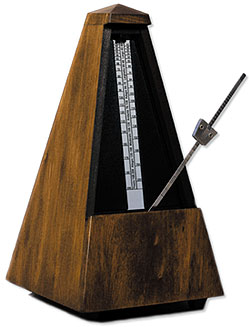
doing is practicing rudiments or exercises with a metronome. The metronome is a device which we use to set a mechanically consistent tempo and play selected passages along with the device so as to make our timing as consistent as possible. Although there were earlier attempts to invent such devices, the metronome as we know it was invented in Amsterdam in 1814 by Dietrich Nikolaus Winkel, although someone named Johann Maelzel may have lifted the idea and patented it himself in 1815. Beethoven was the first famous composer to write "metronome markings" in his music ( for example, Quarter Note= 150 and so forth). Now, stand alone metronomes are quite advanced; musicians use things called "Dr. Beat" to program odd meters and other complicated rhythmic training exercises. Furthermore, the use of computer software has given a whole new meaning to the idea of rhythmic precision. Studio drummers are expected to be able to play along with "the click," or "click track." (I've had to do this in various studio settings as a drummer, and it is not easy. Many "jazz" drummers have a hard time with this.) In fact, the use of virtual software instruments has gotten to the point where if you want your drum track to be absolutely 100 percent precise, you can just program drums that sound almost exactly like real drums, thereby eliminating the need to make a drummer sit there and try to "play with the click."
It's interesting that when I looked up "metronome" on Wikipedia, I discovered this controversy:
Human beings seldom play music at an exact tempo with all the beats
exactly the same. This makes it impossible to align metronome clicks
with the beats of a musically expressive performance. This also has led many musicians to criticize use of a metronome. "Metronome Time" has been shown to differ from "Musical Time".
Some go as far as to suggest that metronomes shouldn't be used by
musicians at all. The same criticism has been applied to metronome
markings as well.
And there were several interesting quotes which were against the metronome:
The metronome has no real musical value. I repeat, the metronome
has no value whatsoever as an aid to any action or performance that is
musical in intention. [...] refer by analogy to the sister art of
drawing. Graphic artists understand well enough the essential and
generic difference that exists between mechanically-aided drawing on the
one hand and freehand on the other. Similarly, musicians ought to
distinguish between (1) the sort of timing that results from dull,
slavish obedience to the ticking of a soulless machine, and (2) that
noble swing and perfect control of pulsation which comes into our
playing after years of practice in treating and training the sense of
time as a free, creative human faculty.
—The Amateur String Quartet by James Brown III
... this series of even, perfectly quantized, 16th notes, is no more evocative of samba, than a metronome would be. In fact, this representation neglects what
makes up the samba essence in the first place — the swing!
—Understanding the Samba Groove by Pedro Batista
[...] using the metronome as a constant guide to ramp up the speed
or to keep the rhythm. This is one of the worst abuses of the
metronome. [...] If over used, it can lead to loss of your internal
rhythm, loss of musicality, and bio-physical difficulties from
over-exposure to rigid repetition
—Fundamentals of Piano Practice by Chuan C. Chang
Reading these quotes makes me very conflicted; one of the first things I ask my students who are having trouble with rhythm is, "Do you practice with a metronome?" (It's also weird because I don't practice with a metronome very often, although I did when I was younger. I used to spend a lot of time recording seqence tracks on keyboards and then in the computer program Logic, so I spent time "playing to the click," so to speak.) My students will say that they use the metronome, but It's hard for me to tell. I think you should use the metronome for practicing certain grooves or passages, but it's true that you also have to develop your own sense of internal time; you can't use the metronome as a crutch. You can't(well, you shouldn't....) have a metronome on stage while you play( I realize some bands play to a click....). You need to develop your sense of how to play with others. This might be actually more important that having good time. Bands that sound good fluctuate TOGETHER; they shift with each other as they play. I also suggest playing along with recordings, which I think can be highly beneficial for young musicians.
I found something called "In Search Of The Click Track" which really blew me away. The site shows various drummers performances with the tempo fluctuation interpreted by a graph. The real human drummers had lots of fluctuation, while the pop songs with "The Machine" were flat-lined. Stewart Copeland, the drummer from The Police, had a lot of fluctuation, as did Bernard Purdie on James
Bernard Purdie, one of the most recorded drummers
Brown's "Say It Loud(I'm Black And I'm Proud)." It just made me think about whether we want our music to be metronomic or just have a good feel and not worry about it so much. I think if you are rushing or dragging enough to where it's really noticeable, then it needs to be addressed. However, I think having a little bit of wiggle room is good for the future of music made by humans rather than by computers. Computers and metronomes are tools for humans to create music. We shouldn't be slaves to them.
On that note, I leave you with a decidedly human track from a forthcoming album I'm working on. This features my band Theoretical Planets, which is Jon Lakey on bass, Nicole Glover on tenor and soprano saxes and Joe Manis on tenor and alto saxes. Enjoy!
Sometimes I'm just late to the party; I recently discovered a wonderful musician from England named Soweto Kinch, who is equal parts alto saxophonist and rapper. Kinch's vision is very fresh to me; when I hear music like this, it makes me want to stop talking about learning standards and tradition and so forth and start talking about going forward. Kinch has combined a rock solid gift for jazz alto saxophone with a very distinct and engaging lyrical flow that is truly a revelation. Soweto Kinch has been out there for about a decade, but I guess I've been preoccupied with Facebook or something.
I used to be very sensitive about the notion that Jazz in Europe is becoming more innovative while
many American musicians cling too strongly to the past. Well, musicians like Soweto Kinch sort make me want to eat my contrary words; Kinch blends hip hop and jazz so well, it's almost a perfect fusion. Kinch's alto sound reminds me of Kenny Garrett, Steve Wilson and Vincent Herring; the tone has the crying hard edge I love, and he has a very fluid sense of melody and rhythm. On 2010's "The New Emancipation," the tune called "A People With No Past" jumps out with a swinging soaring sequential melody nicely countered by guitarist Femi Temowo. Kinch the jazz musician is without a doubt an expert navigator of chord changes. " Trying to Be A Star" shows off Kinch's lyrical expertise; at times, it's almost more like spoken word, but then also has a Busta Rhymes sort of behind the beat feel. (I think it's refreshing that Kinch makes no effort to hide his British accent.)
The sonic palette of 2009's "War In a Rack" is euphoric, symphonic. "Can't Hold Me Down" alternates many voices with Kinch spitting rhymes with overwhelming intensity. Contrast this with another EP from 2008, " London Sessions, " a live date which is somewhat more spacious: a blend of acoustic jazz/groove with lyrics, Kinch's flow is no less impressive. The opening track, "Ridez" is a bottomless pit of creativity. "Adrian's Ballad," which begins rather conventionally, leads into a very dramatic lyric. The final track, "Freestyle," is a funny interaction with the audience trying to find a word with which to flow spontaneously. It's mind boggling how comfortable Kinch is with rhyming off the top of his head.(Perhaps his studies of Modern History at Oxford helped with that.)
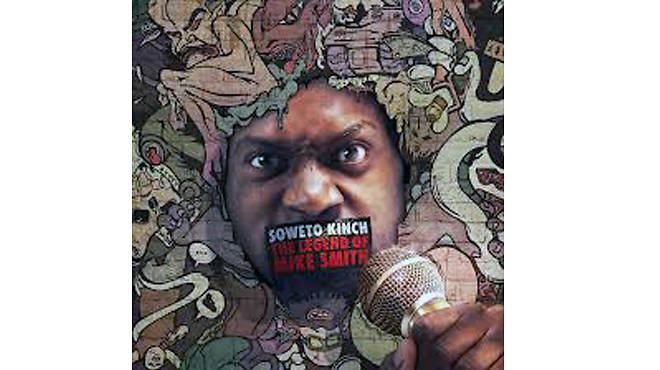
Soweto Kinch's latest is "The Legend Of Mike Smith," a concept album about a young rapper trying
to get into the business, dealing with phony music executives. (I get the feeling that this would be what you might get if Miguel Zenon and Wu Tang Clan somehow made a record together.) The double album follows a narrative but never leaves the music behind. " The Dream" is Shakespeare with a hip hop groove; it's sophisticated English poetry with rather wild orchestrations accompanying. The whole album feels like a Hip/hop Opera. It's a magnum opus from an artist who I hope has many years of creative output ahead of him.
We are continuing to have some great Jazz masterclasses at PSU. So far this year, we have had saxophonist Hailey Niswanger, drummer Scott Cutshall, and saxophonist Joe Manis. Originally from Eugene, a graduate of the University of Oregon and New England Conservatory, Joe Manis plays the tenor saxophone in a no holds barred, unapologetic manner. We recorded his sophomore CD, "North By Northwest" two summers ago, and it's been getting some great attention. Manis' clinic was equal parts performance; he's been using organ trio quite a bit, so he decided to hire me on organ and drumming wizard Todd Strait. We've worked this configuration a bunch during 2013, and it's always been a ton of fun. In between songs, Manis and Strait answered questions and talked about why they got into the music. I'm hoping we can have more informative presentations like this in the weeks and months to come.
I was happy to get the chance to play great music with great musicians, but I was really happy about
Hammond SK1
getting another chance to try my brand spanking new Hammond SK1. This is a keyboard which the industry refers to as a "clonewheel," or an "organ clone". It's not exactly brand new, but it's new to me( it was half the normal street price at Guitar Center, so I couldn't pass it up!)I've used various keyboards which try to emulate the wonder of the Hammond B3, and I've met with various levels of satisfaction. However, the SK1 has a number of great things going for it. One, it's only 15 pounds! Secondly, it has REAL drawbars, which give it the real feel of the B3. The action is also remarkable B3-like. Furthermore, the sound of the "percussion" is really authentic to me. In terms of sound, I question whether the layman would notice the difference, but if you have ever played an actual B3 and then played an organ "patch" on a keyboard, you know that there is a huge difference. For the moment, I'm very satisfied with my SK1. To be totally honest, I was thinking about phasing out the organ stuff from my duties; this keyboard is actually making me think about finding MORE opportunities to play organ gigs!
I leave you with some footage from our clinic, and you can judge the music and my keyboard for yourself!
Even if you have a stellar full time or adjunct faculty at your college or university(which we do in the Jazz Department at Portland State University), sometimes it's great for the students to hear a different perspective on jazz educational topics. Sometimes, it's good to hear the same perspective from a different source! We have been having some cool masterclasses this school year; I posted regarding the Mike Clark event, and we've had some others. David Valdez, who is actually adjunct at PSU, has been giving some great and valuable masterclasses since he's been on the faculty; Valdez has so much chord-scale material that students walk out of the room with their minds thoroughly blown. Chris Brown, a prodigious drummer, saxophonist, pianist, and composer, who is a Portland native and resident, gave an exciting lecture/demonstration recently. We have had two visiting bassists who have dazzled our students with their wisdom; Marcus Shelby gave a wonderful masterclass on the blues, and Clark Sommers talked and demonstrated some deep rhythms.
This term, we kicked it off with alto and soprano saxophonist Hailey Niswanger. A native of West
Linn, Oregon, Niswanger was a star pupil at Berklee College of Music in Boston, and has gone on to the professional jazz world of New York City. She has been touring with Esperanza Spalding, and also with Mike Clark's band, in addition to leading her own groups. She was back in town for the holidays, and also to record her third CD. I thought it would be great if she could come and do something for our Area Recital period.
We played some and Niswanger talked about her career and her
musical vision; we alternated like that for a while. Niswanger performed with the Park Avenue Group, which is a small group led by yours truly. The group features Nicole Glover on tenor saxophone, Jon Lakey on Bass, and Brandon Braun on drums. It's a learning experience for them to play with different guest artists in a casual, yet intense performance situation. I was impressed with how well Glover and Niswanger phrased together as a front line; hopefully, we'll get to try that configuration again in the future. Also, Nilswanger is an incredible sight-reader; she was reading my tunes for the first time for the masterclass, and they were not Eb charts, meaning that she had to transpose at sight, which adds another level of challenge.
Below is a video of one of the songs we performed. ( It's called "The Confident One," and it is a contrafact. Try to figure out what the changes are based on!) Just to let you know, we have many more masterclasses and performances this term at PSU. Our Area Recital time is 5-7 on Tuesdays in Room 47 in Lincoln Hall. Future performances and events include:
January 14 Kerry Politzer Masterclass 5-7 Lincoln Hall 47 Free
January 21 Scott Cutshall Survivor's Suite 5-7 Lincoln Hall 47 Free
January 28 Joe Manis Organ Trio 5-7 Lincoln Hall 47 Free
February 4 Guitar Heroes/ Lords Of Justice 5-7 Lincoln Hall 47 Free
February 11 Bebop/Hard Bop/Contemporary 5-7 Lincoln Hall 47 Free
Feburary 18 Persian Jazz Ensemble/Heppners 5-7 Lincoln Hall 47 Free
Thursday Feb 20 Jazz Conversation with Ahmad Jamal. 12-1 Lincoln Hall 75 Free
February 25 Ken Ollis Free Ensemble/ Colligan Men 5-7 Lincoln Hall 47 Free
Saturday Mar 1 and Sunday Mar 2, 12-6 pm LH 75- PDX Jazz Festival Student Stage
March 4 Mark Simon Masterclass 5-7 Lincoln Hall 47
March 11 MUS 194/Vocalists 5-7 Lincoln Hall 47


:format(jpeg):mode_rgb()/discogs-images/A-238626-1328259868.jpeg.jpg)






.jpg)