Showing posts with label Rants. Show all posts

Sunday, January 24, 2016

ORIGINAL JAZZ

The Case For Original Jazz

Imagine a world without Thelonious Monk’s music. Imagine a world with none of Wayne Shorter’s music. Imagine a world where no one would say, “ Let’s play something by McCoy Tyner.” In this alternate world, Coltrane never wrote “ Moment’s Notice, “ never wrote “ Naima,” never wrote “Giant Steps.” In this same world, Joe Henderson never wrote “ Recorda-Me,” or “ Serenity,” or “Black Narcissus.” He also never had a career resurgence with “ Lush Life: The Music Of Billy Strayhorn,” because Billy Strayhorn, in this alternate world, never wrote “ Isfahan,” “ Upper Manhattan Medical Group,” or “ Blood Count.” I think most true jazz lovers would agree that this is a world we would rather not live in.

 I want to make the case for original music. What do I mean by “original?” In some ways, “ original” implies a unique approach, something breaking new ground, or something that revolutionizes a
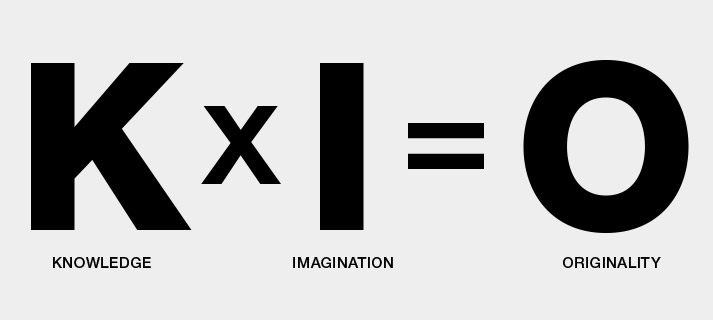
musical genre or a group of musicians, or even a generation. That’s certainly a wonderful thing. However, I’m really just talking about new content. We can’t expect that everyone who writes a new song to reinvent the wheel. Furthermore, it’s oftentimes difficult to see the unique approach or new ground being broken upon the first hearing. Then, the word of this new approach has to permeate the musical society. Thelonious Monk was doing innovative things in the 1940’s, but the world did not really recognize this until 20 years after the fact.

But the desire for the new is a natural one. Those who never travel want to see “new places” and
have  “new experiences.” Many of us get excited about trying a “new restaurant” or going to a “new” bar, even if they get the same alcohol they drink at the “old” bar. We love babies because they are
“a new addition” to the family”, and some of us fall in love with a lover because it all feels “new.” Many game shows enthusiastically offer “ A BRAND NEW CAR!” as their prize; I think if the prize was “ A USED CAR WITH 70,000 MILES ON IT THAT NEEDS A NEW ENGINE BLOCK,” I have the inkling that the contestants would probably not jump up and down.

In order to have a stable life, when we “settle down” ( meaning marriage, family, house, job, community, etc…) we accept that many things in our lives, at least in an overall sense, will most likely not be new. For this reason, in our artistic life, or in our search for entertainment( music, visual art, food, travel, movies, TV, plays, books, shopping, etc…), we look for “ the new” because it is the safest way to experience newness. Movies and books and paintings and plays take us to new places, spend time with new people, allow us to “experience” new things, without all of the hassle of ACTUALLY going to new places and so forth.

This is why I love to compose new music, and why I am an advocate of new music. The idea of

creating something new from scratch is another natural need of man. Some people cook food, some people make beer, some people build model airplanes, some people write short stories or paint. I write music. I do it because I love the satisfaction of putting melody, rhythm, harmony, and structure together to make something that perhaps a few hours or even minutes before didn’t exist. Furthermore, musical composition is a world where no one can tell you you’re wrong (which is quite untrue of the real world). Even a composition teacher cannot tell you you are wrong. They can only give you advice. You are never wrong when you are composing music.

Also it is essential to note that, in jazz, a composition might seem like it’s not comparable to a Beethoven Sonata. However, the beauty of jazz is that our compositions are “ improvisational vehicles;” they are topics of conversation given to us by the composer where we can improvise our own take of the melody or harmony or rhythms. To be perfectly honest, I really see composing and improvising as interrelated; they are the same process at different rates. The fact that you can “improvise” within a “composition” but also develop a “ composition” while “improvising” is what makes it all come together. Furthermore, a new composition makes you improvise differently.

I can’t help but lament the fact that, while in some American genres like Country, Rock, Pop, and Hip-Hop, there is an assumption that 98 percent of the time, an artist in this genre will bring their original music to the show or recording session. If a band in this genre has a book of music with the majority being tunes that are already associated with artists, they are usually considered “cover bands.” A cover band, while often lucrative for musicians, is usually a band that will never rise beyond local success playing weddings, bars, and local outdoor festivals. You won’t see a Journey cover band performing on Saturday Night Live. It’s just not going to happen.

In Jazz today,  it seems as though there is this increasing trend of “tribute” concerts. A jazz artist today has arguably less opportunity if they insist on performing their own original music. Instead, the pressure is to present concerts called “ The Music Of [ Insert Famous Jazz Legend Here].” Perhaps this type of concert draws more crowds in a world where jazz is steadily losing what’s left of it’s popularity. Jazz listeners might not know Steve Wilson, but they would come to a concert called “Steve Wilson presents A Tribute to Cannonball Adderly,” simply because they have heard of Cannonball Adderly. Steve Wilson has some truly great compositions, however, the public will never get to know them if he is always doing tributes to ( meaning the music of) someone else.


What if Thelonious Monk only performed the music of Duke Ellington? What if McCoy Tyner only did tributes to Gershwin, or Cole Porter? What if John Coltrane couldn’t work unless he did “ A Tribute to Lester Young?” What if Wayne Shorter couldn’t work unless he did “ A tribute to Jerome Kern?” Back in our alternate world, an entire body of jazz composition has been wiped out. One of the hip things about the Hard Bop era is the efforts to return to the roots of the music ( blues, gospel, danceable rhythms) in order to have a wider appeal, and YET, the great Hard Bop composers like Lee Morgan, Horace Silver, Wayne Shorter, and Benny Golson never stopped creating their own music. What if they had only played jazz standards? We would missing a HUGE body of work.

Jazz is a living music. Jazz musicians improvise, and we write our own music, and we have our own concepts. it doesn’t have to reinvent the wheel; it’s having the freedom to make our own musical decisions. If jazz musicians can’t do that, then jazz will become like classical music: music which reminds us of history, a musical museum, a look back in time. I’m not anti tradition; indeed, I teach Jazz History at Portland State University, for crying out loud!Plus, I insist my students know other people’s tunes as part of their repertoire studies. I think that jazz, differently from American genres like Country, Rock, Pop, and Hip-Hop, uses the lessons of history to move forward. The question is, do we want to move forward?
"I wish I could get The Rite Of Spring played, but I'm too busy with these Mendelssohn tributes....."


Friday, October 23, 2015

New York Is Still Now

I'm currently away from Portland and on one of my Jazz Fantasy Camp trips. I performed twice in Canada: once at The Rex in Toronto and once at The Jazz Room in Waterloo-Kitchener, about 90 minutes away from Toronto. Joining me on bass was the great Neil Swainson, and on drums was the powerful Ted Warren. I had a great musical time with them, the audiences were very appreciative, and it was a good warm up for my trip to New York.

I had a trio night scheduled for the Jazz Standard. However, the night before, I went down to the Standard to hear the Mingus Big Band. I used to play with various configurations of the Mingus Band. It seems like another lifetime at this point. I really enjoyed the experience from the side of audience member; the Mingus Band always seemed more like a small group than a big band, in that the emphasis isn't on tight ensemble playing or fancy arrangements but more about the groove, spirit, and the strength of Mingus' compositions as melodies and improvisational vehicles. It's also great to hear Frank Lacy sing! Lacy is one of the more underrated musicians in jazz. In fact, any member of the Mingus Band could lead their own band; the bench is THAT deep.
Frank Lacy

Indeed, I am always ranting about how the level of jazz musicians is higher in New York than anywhere else. I believe this is not going to change anytime soon, even though many of the best musicians have moved out of New York for various reasons. As Benny Golson said, New York is still the Jazz Mecca and even in this period of doom and gloom for live music, there is still more jazz and there are more jazz musicians per capita in New York than anywhere else in the world. I think it's hard for folks who haven't spent much time on the New York scene to understand the depth of ability and understanding and expectation that is the norm in New York. I suppose if we want young musicians to feel good about themselves, we can ignore the New York standard and lower our expectations. I have the memories of 15 years in New York that in some ways drift away as I spend more time in Portland. However, even just a few nights of club hopping- from Small's to Mezzrow to the 55 Bar, even walking by The Garage, or even doing some informal jam sessions- has reminded me of the idea that to be a serious New York jazz musician is to have a DEPTH of ability and understanding of the music. Every town has it's local heroes, but some of those heroes would be just another one of the multitudes in New York.

At the Jazz Standard, I had the pleasure of working with bassist Boris Kozlov and drummer EJ Strickland. Although the turnout was not what I had hoped for, it was a very satisfying musical experience. Kozlov and Strickland are easy to play with because they have good time and a great feel but they also know how to take enough chances to keep the intensity and the interest level high. We had a guest on a few tunes- my former student and new resident of New York, saxophonist Nicole Glover. Although I usually try to persuade my students NOT to move to New York, Glover is one of the tiny minority of students I have had in Portland that I think has a chance on the New York scene. (I was pleased to find that many students from University of Manitoba are now in New York and doing well: Karl Kohut, Luke Sellick, Curtis Nowosad, Niall Bakkestad-Legare.....)

Damian Erksine
The next thing was a performance with electric bassist Damian Erskine's band, which consists of Reinhard Melz on drums and Tom Guarna on guitar. We did a performance and clinic for Aguilar amps. The audience was probably 98% bass players! Although we only played 4 tunes, it was fun to reunite this group, which has played merely twice in Portland at Jimmy Mak's.

My trip is not over; I have two gigs in Connecticut. Tonight, I'll be at Firehouse 12 in New Haven with Boris Kozlov on bass and Matt Wilson on drums. Then I will be playing drums with the great pianist Noah Baerman in Middletown on Saturday.

It's hard to balance performing and teaching and family. There are few places to play nowadays in Portland. I'm determined to try to continue to work in a trip to New York a few times a year in order to keep my inspiration. Despite the outrageous cost of living and the fall of the music business, New York is still the place for jazz of many kinds.


Thursday, June 11, 2015

Originality


Chamber Music America is a wonderful organization which facilitates a boatload of grant money for independent jazz artists. The organization was founded in 1977 and was mostly focused on classical music for small ensembles. Jazz has been a big part of their work since 2000. The Doris Duke Charitable Foundation gives money to composers for new works and also money to presenters.
I actually won a Doris Duke grant in 2003, which allowed me to do a number of performances with a quartet featuring Gary Thomas, Drew Gress, and Ralph Peterson. ( We recorded a live record and I wish I could figure out a good way to put it out. There's some incredible stuff on there.)

Most jazz artists are independent these days; some are more independent than others. I'm extremely independent! So I've continued to apply for funding since 2003, and I haven't had any luck. I've applied with many different projects, and music that I thought was original. It's extremely competitive given how many jazz musicians need money out there. I've known extremely talented and able musicians who have applied every year and never gotten a grant. I think they only give 10 a year, so it's very selective. It also depends on who is judging, and that changes every year; some of the judges are more " avant garde" and some are more straight ahead in their tastes, judging from some of the recent winners.

Although I haven't won since 2003, I'm still very much in favor of grant opportunities for jazz musicians. However, I have to comment on the judging process. CMA has made it possible to hear what the judges said about your music and your proposal. Last year, I wanted to get feedback, and  I talked on the phone to a woman who works for CMA, and she read from the judges comments. ( She seemed a little nervous; I wondered how many musicians she had given feedback and if any of them had cursed at her....) I welcome constructive criticism because I want to continue learning and growing as a musicians, and also, maybe I'll learn something and then get a grant in the future. In last year's case, I didn't get much out of the comments; I mostly got the impression that the judges just didn't understand the work I submitted( I sent my "Persian Jazz Suite" which uses Persian scales that have non- western tuning; one judges comment was " The poor intonation really bothers me.").

For some reason, after receiving another rejection letter this year, I decided to ask for written summary feedback. I submitted my Theoretical Planets group( we released a CD on Origin last year.)
I'm very proud of this group, although it is a somewhat young group in terms of experience. Some of the feedback was leaning in that direction- saying that the group was "tight" but not as outstanding as some of the other submissions. It's hard to know what to do with that sort of feedback ( You're good, kid, but just not good enough...).

There was one comment that stood out to me. Panelist number 2 said:

 " Good playing. Derivative. Where is your originality?"


This is borderline insulting to me, as somebody who paid my membership fee to CMA, to get comments like this. Derivative? Because I play a conventional drum set? Because I play a swing beat? Because I've been influenced by earlier jazz music? Whose music is completely original, as in having no discernible influence? If you are going to throw out the word derivative, you really need to be more specific. Also, just because one's music doesn't reinvent the wheel doesn't mean it isn't original. Is Hank Jones original? Is he derivative? Is Kenny Kirkland derivative because he clearly checked out McCoy Tyner and Herbie Hancock? (If he is, I don't care because he's great!)These are extremely loaded words and it just sounds like Panelist number 2 was in a crappy mood and tired of listening to music all day. ( I feel that, after our third round of juries and auditions this year at PSU, which takes three days of listening to students-- CALGON TAKE ME AWAY!)

So in conclusion, I have a Brooklyn- style message for Panelist Number 2. YO! PANELIST NUMBER 2! WHERE IS MY ORIGINALITY? I'VE GOT YOUR ORIGINALITY RIGHT OVER HERE, RUBBERNECK!

Friday, February 20, 2015

Looking Forward, Glancing Back


It's a few weeks to go until Spring Break, and I can feel the home stretch. I am enjoying my teaching; many of my students are really impressing me with their improvements. I'm hoping to make improvements of my own as well.  I'm determined to find time each day to practice a least a little so I can hopefully make similar strides as my students have made. I also have a number of gigs coming up, for which I would like to sound somewhat prepared. I'll get to that in a minute.

Because I've been so busy I have not been able to blog about my gigs as I have in years past, but I wanted to make brief mention of them, lest ye think I've been put out to Jazz Edumacator Pasture! During the fall I did a number of things. I booked my own tour of Europe and went to Iceland, Denmark, Sweden, and Austria. I recorded another organ trio project with tenor saxophonist Joe Manis. I was invited to perform for 4 nights at Jazz Alley in Seattle with fusion legends Lenny White, Victor Bailey, and Larry Coryell. I played a bunch of gigs with Chris Brown's Quartet and his crazy arrangements of 80's pop tunes. We did a number of Portland State recruiting performances and visits all over the state. I went to Novasibirsk, Siberia( Russia) for the
Novosibirsk has some big  statues!
first time with Lenny White's band ( quite a long trip for ONE HOUR OF MUSIC!). I brought in two New York special guests for masterclasses and performances: alto saxophonist Jim Snidero and flautist and composer Jamie Baum. I played a bunch of gigs in Eugene; Roaring Rapids Pizza, The Jazz Station, Broadway House Concerts- the audiences were wonderful. I took a trip east to hit the newest spot in New York- Mezzrow, run by Spike Wilner who also runs Small's across the street. Then I headed down to Baltimore to play trio with Warren Wolf and Tom Baldwin at Jazzway 6004( one of my favorite places to play on the east coast!) Beating the Thanksgiving traffic back to Newark, I then flew even more east to Birmingham, U.K. to do a week long residency at the Birmingham Conservatoire. ( It's always a pleasure to teach and play here- the students are at a super high level and even 6 hours straight of combo coaching leaves me energized!) Portland wise, not only did I bring two of my groups( Theoretical Planets, the group in which I play drums, but also my quartet with Tom Guarna, Damian Erskine and Reinhard Melz, which has a new recording under Erskine's name which will be out soon.)into Jimmy Mak's after a very long hiatus, I started playing at Wine Up on Williams, which is a great help to a scene which is hurting for jazz venues at the moment. Lastly, one of my pieces entitled "Existence" was premiered by the Portland State New Music Ensemble under the direction of Ken Selden. ( I got to play some pocket trumpet on it...)

Jordan Gregory Colligan

Although January 4th brought Jordan Gregory Colligan into my life, I still made time to release my Theoretical Planets recording on the Origin Label ( Risky Notion is the title) and it's available on Itunes. I also got to do two nights with the great trumpeter Randy Brecker in Bend, Oregon. I did some really nice gigs in Maryland; one was a CD release at Peabody Conservatory in Baltimore( my alma mater) with Alex Norris, Gary Thomas and Rudy Royston( I played Hammond B3), the other was a gig at Blues Alley in DC with clarinetist Todd Marcus( featuring Warren Wolf on drums and Kris Funn on bass, who really blew me away!) I also did a really nice concert at the Mennonite Church in Southeast Portland with the great tenor saxophonist Rob Scheps and Paul Gabrielson on bass.

I did want to mention first off that this coming weekend Sunday, February 22nd from 7-9), I have a gig at Corkscrew(1665 SE Bybee Ave 503.239.WINE)
in Sellwood; I'm performing as a singer songwriter. Bassist Jon Lakey will be joining me. I haven't been doing this live so much lately, although I actually have an entire album of songs in the can ready to be released. I performed all the instrumental tracks and vocal tracks and recorded it all myself. ( I need help from Adam Brock on mixing and Dana White on mastering.) Come by if you want a taste of the material!
A couple of things to which I'm really looking forward. First, my band Theoretical Planets will be at Wine Up on Williams(3037 N. Williams Ave) on March 6th at 8pm. Come by and buy a CD!
The same band will be at Christo's (1108 Broadway St Ne Salem, OR) on March 12th ( I think we start at 7). My spring break will be spent touring the midwest with the great alto and soprano saxophonist Steve Wilson; the band will feature Ugonna Okegwo on bass and Bill Stewart on drums. It should be quite amazing!

April will be busy as well. I have solo piano engagement at The Jazz Station ( 124 W. Broadway, Eugene, OR) starting at 8. This is going to act as part of a warm up for a solo piano tour that I am doing in June on the east coast. April 11th with be my CD release for "Risky Notion" and it will feature not only Theoretical Planets( Joe Manis, Nicole Glover, Jon Lakey) but also my trio with Chris Brown and Chris Higgins. This will be at Michelle's Piano's ( 600 Se Stark St, Portland, OR) and I guarantee it will be awesome.

That's all for now. I promise next blog time to have more jazz nerd stuff like patterns or CD reviews.....

Monday, December 29, 2014

The 2014 First Annual Colligan Awards

Since I've been on the subject of movies lately, one great film I saw recently was "Birdman," an incredible vehicle for Michael Keaton, who plays a former action star trying to produce a darkly serious play while trying to keep his dark mental difficulties at bay. The acting by Keaton and co-stars which include Edward Norton, Zach Galafanakis, and Emma Stone, is solid. However, the cinematography and special effects are absolutely amazing. Furthermore, the musical score, which is mostly solo drum set, really blew me away. It sounds somewhat improvised, but it really fits the emotion of the story, as any good score should. ( When I think of my disappointment with "Whiplash," it's nice to hear truly great drumming in a movie.)

I recently discovered that jazz great Antonio Sanchez is responsible for the score for
"Birdman." I also discovered that his score was rejected by the Academy of Motion Pictures for consideration for an Academy Award. Sanchez' fans are wondering why. The reasons the Academy gives have to do with the amount of original music related to known songs, I think bottom line it's because the Academy is stupid. And racist. And just plain evil. Do I think the Academy and it's members are worse than Hitler? That would be pushing it a bit too far. So then the answer is yes. 

Antonio Sanchez is an incredible drummer, having played with Pat Metheny, Chick Corea, Miguel Zenon, and plenty more of the heavyweights. He's very successful as a musician, so I'm betting that he could probably care less about whether he is snubbed by the aforementioned Worse-Than-Hitler-Academy of Motion Pictures. However, since so many of these awards are so pointless and arbitrary, I'm starting my own Awards.

Good Evening And Welcome to the The 2014 First Annual Colligan Awards. I'm your host, Ellen DeGeneres. We have a really great show for you. We have many special guest, and so many great song and dance number. I have lots of great joke(Rim Shot)......ahem..... Moving right along, presenting the award for Best Musical Score is Jack Black.

Jack Black: ( In a loud, rock and roll type voice) Hey everybody, the nominees for Best Musical Score are:

Antonio Sanchez for "Birdman"(Roll Clip)
"Birdman," Antonio Sanchez (Roll Clip)
(Roll Different Clip)
" Big Momma's House 13," Kanye West ( Roll Clip.....Ugh..)
" Indian Jones and the Quest To Find A Good Hip Replacement Surgeon," John Williams( Roll Clip, I guess...)
Antonio Sanchez for "Birdman"(Roll Clip)

And the Colligan Award goes to......
Antonio Sanchez for "Birdman!" 

( This is Antonio Sanchez' first Colligan Award....)

Anyway, I have a vivid imagination. I recommend the film, Antonio Sanchez got robbed, and F the Academy. 


“What's with all these awards? They're always giving out awards. Best Fascist Dictator: Adolf Hitler.”
Annie Hall (1977) – Alvy Singer (Woody Allen)


“Awards are like hemorrhoids. Sooner or later every asshole gets one.”
Swimming Pool (2003) – Sarah Morton (Charlotte Rampling)


Sunday, December 28, 2014

There Is No Theory......Only Sound


"Man those cats be playing some THEORY!"
I'm finding that one of the huge challenges for teaching jazz at the higher levels is as follows; how do you teach skills, the history and the rules while also getting students to think for themselves, think outside the box, and be creative? I find that all of us may tend towards one side of the brain or the other. I'm left handed, so they say that I'm most likely more right brained, which is the creative side of the brain. I've always felt that the piano for me was more of a vehicle to find something new rather than try to play all of the existing repertoire. I try to practice classical pieces, but lately, they just make me think about how to let those pieces inspire me to write my own music. Yet I find myself stressing skills to many of my students. I have so many students that need to focus on sound, reading, knowing tunes, jazz vocabulary, rhythm. A lot of these things are pretty concrete. I believe that the skill side is needed as a foundation for creativity. However, I acknowledge that it's possible to get bogged down in the technique and never learn or love to be truly creative.

Music theory is not music. Theory is how we analyze and understand music. How do we get beyond the rules? Sometimes breaking the rules is not only acceptable, it's essential to making good music.
This recent video made me think about this:
Ok, Marta Altesa is cute, let's move on from that. The cool thing about this Jamiroquai song is what? Well, the bass line is killing for sure. The groove is great, it's got a nice melody and a catchy hook. But it occurred to me that the harmonic movements are actually the best part about it for me.
The song starts in D minor and simmers there for a while. Then we jump to Fminor, with one of those sort of reverse progressions you hear in R&B often: F minor, C minor,7 Bb minor7,  Gbmaj7, Fmaj7, Bb minor 7 Eb7, Abmin7, Db7, Gmin 7, F#7( or C7 at the end of the phrase). And then it jumps back to Bb7 to D minor. Later the verse has the progression G-7 to A7 ( altered I think) and then F min7. This really lifts the song for me.

But wait a minute. A7 to F minor7. When was the last time you studied a progression like that in theory class? Usually we spend so much time on ii V I's and their variations. Everything has to be justified as a substitution of something. A7 to F minor 7 is a pretty jagged movement. It's particularly jagged because many of the other chords are rather functional. But for me, it's the best part of the song. It's the hippest part of the whole thing, for me.

So why don't we teach that in theory class? Why don't we start with A7 to F minor?


Saturday, December 27, 2014

Haitian Fight Song


Chris Rock in "Top Five"
I recently wrote about my disappointment in regards to a movie I went to see with my wife; part of my lament was that I don't get to actually go to the movies often. Well, I actually was able to get out again to see "Top Five," a hilarious film starring one of my favorite comedians of all time, Chris Rock. I was a fan of his HBO program in the late 90's, although he hasn't made a ton of great films. I really enjoyed this one, especially one scene with a famous rapper surprising us with some of his "unknown" talent( don't want to spoil it for you). Rock  and supporting actors Rosario Dawson, JB Smoove as well as a host of other surprise comedians really made this one work for me.

Rock is great with observational humor, but he's not afraid to push the political envelope. Rock's character, Andre Allen, is a comedian turned actor who had financial success with a string of "Hammy The Bear" films. Allen, a recovering alcoholic, decides he wants to make "serious films" (perhaps a nod to one of my favorite Woody Allen films, "Stardust Memories") and ends up starring in "Uprize," a movie about the Haitian Slave Revolt of 1791-1804 in which thousands died and Haiti gained independence from France. It's amazing to me how Chris Rock is able to make the idea of this film ( which I'm fairly sure no one, even a Hollywood superstar would have an easy time financing) into something hilarious. It's kind of a complex idea; it's funny because it's such an intense departure from the silly "Hammy The Bear" character; it would be like Tyler Perry doing a movie about Nat Turner.....( actually I would pay to see that!) During a scene where Allen sneaks into a theater to see whether people like his new movie,  I was pleasantly surprised to hear Charles Mingus' "Haitian Fight
Song" as the background music. ( I wonder if Questlove, who is credited with the score, was responsible for that choice?)


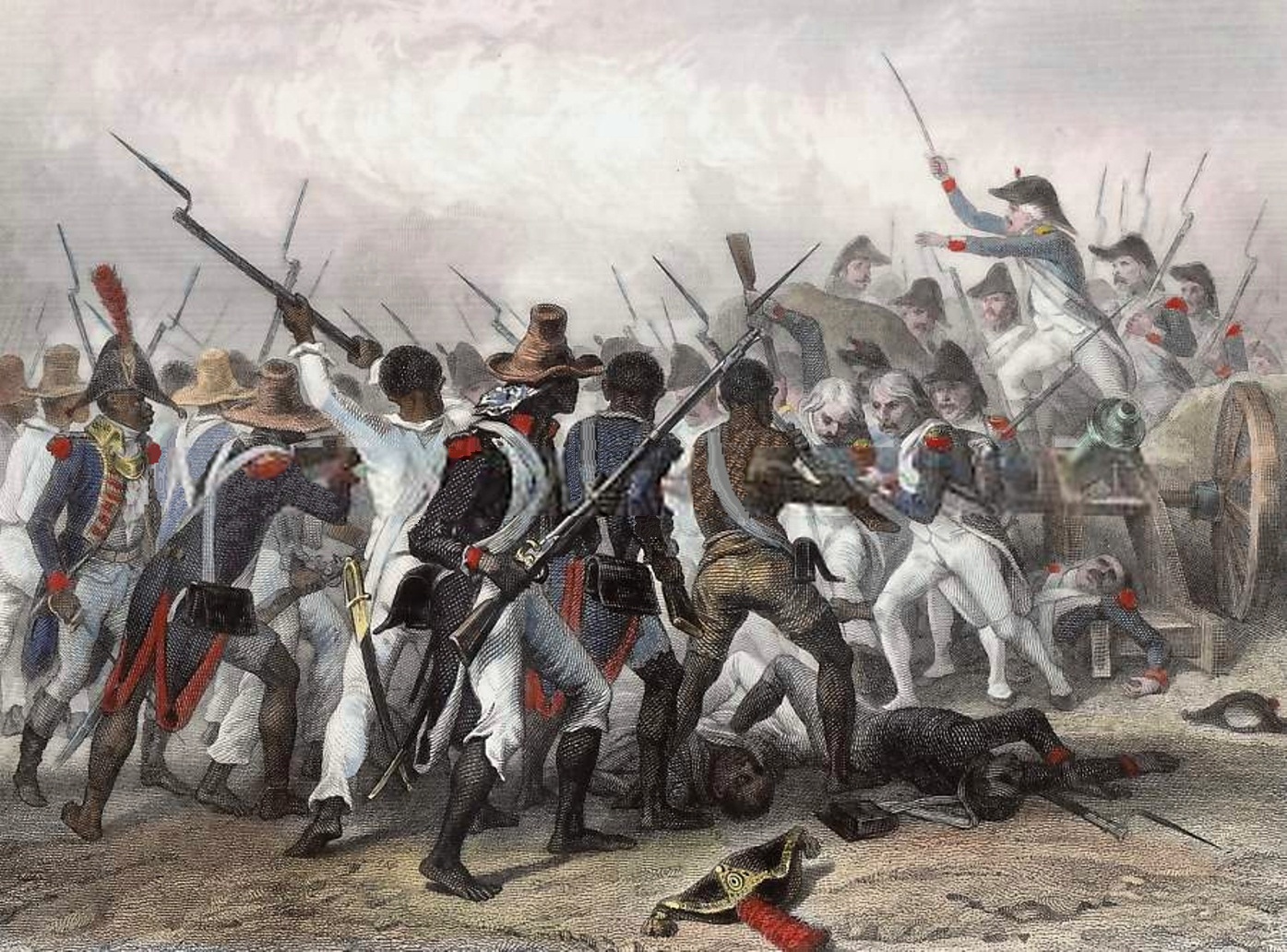
All levity aside, the Haitian Revolution was no joke; considered the most successful rebellion in history, it culminated in driving out the French and appointing governor-general Jean-Jaques
Haitian Rebellion
Dessalines
, who in 1804 ordered the massacre of almost all of the remaining whites on the island. I guess I can't help but wonder why we study the French Revolution, the American Revolution, and the Russian Revolution in school- but not the Haitian Revolution? It seems like this would have been interesting to mention.....

In the fake "Uprize" movie within a movie, the Allen character plays Dutty Boukman ( which I hate to say but it sounds like somebody from the Pootie Tang bits from the Chris Rock Show......never mind, I'll be quiet...) who was a voodoo priest and leader of the Maroon slaves. Haitian voodoo religion originates in Africa and uses mystical dance and music ceremonies where spirit possession is involved. This reminded me of a recent performance I saw while visiting Birmingham, U.K. A young composer named Bobby Avey recently released an album entitled "Authority Melts From Me." This is a large form suite which is inspired by the Haitian Uprising; Avey actually traveled to Haiti and recorded actual voodoo ceremonies, transcribed them, and used the musical and political inspiration to create some incredibly intense music. Pianist Avey and his all star band of Miguel Zenon on alto saxophone, Ben Monder on guitar, Jordan Perlson on drums, and bassist Michael Janisch created a dense musical jungle full of dense chromaticism and brain-bending odd meters; the severity of the music made me see things differently upon completion of the performance. 


I need time to study the Haitian Rebellion. I think it's strange that such a striking and significant event seems to be relatively forgotten. I'm under the impression that the tragedy of modern day Haiti may have a lot to do with the circumstances under which it became a nation. I didn't expect a history lesson this evening, but I'm glad to get to laugh and also learn something.

Hey, what about Tyler Perry as W.E.B. Du Bois? Ok, never mind, I'll shut up.....

Wednesday, December 24, 2014

Whiplash: Two Thumbs Down

I remember when I graduated from Peabody Conservatory in 1991; I was already earning a living as a jazz pianist in the Baltimore-Washington, D.C. area. I had no other responsibilities( no day job, wife, children, etc...), so I spent a lot of my free time going to the movies. It was hard for my friends to see movies with me because usually I had already seen everything.  My idol was Baltimore pianist  and movie buff Tim Murphy, who not only was an incredible musician, but also told me that when he would play a gig  at The Closet, he would play one song at the beginning, and then-

" there were so many guitar players who wanted to sit in, I would go see a movie, come back and play the last tune, and get paid for the night!" 

The world has really changed since then. I'm a father and a husband and a professor, so I don't get to actually go to a movie theater often. Not that anyone needs to go to an actual theater to see a movie; now you can stream every movie that has ever been made on your phone, if not your ipad, laptop, Roku, or whatever your favorite device happens to be.


So when I do actually have a chance to go to a theater and sit in the dark and concentrate on a movie, well, it had better be worth it. Recently, I went with my wife to see "Whiplash," the story of a young jazz drum student pitted against the most abusive music professor in modern history. This movie was recommended by a lot of non-musicians, and has been almost universally praised in the press as well as sites like Rotten Tomatoes. My mother-in-law AND my father-in-law insisted that I and my musician wife would LOVE this movie. I had high hopes to say the least.

Fifteen minutes in, I was ready to leave. "Whiplash" is, to begin with, so technically inaccurate that you wonder whether the director bothered to consult with anyone about basic things like:

What's it really like  at a music school?
How does jazz music work?
How does one set up a set of drums?

and so forth......

 I wish someone would have called me; I would be the cheapest music consultant in the world. I'm not saying that a movie about music school has to be 100 percent accurate. I'm saying that this movie is SO inaccurate that it puts in the comically bad category for me- the same category as gems like, "Plan 9 from Outer Space," "Ishtar," "From Justin To Kelly," and so forth.

How inaccurate, you say? Let me count the ways:

1.Most of the things Andrew( the drumming student) practices are just terrible.

2. Nobody practices or plays drums day after day and bleeds all over the kit. (Sure, people develop tendonitis, but I guess that doesn't look good on film.)

3. Young jazz students today look up to Elvin Jones, Jack DeJohnette, Bill Stewart, Brian Blade, and bunch of other folks, perhaps in addition to Buddy Rich, but I'm willing to bet money that you will not find a young jazz student who singularly idolizes Buddy Rich. More young students know about Eric Harland and Ari Honeig than Buddy Rich.

4. The way Fletcher conducts and rehearses the band is just ridiculous.

5. Sure, some professors are tough and they might even yell and perhaps make people upset. But Fletcher's abusiveness, even if he had tenure, wouldn't be tolerated for one second, especially in today's world of higher ed. There would be so many student complaints that Fletcher, if he wasn't fired, would be marginalized by teaching something where he couldn't be abusive. They wouldn't be able to handle all of the lawsuits coming their way. I wish I could say that this opens a discussion about the spectrum of discipline in music education. Unfortunately, Fletcher (played well by JK Simmons- I'm glad he gets a starring role) as a character is so over the top that even the scariest of band directors would be appalled by the character's behavior. Lucky they are in college; if this kind of professor was in high school he might very well end up in jail!

6. When Andrew walks by the jazz club and sees Fletcher as a special guest, he enters the club and hears the "great" Fletcher play piano. It's just embarrassingly bad. Afterwards, Fletcher talks to Andrew about the greats of jazz. Clearly, Fletcher is not even close, but this irony seems to be lost on folks who don't know the difference between what Fletcher plays and pretty much any decent working jazz pianist.

7. Andrew breaks up with his girlfriend because he says he needs time to practice and become great. I guess he didn't know what we call a jazz drummer without a girlfriend- homeless!......(thanks I'll be here all week, try the veal.....)

I could go on and on. I believe that these things will be obvious to most musicians who see the movie. What's telling is that non-musicians are not bothered in the slightest by these issues. When you consider how medical shows or legal shows or even historical movies seems to spend a lot of effort on painstaking accuracy, why would a jazz education movie clearly not even be bothered. If you saw a medical show where the doctor referred to the heart as part of the skeletal system, or ask the nurse to hand him a scalpel and she handed him a stethoscope, you'd be rolling in the aisle! That sounds more like a Zucker Brothers parody than anything else. It would be akin to if went to "The Passion Of The Christ," and instead hearing the dialogue in the historically relevant languages of Aramaic, Latin, and Hebrew, they just talked like they were modern day twenty somethings from California:

Caiphas:  So, you are like a king or something. Where  is this, like, Kingdom, Bro? I mean, you know, like , totally! You are, like a carpenter or something? Why don't you say something?Why don't you, like, tell me what's up, dude? Jesus:  Yo, Bro! I totally told everybody what was up with this, man!. I was like, all up at the Temple and what not, you know, like, I was totally all like, Hey everybody, I'm down with whatever...
  Temple Guard:   Bro, you need to like, chill when you talk to the High Priest, I mean, like, duh!
Jesus:     Come on, man, be cool, my man! Let's all just chillax, my homies.....

I think I've made my point. I think this speaks to the divide between musicians and the general public of today in a society which has cut music programs in schools, has let corporate monopolies control our radio and television so that they can bombard us with music which has no artistic merit or substance, and distract everyone with gadgets so that no one has any time or money left over to go out and see a live jazz band in their town. It's ironic to me that Andrew is hoping that Fletcher is going to make his career. How? By recommending him to Wynton Marsalis? Please! The idea putting up with Fletcher's abuse in order to have a career is just preposterous.

I decided to stay and watch the whole movie, and not just because my wife needed a ride home. I wanted to see if there was a point to the movie. I thought the ending was a good climax in terms of the story. I'll say this: "Whiplash" could have been a great movie if they had spent maybe an hour or two talking to a real jazz student. Again, I'll offer my consulting services for an extremely affordable price!


Saturday, December 6, 2014

Everything is Great!


The older I get, the less I care about what others think of me. I'm not saying I don't care at all; I'm saying that it concerns me a lot less than in years past. It's also kind of a relief to accept that there are always going to be people that just don't like you and never will, regardless of how many Hallmark cards you send them. Although my 4,967 friends on Facebook( ha!) might make you think I'm universally well liked, I do think some folks think I'm somewhat negative at times. I wouldn't consider myself to be a negative person in general, although I do go on about negative things, whether in my blog, on facebook, or even in conversation. Hey, why spend the time and money whining to a therapist when I can whine to the person I'm talking to right now!

I suppose it would be logical to say that we don't tend to gravitate towards negative people. Indeed, the Saturday Night Live sketch " Debbie Downer" shows the epitome of this type of person. You might be enjoying your birthday at Disneyland, and Debbie Downer can't stop talking about the nuclear disaster in North Korea......( Actually, this sketch is great not only because of the character and the great performance by Rachel Dratch, but also because of the trombone sound effect, plus the fact that Dratch and company couldn't stop laughing...)

I suppose we have all had friends like this. It's never really bothered me. I would rather talk about reality than try to pretend that life is always a bowl of cherries. Obviously, we want to acknowledge our good fortunes. I think it's only human nature to see both sides of the coin.

I remember one tour where one of my band mates chastised me for being too negative. " Man, you are always talking s*$t about something." OK. I decided then that my friend would only see the "positive" side of me....

Hey, good morning! I slept so well, did you? You look rested. Have you been outside? It's such a beautiful day. We are so blessed to have the sun shining today. I'm so glad we are on the road together. You are one of my favorite drummers, did you know that? Do you realize how lucky we are to get to play music together? I'm so glad we are friends. Here, come here, I want to give you a hug.....

After a few hours of that, the consensus all around was that I should " go back to being normal."

I think negativity is normal. But don't just take it from me. The New York Times recently ran an article called " The Problem With Positive Thinking."  According to the research done by author Gabriele Oettingen, women who tried to think positively about themselves lost less weight than ones who were less positive about their ability to lose weight.

Fantasizing about happy outcomes — about smoothly attaining your wishes — didn’t help. Indeed, it hindered people from realizing their dreams.

Positive thinking fools our minds into perceiving that we’ve already attained our goal, slackening our readiness to pursue it.

The article doesn't recommend a Debbie Downer approach; actually, the hybrid approach is better. Think about your goals, clearly see what stands in the way, and figure out what you can do to remove the obstacles. I think of this as "honesty" or "realism." The truth shall set you free. Some people can't handle the truth. I think it's better to get to the truth sooner rather than later. To solve problems and improve, we must be honest with ourselves.

This is how I approach teaching. This week, I was a guest teacher and performer at the Birmingham Conservatoire in the U.K. I told the student ensembles that I would be positive first, and then give them the bad news. All of the students were very cool with it, and it made for an incredibly satisfying performance. It's not negativity, it's just honesty. I don't want to bum anyone out the way Debbie Downer does. However, I will continue to "be real" with things as much as I can. Of course, someone may give me constructive criticism about this. I'm willing to take the lumps.

Wednesday, October 22, 2014

Blue: Mostly Other People Do The Killing's Transcription Homework Assignment


Mostly Other People Do The Killing.....I mean, wait.....
Mostly Other People Do The Killing is quite a provocative name for a jazz group. I've been aware of them for a few years; I have heard a few samples from their earlier recordings( "This Is Our Moosic, "Forty Fort", and "Shamokin!!!"". Clearly, it's not all about the hype; these guys can play, and they combine a post modern sense of humor with a solid grasp on virtuosity and the jazz tradition.  I think this group is a great example of where jazz is today and how conservatory trained musicians can think outside the box in order to find their niche.

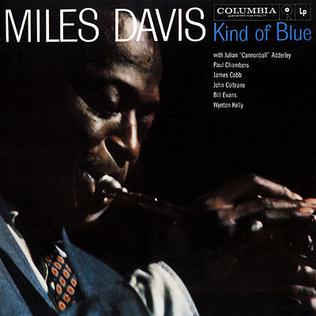
It was brought to my attention that Mostly Other People Do The Killing recently released "Blue", which is not a tribute to Joni Mitchell, but rather an attempt at a note for note reproduction of "Kind Of Blue", which is probably trumpeter Miles Davis' most famous album and one of the most important as well as popular jazz albums in history. I was curious about the project. I will say off the bat that I did not purchase the album, I listened to samples on Itunes, which many of us do before making the decision to buy music( if you actually still buy music......anyone?). I decided not to buy it; instead, I download some of Mostly Other People Do The Killing's earlier work and study it a bit more. I'm not saying that I won't purchase it in the future, but I have reasoning why and I'll get to that later.

I am very conflicted about "Blue"; the clips I heard were impressive, and the jazz educator side of me is always impressed with the technical ability to hear and reproduce solos(especially since many of my students have real challenges with that kind of activity. I wasn't going to mention that one of my student groups couldn't name the musicians on "Kind Of Blue," which is rather disturbing, to say the least.) Transcribing solos and trying to play along with the recording and trying to match every nuance is a great tool in jazz education; however, even the most "derivative" musicians rarely try to perform a transcribed jazz performance and pass it off as their own. ( I'm not saying that MOPDTK is trying to do that, exactly.) It is a little odd that musicians would spend so much time on something that they would never present in a performance; in this way, transcriptions are like etudes- they are studies. You can't play the entire solo of  McCoy Tyner's on Passion Dance whien you play Passion Dance. You could play part of it, you can be influenced by it, but you can't play the whole thing. EVEN IF YOU CAN! IF YOU CAN, YOU AREN'T SUPPOSED TO! In this way, jazz is like comedy- young comedians listen to the greats, but they MUST create their own material to be legitimate. Without Richard Pryor, there would be no Eddie Murphy, and without Eddie Murphy, there would be no Dave Chappelle. BUT, Dave Chappelle would NEVER release a comedy special called "Live On The Sunset Strip" or "Delirious." Why not? Because he has more than enough of his own jokes, and doing something like this would be an enormous waste of time and energy!
 

I read Nate Chinen's review of the CD, and he address some of the reasoning behind the project, and his own take on it seems just as conflicted as mine, although in the end he heartily endorses "Blue". Again, these are great players from a technical and creative standpoint. However, in my mind, this album has GIMMICK written all over it. The sad thing is, gimmicks work. This is especially true in the entertainment world, the music world, and the jazz world. Most of the time, it isn't about the notes, about the sound, about the artistic message. It's about the gimmick, the image, the sound byte, the selling point. It's not, "How can we make great music that will reach people and take an art form to a higher level?" It's, " how can we trick people into buying our product?" I've tried to stay away from gimmicks as a musician, mostly because it doesn't interest me, usually seems cheesy to me, and most importantly because I haven't found a gimmick that has made me rich and successful.....

The paradox of transcribing solos and playing them along with the recording is that it's nearly impossible to sound exactly like the musician who originally played the solo. It is impressive that MOPDTK  on "Blue" sounds at times exactly like Davis and crew. But even so, it's still not close enough. The recording quality is obviously different. As soon as trumpeter Peter Evans starts playing, you know it isn't Miles Davis. Maybe because he isn't playing on a 1947 Martin Committee trumpet? Is he using a Heim 2 mouthpiece with a deep V cup? Did they record on the same Steinway that was at Columbia's 30th Street studios? (I played that piano when I was recording at Clinton Studios years ago. It was a great piano, but I didn't sound like Bill Evans or Wynton Kelly, oddly enough.) I'm willing to engage in a "Kind Of Blue" challenge to test my own ears, if anybody wants to facilitate that.

I'm not saying that "Blue" is disrespectful of the tradition; indeed, I don't think MOPDTK would have spent all that energy on this if they didn't love that music. However, I would rather see them play their own music. This is why I'm not going to buy "Blue." I won't buy it, but clearly, I've already bought into the hype, and even this little blog will give them more press, so in the end, isn't that what matters? In an era when no one is buying music, it's not surprising that anyone would resort to extreme tactics.

In the end, the existence of a project like this reaffirms my belief that jazz is about innovation through imitation. Check out the greats, but in the end, do it your own way. MOPDTK, as evidence by their earlier recordings, already did this in spades. I guess they had a lot of extra free time to make "Blue". But I can't help what are some other records that warrant note for note reproduction:

A Love Supreme?
Birth Of The Cool?
Way Out West?
Duke Ellington Live At Newport?
Black Codes(from The Underground?
No Jacket Required?
Songs in The Key Of Life?
The Chronic?
Enter The Wu Tang(36 Chambers)?
Revolver?

Don't be offended, MOPDTK, but when my son's Bar Mitzvah rolls around, I'll know where to find a "Kind Of Blue" cover band.


Sunday, October 19, 2014

Exercises in Sleep Deprivation, Part II

My son Liam was born December 19, 2009. I did not sleep again until December 19, 2010. Those of you with children can relate; some babies sleep, but some don't. Liam was a kid who just did not want to sleep. I was so sleep deprived that I started taking the bus to school after falling asleep at traffic lights. I thought that maybe I would never sleep again in life, that it was just a 39 year lucky streak and my luck had run out for the next few decades. When we went back to New York for the summer, we hired a sleep consultant, which worked out great for some lady who convinced me to give her 400 bucks in exchange for "sleep" information I could have found for free on the internet. Even at age 4 and a half, Liam still has lots of energy at night, but he sleeps pretty well( although he does com into our room during the night on occasion) once he gets to sleep.

I remember musicians who had kids always said they got more sleep on the road. I never could understand that until I had a son. When I travel, I miss my family, but it is nice to have a bit of a break from irregular sleep patterns. In fact, I think that the period after my son's birth has made me handle sleep deprivation a lot better than I did when I first started traveling. I remember after a few years of being jet lagged every time I went to Europe thinking, "Wow, this is not all that it's cracked up to be!" I don't sleep on planes- which is surprising, since trying to sleep sitting upright with a jet engine under your seat surrounded by strangers seems like it would just knock you right out.....

I always tell my students in my 9 am class, " If you are lucky enough to become a professional musician, you'll be getting up at all hours to make flights, trains, buses, and so forth. Missing a flight is an expensive lesson that you don't want to have to experience." I find I am better at mentally pushing myself through sleepiness. It can be tricky if I need to drive.

This past Friday, I had a good test of my tolerance for sleep deprivation. My son kicked me awake at 3:30 AM, which beat my alarm by 30 minutes. I left my house in Portland at 4: 15 and picked up bassist and former PSU student Jon Lakey at 4:30. We were planning on participating in Eugene based saxophonist Adam Harris' live recording; however, I wanted to make some recruiting stops along the way. We arrived at South Eugene High School at 6:45. I worked with Director Steve Robare's jazz band for about 30 minutes and then Lakey and I played some duo and we talked about the program at PSU. After a nice leisurely breakfast of omelettes, waffles, and gallons of coffee, we headed over to the University of Oregon to crash their Friday jam session. This was obviously not a recruiting stop but more of a chance to observe what goes on at other programs in the area. Lakey and I were invited to play a few tunes, which was of course a lot of fun.

I started to fade a bit, so I head over to saxophonist Joe Manis' house to try to nap on his couch for a few minutes. Lakey and I didn't so much nap, but we did play with Manis' 2 year old for a while. "George......Piano......Jon......Bass...." Ellery is a smart kid and we were having fun, but then it was time for a recruiting stop at Lane Community College. One of my combos from PSU, The Park Avenue Group, met us there, and we played some tunes and answered questions. The kids at LCC are very enthusiastic and it was a really good vibe. I took the PSU students for dinner at a small cafe in downtown Eugene, right before the soundcheck for the live recording, which was taking place at The Jazz Station, a wonderful non-profit venue. I was surprised at my ability to get through the concert, since around 10 pm I started to feel like I was running on fumes. After some quick goodbyes, Lakey and I got back in the car and drove back to Portland. I got home around 1:47 AM. I felt like I had just flown around the world and back.

Ironically, I am about to do something to that effect; tomorrow night, I begin my voyage to
Novasibirsk
Novasibirsk for one concert with the Lenny White Group. My flight path is Portland-New York-Moscow-Novasibirsk. Most of my trip will be on an airplane. I'm trying to bring as much reading, listening and watching material as I can. I'll keep you posted on whether I get any sleep or not. Wish me luck and I promise to take a lot of pictures.

Wednesday, August 27, 2014

Ouch: Portland Loses Another Jazz Venue

I realize it's still a bit raw, but I wanted to express my disappointment at the news tonight that Camellia Lounge in Portland, as of September 6th, will no longer have jazz music. I'm especially bummed because it was one of the few venues in Portland that would essential book me at will(thanks to curator Laura Stilwell) and also it was a venue where I could bring in student groups and give them valuable performing experience. Furthermore, Portland has lost a number of venues just this year; Ivories, The Blue Monk, Shaker and Vine, The Mission Theater( they decided they would make more money as a movie theater) and Quartet. It would not be exactly correct to say that they all ended because of jazz music's lack of popularity; many of these venues had a host of other problems besides trying to present something besides crappy "indie" music(which is a legitimate genre, so I'm told). In the end, business is business and the restaurant and club business is not easy.(That's why every time I think, "yeah, I'll open my own place," I then think," yeah, financial ruin would probably suck.")

I suppose what I can't figure out is that in the case of Camellia Lounge, why would they stop the music when they didn't seem to really be paying for it anyway? I always thought it was a door gig. The band took whatever came in from the door, plus tips. I never found it to be lucrative; even when the place was packed, it wasn't a huge money maker for musicians. Still, it was a place to play where the booking didn't seem to be locked up for a handful of regulars.  My question is, now, without music, do the new owners think that anybody will go there for dinner? I don't know, maybe the music drove more people away than it brought in? I would be curious to see where they are at in a few months. Maybe they will come crawling back to us, "please come back, it's dead without the music!"

One thing that drummer Sam Foulger pointed out on the positive side is that:

 It's good to remember that half the venues we're talking about didn't have live music five years ago (some of them weren't even open yet). Ordinary, but determined, people made them into performance spaces. There will be more if we make them.

This is why I'm expressing my frustration, but only so that I can get it out of my system and move on. There are still places to play and still places that could have more playing. We still need to get people to come out to shows more, and support the scene so that the venues we still have continue to thrive. I'm for hitting the streets to find some new places. Even if we have to rent a space, or have a concert at PSU, or have it in my backyard, or even in my tiny living room, I'll keep trying to find places to play. 

Wednesday, July 30, 2014

Gratitude

It's interesting how we get wrapped up in our own problems so much that we completely lose perspective on the truth. Many of us are living a dream life, and yet we spend tons of energy whining about problems which are so insignificant. It's not wrong to want more than you have, and it's not wrong to have ambitions and aspirations. However, lack of awareness of how good we have it prevents us from enjoying our brief time on earth, and it's also kind of insulting to those out there who wished they had our problems instead of theirs.

First of all, just in terms of basic lifestyle, I'm better off than I was 5 years ago. I have a steady job, and a pretty nice house. I have HEALTH INSURANCE! WHICH INCLUDES DENTAL! I live in a safe neighborhood, and the weather here is pretty mild compared to the East Coast. I have a loving family; my son is really thriving, as long as he gets his dinosaurs and Godzilla toys. We have access to all types of food and digital entertainment at the drop of a hat(well, we usually have to go somewhere for food. Delivery service in Portland isn't like New York). I'm not rich by any means, but where I live now kind of beats the tiny apartments in which I lived in New York in the 90's, not to mention the tiny row house in Columbia, Maryland, where I grew up.

My father's ancestors were Irish. If I was born 100 years earlier(1869), I'd probably be living in a tenement in New York, probably in the Five Points neighborhood. I'd likely be working on the docks, or in a sweatshop, or who knows, maybe I'd be in a gang. If I was born 50 years earlier, I might have joined the Army and fought in World War II. If I had been born 20 years earlier, I might have been sent to Vietnam. One thing I'll say about looking at recent history is that thank heaven that I didn't have to go to war. I hope my son never has to go to war.

Sure, I would love to have more gigs and I would love to see jazz musicians get better opportunities. I would love to be more recognized than I currently am for my artistic work. However, we jazz musicians need to put it all in perspective. Let's face it, even though conventional wisdom is saying our generation has it worse than previous generations, we have it pretty darn good.

My summer resolution is to stop whining so much about what's missing. I need to acknowledge what's great about my life. It doesn't mean I'll lose my ambition, or that I will stop thinking of ways to move forward. It just means that I will retain some balance in my view. There are people in other parts of the world suffering tremendously; they wished they had my problems. Think about them the next time you complain about how long the line is at Por Que No, or complain about something trivial. We don't even know how lucky we are.

Tuesday, July 22, 2014

Catching My Breath


Joe Manis and Nicole Glover at the Cathedral Park Jazz Festival
Hey everyone. Last week was incredible; we had our third successful "The Shed" PSU Summer Jazz Camp( partnering with the Portland Jazz Composer's Ensemble) featuring special guests Alex Norris and David Ephross, as well as Portlanders Darrell Grant, David Valdez, Javier Nero, Jason Palmer, Dan Balmer, and Ryan Meagher. It was a intense, full week of masterclasses, rehearsals, and jam sessions; 9 in the morning until almost 8 pm every night. I enjoyed hearing the students as well as the faculty, and we got some great positive feedback. Admittedly, there's no pleasing everyone, and a few folks had complaints, but this is to be expected; this is only our third year, and we are still learning. Nevertheless, it was by and large a positive experience and I look forward to next year's "The Shed."

It would have made sense to plan a weekend vacation in the Bahamas, but alas, I had 5 gigs scheduled for the weekend; three on Saturday and two on Sunday. Saturday started with playing keyboard on a 4 hour wedding gig with bassist Cary Miga's group; then I hightailed it over to St. Johns to play drums with Kerry Politzer, Jon Lakey, and Nicole Glover. I was supposed to play organ after that with Joe Manis, but there was an issue with the pay, so we decided to cancel. The gigs were part of the Cathedral Park Jazz Festival; it was supposed to be a sort of after hours series. I believe that the issue was that the cover charge would pay the band, but when the venue tried to collect a cover charge at the door, no one would enter the bar!  More on that in a minute.

Sunday, I got to play twice in a row on the big stage at Cathedral Park. It was really crowded and the weather was beautiful. First, I played piano with the Jeff Baker group featuring David Valdez, Thomas Barber, Jason Palmer, and Andrea Niemiec. After that, I sat behind the drums for a great set with my band Theoretical Planets featuring Nicole Glover, Joe Manis, and Jon Lakey. It's always great to play for a big crowd in a great outdoor venue. I was pretty much running on fumes after such a long week, but I left the festival satisfied and looking forward to a quiet week of relaxation.

Again, it's always great to play music, and the Cathedral Park Jazz Festival is a great institution which I hope will continue to exist. But there were two issues which I think are worth discussing constructively. One is the idea that musicians are supposed to be paid.  In the case of the Saturday night  gig, where no one would pay 10 dollars to hear music,  I don't blame the venue( which is merely a neighborhood bar) and I certainly have nothing but kudos for the organizers of the festival ( Mary Sue Tobin, Farnell Newton and Arthur Marx, respectively) who did a lot of work to keep the Cathedral Park Festival alive. I have been told that Portland has always been a town which has trouble getting folks to pay any sort of cover charge for music. I am constantly reminding people that in New York City, you basically cannot do anything without paying at least 20 dollars. Portland, you need to accept the fact that musicians need to get paid! When you watch how much money Portlanders spend on artisanal chili dogs and then people say a 10 dollar cover charge is too much, I get a little depressed, to say the least.

Another issue was the sound during the main stage concerts. I've had years of experience playing on stages with sound people of all types. It seemed to me, on Sunday, as though the atmosphere with getting the sound, as well as people on and off the stage and so forth, was a little tense. I tried to get what I needed in the monitors, and then I just put my earplugs in and tried to get through it. I did see that David Valdez was trying to get the mixing guy's attention during the set, and I could see from where I was sitting that the mixing guy was either not hearing David, or purposely ignoring him, which is really unprofessional, no matter how you slice it.

Sound people and musicians have to work to together respectfully; we know this! Musicians cannot be rude to sound people, and sound people need to respect us as well. It's a two way street, for sure. I know for myself, in the 20 years I've been traveling internationally, I always try to be as polite as possible to the sound guys, but sometimes things like quick stage changeovers can make the atmosphere tense.(Sometimes the language barrier can make it even more challenging!) I don't know what David Valdez did to make the sound guy think that he was being disrespected. Asking for certain specific sound things in the monitor or in the house, while possibly time consuming and annoying, is not disrespectful in and of itself. However, tit for tat on the part of the engineer in this case is just juvenile. I hope there will be a different, more cooperative and less egotistical sound company next time.

I'm reminded of the first tour I did with Cassandra Wilson in 1999. Our first performance was at the Ocean Blue Jazz Festival in Japan. I remember that there were probably 20 or 30 stagehands during the sound check. They were all sprinting back and forth across the stage, making sure every musician had what they needed to hear in the monitor, making sure musicians had water, towels, or whatever they needed for optimal performance. The next week, we were in Torino, Italy. I remember  for that sound check, there were 20 or 30 stagehands, all standing around smoking cigarettes..........

Wednesday, May 28, 2014

In Search Of Rhythmic Humanity

Although I've had more than my share of luck and success as an accidental jazz pianist, I was very interested in the drums. I recall that during my frustrating freshman year at Peabody Conservatory, I had secret fantasies of transferring to Berklee College of Music or The New School for Jazz and Contemporary Music and switching my major to drums. I did graduate from Peabody with a degree in Trumpet and Music Education, however, by that time, I was pretty much on my way to playing piano full time. ( I actually sold all of my trumpets upon graduation in 1991, and didn't own a trumpet again until 1998.) Even so, I still maintained a fascination with drums and drumming. I believe that rhythm is the essential and distinctive element of American music. It's the most primal and universal regardless of simplicity or complexity. ( I have a great memory of hearing Steve Coleman's group at the Jazz Gallery many years ago. I had ingested a large quantity of Nyquil, as I had a terrible cold. I didn't know what meter Coleman's music was in, but I really enjoyed the grooves and the angular improvisations. Coleman's music is based on drum chants, which are essentially complex "claves" similar to African or Afro Cuban music, and it gives the music a foundational structure from which to expound upon. I remember thinking that people could have easily danced to this music if it wasn't a "jazz club.")

I'm still interested in developing my skills as a drummer. One thing that drummers spend a lot of time
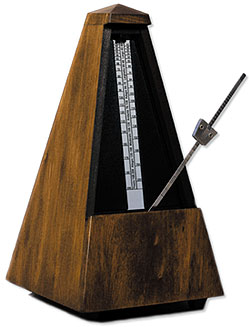
doing is practicing rudiments or exercises with a metronome. The metronome is a device which we use to set a mechanically consistent tempo and play selected passages along with the device so as to make our timing as consistent as possible. Although there were earlier attempts to invent such devices, the metronome as we know it was invented in Amsterdam in 1814 by Dietrich Nikolaus Winkel, although someone named Johann Maelzel may have lifted the idea and patented it himself in 1815. Beethoven was the first famous composer to write "metronome markings" in his music ( for example, Quarter Note= 150 and so forth). Now, stand alone metronomes are quite advanced; musicians use things called "Dr. Beat" to program odd meters and other complicated rhythmic training exercises. Furthermore, the use of computer software has given a whole new meaning to the idea of rhythmic precision. Studio drummers are expected to be able to play along with "the click," or "click track." (I've had to do this in various studio settings as a drummer, and it is not easy. Many "jazz" drummers have a hard time with this.) In fact, the use of virtual software instruments has gotten to the point where if you want your drum track to be absolutely 100 percent precise, you can just program drums that sound almost exactly like real drums, thereby eliminating the need to make a drummer sit there and try to "play with the click."

It's interesting that when I looked up "metronome" on Wikipedia, I discovered this controversy:

Human beings seldom play music at an exact tempo with all the beats exactly the same. This makes it impossible to align metronome clicks with the beats of a musically expressive performance. This also has led many musicians to criticize use of a metronome. "Metronome Time" has been shown to differ from "Musical Time". Some go as far as to suggest that metronomes shouldn't be used by musicians at all. The same criticism has been applied to metronome markings as well.

And there were several interesting quotes which were against the metronome:

The metronome has no real musical value. I repeat, the metronome has no value whatsoever as an aid to any action or performance that is musical in intention. [...] refer by analogy to the sister art of drawing. Graphic artists understand well enough the essential and generic difference that exists between mechanically-aided drawing on the one hand and freehand on the other. Similarly, musicians ought to distinguish between (1) the sort of timing that results from dull, slavish obedience to the ticking of a soulless machine, and (2) that noble swing and perfect control of pulsation which comes into our playing after years of practice in treating and training the sense of time as a free, creative human faculty.
—The Amateur String Quartet by James Brown III
 ... this series of even, perfectly quantized, 16th notes, is no more evocative of samba, than a metronome would be. In fact, this representation neglects what makes up the samba essence in the first place — the swing!
—Understanding the Samba Groove by Pedro Batista
 [...] using the metronome as a constant guide to ramp up the speed or to keep the rhythm. This is one of the worst abuses of the metronome. [...] If over used, it can lead to loss of your internal rhythm, loss of musicality, and bio-physical difficulties from over-exposure to rigid repetition
—Fundamentals of Piano Practice by Chuan C. Chang

Reading these quotes makes me very conflicted; one of the first things I ask my students who are having trouble with rhythm is, "Do you practice with a metronome?" (It's also weird because I don't practice with a metronome very often, although I did when I was younger. I used to spend a lot of time recording seqence tracks on keyboards and then in the computer program Logic, so I spent time "playing to the click," so to speak.) My students will say that they use the metronome, but It's hard for me to tell. I think you should use the metronome for practicing certain grooves or passages, but it's true that you also have to develop your own sense of internal time; you can't use the metronome as a crutch. You can't(well, you shouldn't....) have a metronome on stage while you play( I realize some bands play to a click....). You need to develop your sense of how to play with others. This might be actually more important that having good time. Bands that sound good fluctuate TOGETHER; they shift with each other as they play. I also suggest playing along with recordings, which I think can be highly beneficial for young musicians.

I found something called "In Search Of The Click Track" which really blew me away. The site shows various drummers performances with the tempo fluctuation interpreted by a graph. The real human drummers had lots of fluctuation, while the pop songs with "The Machine" were flat-lined. Stewart Copeland, the drummer from The Police, had a lot of fluctuation, as did Bernard Purdie on James
Bernard Purdie, one of the most recorded drummers
Brown's "Say It Loud(I'm Black And I'm Proud)." It just made me think about whether we want our music to be metronomic or just have a good feel and not worry about it so much. I think if you are rushing or dragging enough to where it's really noticeable, then it needs to be addressed. However, I think having a little bit of wiggle room is good for the future of music made by humans rather than by computers. Computers and metronomes are tools for humans to create music. We shouldn't be slaves to them.

On that note, I leave you with a decidedly human track from a forthcoming album I'm working on. This features my band Theoretical Planets, which is Jon Lakey on bass, Nicole Glover on tenor and soprano saxes and Joe Manis on tenor and alto saxes. Enjoy!