Showing posts with label Jazz History. Show all posts

Sunday, January 24, 2016

ORIGINAL JAZZ

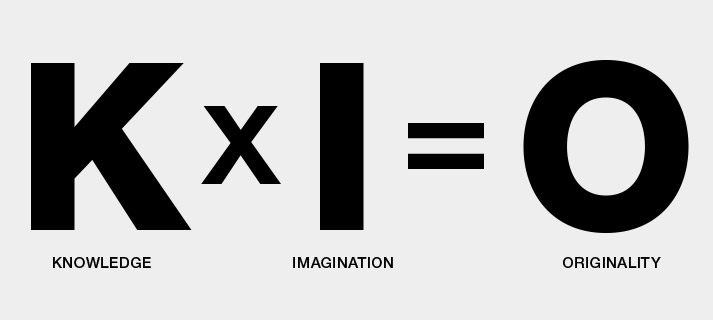
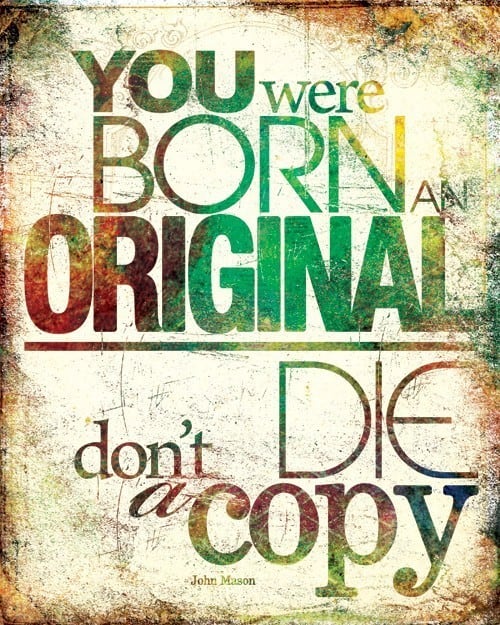
The Case For Original Jazz

Imagine a world without Thelonious Monk’s music. Imagine a world with none of Wayne Shorter’s music. Imagine a world where no one would say, “ Let’s play something by McCoy Tyner.” In this alternate world, Coltrane never wrote “ Moment’s Notice, “ never wrote “ Naima,” never wrote “Giant Steps.” In this same world, Joe Henderson never wrote “ Recorda-Me,” or “ Serenity,” or “Black Narcissus.” He also never had a career resurgence with “ Lush Life: The Music Of Billy Strayhorn,” because Billy Strayhorn, in this alternate world, never wrote “ Isfahan,” “ Upper Manhattan Medical Group,” or “ Blood Count.” I think most true jazz lovers would agree that this is a world we would rather not live in.

 I want to make the case for original music. What do I mean by “original?” In some ways, “ original” implies a unique approach, something breaking new ground, or something that revolutionizes a
musical genre or a group of musicians, or even a generation. That’s certainly a wonderful thing. However, I’m really just talking about new content. We can’t expect that everyone who writes a new song to reinvent the wheel. Furthermore, it’s oftentimes difficult to see the unique approach or new ground being broken upon the first hearing. Then, the word of this new approach has to permeate the musical society. Thelonious Monk was doing innovative things in the 1940’s, but the world did not really recognize this until 20 years after the fact.

But the desire for the new is a natural one. Those who never travel want to see “new places” and
have  “new experiences.” Many of us get excited about trying a “new restaurant” or going to a “new” bar, even if they get the same alcohol they drink at the “old” bar. We love babies because they are
“a new addition” to the family”, and some of us fall in love with a lover because it all feels “new.” Many game shows enthusiastically offer “ A BRAND NEW CAR!” as their prize; I think if the prize was “ A USED CAR WITH 70,000 MILES ON IT THAT NEEDS A NEW ENGINE BLOCK,” I have the inkling that the contestants would probably not jump up and down.

In order to have a stable life, when we “settle down” ( meaning marriage, family, house, job, community, etc…) we accept that many things in our lives, at least in an overall sense, will most likely not be new. For this reason, in our artistic life, or in our search for entertainment( music, visual art, food, travel, movies, TV, plays, books, shopping, etc…), we look for “ the new” because it is the safest way to experience newness. Movies and books and paintings and plays take us to new places, spend time with new people, allow us to “experience” new things, without all of the hassle of ACTUALLY going to new places and so forth.

This is why I love to compose new music, and why I am an advocate of new music. The idea of
creating something new from scratch is another natural need of man. Some people cook food, some people make beer, some people build model airplanes, some people write short stories or paint. I write music. I do it because I love the satisfaction of putting melody, rhythm, harmony, and structure together to make something that perhaps a few hours or even minutes before didn’t exist. Furthermore, musical composition is a world where no one can tell you you’re wrong (which is quite untrue of the real world). Even a composition teacher cannot tell you you are wrong. They can only give you advice. You are never wrong when you are composing music.

Also it is essential to note that, in jazz, a composition might seem like it’s not comparable to a Beethoven Sonata. However, the beauty of jazz is that our compositions are “ improvisational vehicles;” they are topics of conversation given to us by the composer where we can improvise our own take of the melody or harmony or rhythms. To be perfectly honest, I really see composing and improvising as interrelated; they are the same process at different rates. The fact that you can “improvise” within a “composition” but also develop a “ composition” while “improvising” is what makes it all come together. Furthermore, a new composition makes you improvise differently.

I can’t help but lament the fact that, while in some American genres like Country, Rock, Pop, and Hip-Hop, there is an assumption that 98 percent of the time, an artist in this genre will bring their original music to the show or recording session. If a band in this genre has a book of music with the majority being tunes that are already associated with artists, they are usually considered “cover bands.” A cover band, while often lucrative for musicians, is usually a band that will never rise beyond local success playing weddings, bars, and local outdoor festivals. You won’t see a Journey cover band performing on Saturday Night Live. It’s just not going to happen.

In Jazz today,  it seems as though there is this increasing trend of “tribute” concerts. A jazz artist today has arguably less opportunity if they insist on performing their own original music. Instead, the pressure is to present concerts called “ The Music Of [ Insert Famous Jazz Legend Here].” Perhaps this type of concert draws more crowds in a world where jazz is steadily losing what’s left of it’s popularity. Jazz listeners might not know Steve Wilson, but they would come to a concert called “Steve Wilson presents A Tribute to Cannonball Adderly,” simply because they have heard of Cannonball Adderly. Steve Wilson has some truly great compositions, however, the public will never get to know them if he is always doing tributes to ( meaning the music of) someone else.


What if Thelonious Monk only performed the music of Duke Ellington? What if McCoy Tyner only did tributes to Gershwin, or Cole Porter? What if John Coltrane couldn’t work unless he did “ A Tribute to Lester Young?” What if Wayne Shorter couldn’t work unless he did “ A tribute to Jerome Kern?” Back in our alternate world, an entire body of jazz composition has been wiped out. One of the hip things about the Hard Bop era is the efforts to return to the roots of the music ( blues, gospel, danceable rhythms) in order to have a wider appeal, and YET, the great Hard Bop composers like Lee Morgan, Horace Silver, Wayne Shorter, and Benny Golson never stopped creating their own music. What if they had only played jazz standards? We would missing a HUGE body of work.

Jazz is a living music. Jazz musicians improvise, and we write our own music, and we have our own concepts. it doesn’t have to reinvent the wheel; it’s having the freedom to make our own musical decisions. If jazz musicians can’t do that, then jazz will become like classical music: music which reminds us of history, a musical museum, a look back in time. I’m not anti tradition; indeed, I teach Jazz History at Portland State University, for crying out loud!Plus, I insist my students know other people’s tunes as part of their repertoire studies. I think that jazz, differently from American genres like Country, Rock, Pop, and Hip-Hop, uses the lessons of history to move forward. The question is, do we want to move forward?
"I wish I could get The Rite Of Spring played, but I'm too busy with these Mendelssohn tributes....."


Monday, August 31, 2015

Coltrane Time


I recently performed at Jimmy Mak's in Portland with trombonist Steve Turre. In addition to having drummer Charlie Doggett on the bandstand, our bassist was the great Chuck Israels. During the soundcheck, Turre and Israels were trading great stories. One story came up regarding the fact that Israels had recorded with Cecil Taylor. I said, "Really?" Israels elaborated on a record date from 1958, when Israels was 18 years old. The recording, now known as "Coltrane Time," was actually originally released under Cecil Taylor's name  in 1959 as "Hard Driving Jazz." The line up is Israels on bass, John Coltrane, Cecil Taylor, Kenny Dorham on trumpet, and Louis Hayes on drums.

What? That is an INSANE line up. I had never heard this recording. I can only imagine what it would be like for an 18 year old bassist, to get to record with these legends. I looked up the recording on wikipedia, and there is mention of a "tension filled" recording session. " Everyone says that there was tension, but it's not true," said Israels. " Everyone was very nice and it was a surprisingly smooth date." Israels
Chuck Israels
mentioned that it took a minute to adjust to Cecil Taylor's comping, which, if you take a listen, is definitely providing some rhythmic tension, but the contrast in personal styles is fascinating. When I went home and checked out the recording, I was surprised at how " inside" Cecil Taylor sounds; he's making the form and the changes, but in a very abstract way. " They even recorded my tune, 'Double Clutching,' which was a contrapuntal exercise."

If you get a minute, give this one a listen. Musicians often joke about putting together strange rhythm sections and collections of players( for example, " Hey, what about a band with Kenny G on sax, Al Hirt on trumpet, Wynton Kelly on piano, Henry Grimes on bass, and Alex Van Halen on drums? Totally RAD, dude!"). However, all kidding aside, sometimes weird line ups of musicians that might seem like an odd fit can produce intriguing results.


Sunday, March 8, 2015

Hal Galper Masterclass: " Masters Need To Play With Students"

The great Hal Galper
Portland State was recently lucky to have the great pianist and educator Hal Galper for a masterclass. Galper paid his dues as a member of the Cannonball Adderly group for three years and then the Phil Woods group for about ten years. He's made some great albums as a leader ("Speak With A Single Voice" being my favorite) and has been working steadily with his trio of Jeff Johnson on bass and John Bishop on drums for many years. Galper has also written a number of great books on jazz, including " The Art Of Comping" and " Forward Motion."

Galper didn't play much during the class, but he spoke and took questions for two solid hours. One of the things that really rang true with me is when I asked him, " In the absence of the apprenticeship system, with the lack of true bandstand opportunities like what you had in the 60's and 70's, how do we recreate that in the academic environment? " Galper responded, "Teachers have to play with their students." He went on to talk about non-verbal instruction, and how oftentimes academia is skeptical of this type of teaching and learning. " Every master teacher should have his own band with students playing in it. This is the best way for young players to learn."

Indeed, I spent most of my early career playing with older musicians from whom I could learn. So much of today's landscape is students playing with their classmates, and then getting out of school and playing with their peers. There are few comparable bandstand " schools" like Art Blakey, Betty Carter, Horace Silver, and so forth, working today. There's nothing wrong with peers playing together, however, musicians of the same level( especially of lower experience levels) playing together tends to become an echo chamber with no perspective beyond their own limited experience and wisdom.

I personally would never compare myself to Art Blakey, Betty Carter, Horace Silver, and so forth; however, since I've been a teacher, I've tried to find opportunities for my students who I felt were ready to go to the next level. My latest CD, "Risky Notion" ( available on Itunes, people, how's THAT for shameful self promotion....) features two of my best students from PSU; saxophonist Nicole Glover and bassist Jon Lakey. I don't believe I'm being presumptuous by saying that Glover and Lakey have learned a ton from playing and recording with this group. I think it's also been good for saxophonist Glover to play alongside Joe Manis. Manis is kind of a beast on the tenor and it's been interesting to see how Glover has been inspired by his abilities without making every song into a "cutting contest." It's made her solidify her own concept even more.

Galper also had some interesting advice about becoming a professional musician in this day and age: " I tell all my students to quit! I say you should only do this if you have no choice. If you do have a choice, meaning you have options, eventually, you will make the choice not to do it anymore. But if you just HAVE to play music, then you should." I know that a lot of the students present got a lot out of that kernel of wisdom, as did I. Believe me, sometimes I think I should finally get my Real Estate license and leave the dream of jazz behind. But for the time being, I'm still have the compulsion to play and work on music. Thanks, professor Galper, for giving us the truth.


Saturday, February 21, 2015

RIP Clark Terry


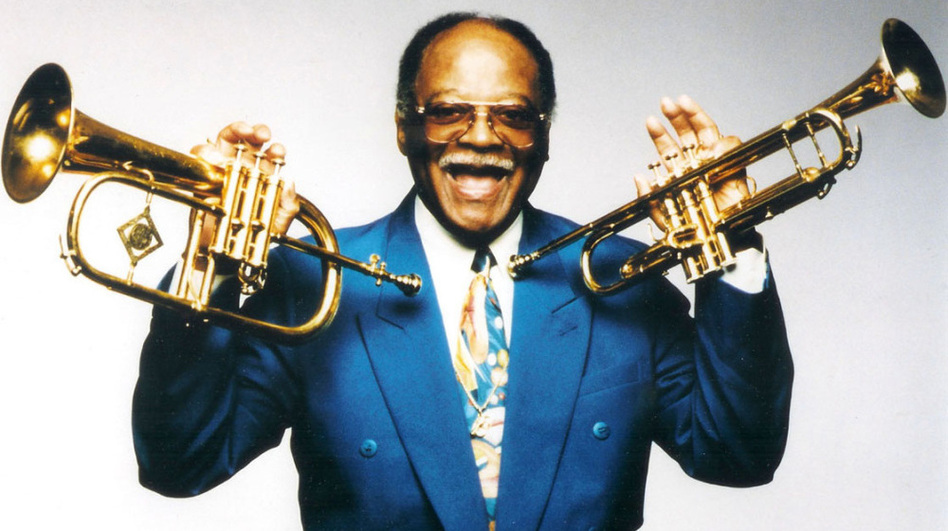
The jazz community is saddened by the loss of the great trumpeter Clark Terry. One of the first jazz trumpeters I ever heard as a middle school student, Terry has been an inspiration to so many. He's underrated in someways, but he had an extremely long career( so many trumpeters in jazz seemed to die young) and played a very physical instrument extremely well even as the rest of his body failed him. He was 94 years old! Terry played with Duke Ellington AND Count Basie, which is pretty impressive on it's own. Miles Davis looked up to him, and Terry was one of the first great flugelhorn players.He was the first African American musician to be on staff at NBC in 1960. Truly a great muscian, he also had his humorous side; if you haven't heard his "Mumbles, " you are in for a treat.

There is a recent film about Terry called " Keep On Keepin' On" which I haven't seen yet. ( I'm sure it's better than Whiplash.) I'm glad they were able to get it done before he passed. Let's remember Terry by listening to his music.


Friday, December 26, 2014

Kansas City Lightning: The Rise And Times of Charlie Parker


Say what you want about Stanley Crouch's opinions on jazz; I've always been impressed with Crouch's writing. "Kansas City Lightning: The Rise And Times of Charlie Parker" is an enthralling read. It's history that reads like fiction. Crouch gives an intimate account of the humble beginnings of Parker, arguably one of the most if not THE most important early figure in jazz. Crouch is so descriptive, you feel like you are actually there in depression era Kansas City. Many books on jazz history can be dull, easily getting bogged down with names and dates. Crouch's presentation draws you in not only to the twists and turns of the life of a troubled genius, but he also helps us understand the foundation on which Parker's genius was built in terms of jazz before bebop: why Kansas City was important in the development of blues and swing in jazz, why musicians like Walter Page, Jay McShann, Count Basie, and Buster Smith were essential to the next step in the development of the music.

Reading about music and musicians can often make one want to put down the books and listen to the music instead. Crouch may assume that the reader is already aware of Parker's musical genius. Crouch's in depth descriptions of the drama of Parker's personal turmoil, whether with drugs or his first wife Rebecca or his yearning to be a great musician beyond Kansas City, will hopefully make the jazz novice seek out recordings and make jazz aficionados revisit Parker's music. I've definitely gained more detailed inspiration for my jazz history classes from this book. "Kansas City Lightning: The Rise And Times of Charlie Parker" will make you look at the transition of jazz from swing to Bebop in a whole new way.


Monday, August 11, 2014

Satire


Sonny Rollins, Jazz Master
I enjoy a good joke as much as anyone. I also consider myself open minded in terms of humor. I enjoy a wide spectrum of comedy, from Monty Python to Martin Lawrence, from Jerry Seinfeld to Andrew Dice Clay, from Dave Chappelle to Ellen DeGeneres and everything in between. However, sometimes, the joke just doesn't work. Worse than a joke not working is when it's unclear whether it's a joke or not, or unclear for which audience the joke is intended. Case in point, the recent New Yorker piece, "Sonny Rollins: In His Own Words"   is supposed to be satirical( which is why the editor makes a note of it at the top of the article). The article was actually written by Django Gold, a senior writer for The Onion, which is a fake news magazine that I usually think is hilarious. Unfortunately, Gold was somehow way off on this one; writing as if it's Rollins giving an interview, Gold is more sophomoric and absurd than clever.

Jazz might be the stupidest thing anyone ever came up with. The band starts a song, but then everything falls apart and the musicians just play whatever they want for as long they can stand it. People take turns noodling around, and once they run out of ideas and have to stop, the audience claps. I’m getting angry just thinking about it.

I released fifty-odd albums, wrote hundreds of songs, and played on God knows how many session dates. Some of my recordings are in the Library of Congress. That’s idiotic. They ought to burn that building to the ground. I hate music. I wasted my life.

I can see what Gold was trying to do: make Rollins say something so extremely the opposite of what he would say that it would potentially be hilarious. As if I wrote something like, "Ronald Reagan: In His Own Words," and wrote something like:

That whole thing about "Government isn't the solution, it's the problem," was just kind of a joke. Tip O'Neil came up with it one night while we were having dinner at the Old Ebbitt Grill. We had consumed about 2 bottles of vodka between us when he blurted it out, as well as something about "trickle down economics," which was probably more to do with vodka trickling down his shirt. After I gave that silly inaugural address, Republicans took that sound byte and really ran with it. I was just trying to be funny, kind of break the ice a little bit. But everyone was taking it so seriously. I guess I was just too embarrassed to admit that it wasn't true.

Iran-Contra? Of course I knew about it. Truth be told, I went to college with the Ayatolla Khomeini. Back then , he was know as Freddie, Freddie Khomeini. We used to hang out all the time in the late 50's. Now that I think of it, he still owes me 26 dollars. So sure, 1979 rolls around, I called in a favor. Obviously, the Tehran Hostage Crisis makes incumbent president Jimmy Carter look bad, and then, bam, I got to be President for 8 years. Oliver North took the heat, saying I didn't know anything, of course, but  in truth I knew every detail. I masterminded the entire thing from day one. This is all off the record, right? 

Anyway, whether you think that's funny, or even know who Ronald Reagan was, hopefully you see my point. In my example, it's quite clear that it's a joke, and it  references in an attempt to be clever as  well as relevant. Perhaps there are a few key differences. One is the person being lampooned. Ronald Reagan is, sadly, way more famous than Sonny Rollins because he was a major political and historical figure, and people who were politically aware during the 80's would possibly get a chuckle from the specific references( trickle down, Khomeini, Oliver North, etc...). The Rollins piece has some nice references, but the tone is perhaps not consistent enough to make sense. It's so on the absurdist side of things.

The saxophone sounds horrible. Like a scared pig. I never learned the names of most of the other instruments, but they all sound awful, too. Drums are O.K., because sometimes they’ll drown out the other stuff, but it’s all pretty bad.

Now, maybe if this had appeared in The Onion, it would have been fine. I think it's appearance in the New Yorker is just confusing. Maybe also, it's a little bit too close to home because let's face it, the vast majority of people probably think the saxophone sounds horrible. In that sense it would be like a comedian trying to tell Israeli-Palestinian jokes 3 weeks from now: "TOO SOON!"  ( Although my piece may perhaps ring a bit to true for some folks as well....)

As to be expected, after this piece was published, Facebook lit up like midtown Manhattan on Christmas Eve. Jazz musicians were angry. Even Sonny Rollins himself chimed in! Spike Wilner, jazz pianist and proprietor of Small's wrote a letter to The New Yorker:

Not only was it not funny but also vague enough to be construed that it was actually “his own words”.  Mr. Rollins is one of the most beloved figures in jazz, renown for his uncompromising artistic integrity.  Why at age 83 after a lifetime dedicated to the music he loves and champions he needs to be the subject of ridicule in your magazine is beyond me.  Instead, the New Yorker should publish a profile celebrating the life and accomplishments of this great American artist.  Jazz is already a much maligned and misunderstood art form.  An article like this does a great disservice to the music and the musicians who spend their lives playing it and is beneath the stature of your magazine.

I believe Wilner hits it right on the nose. Hey, New Yorker, what other beloved elderly figures are  next on the list to lampoon? Mother Teresa? Benny Golson? Jasper Johns? Mikhail Gorbachev? Hopefully, no one is missing why this article, while not a crime against humanity, was certainly in poor taste.

As to be expected, Nicholas Payton had an understandably harsh and extremely well written view of the article:

Here’s one of the most respected American periodicals posting a picture of a somber-faced Sonny with a piece “in his own words,” rhapsodizing about how he hates music and he’s wasted his life. Where’s the humor in that?

I get that White people and Black people have cultural differences and thus a different sense of humor. Given that to be the case, White people: stick to satirizing those who get your sense of humor. Leave Black people be. You’ve done enough over the past 500 years. Black life in a world of White oppression and supremacy is satirical enough. We don’t need your help adding to it.

And maybe Payton goes off on a tangent a little in this next bit, but it's actually pretty on point:

Meanwhile in Rolling Stone magazine, a real article came out that reads like satire. Tony Bennett and Lady Gaga are doing a “Jazz” album. Tony goes on in this piece to say about Gaga, “She’s as good as Ella Fitzgerald…”
Nigga, please?! Lady Gaga ain’t fit to wear Ella’s dirty draws.

 Indeed, if somebody came out and said, " Kenny G's just as good as Charlie Parker," it would be hard not to want to kick their ass. Even if they were elderly. (I think Tony Bennett might be a little foggy on what Ella Fitzgerald actually sounded like...)

Payton's viewpoint brings it all home. Sonny Rollins as an elder statesman of jazz enjoys success which few musicians attain; however, as an African American living through decades of inequality in the United States, Rollins has endured things to which white people just cannot relate. It seems as though the younger generations, becoming farther removed from the Civil Rights Movement, are less aware of the scars of history. Furthermore, the American Idolization of our culture makes people less aware of the origins of American music as well (which is why the top R&B artists these days seem to be all white). To have to hear Tony Bennett say that about Lady Gaga is so outrageous, and yet, it seems as though nonsense is happening all around us and we've all just come to accept it. Big Corporations don't pay any taxes, innocent people die every day, incredibly mediocre actors and musicians become millionaires while ACTUAL TALENT becomes more of a liability than an asset. There's the real joke. 

You would think with all of this mishagos, the writing world would get the message: " Hey, jazz musicians find this offensive, and you are just going to piss people off. Find literally anything else to do a satirical piece on. Leave music and musicians whom are fighting for survival out of it." Well, apparently Justin Moyer didn't get the memo; his piece for The Washington Post, "All That Jazz Isn't All That Great" seems at first like trying to jump on some sort of anti- jazz bandwagon:

Jazz is boring.
Jazz is overrated.
Jazz is washed up.
Unlike a poorly received New Yorker piece purportedly written by jazz great Sonny Rollins, this is not satire.

Though Gold’s piece elicited an angry response from Rollins and outrage under the Twitter hashtag #rollinstruth, it was, as they say, funny because it was true. Jazz has run out of ideas, and yet it’s still getting applause.

I studied jazz while an undergraduate at Wesleyan University and had the privilege of learning from, at varying distances, some of the genre’s great performers and teachers, including Anthony Braxton, Pheeroan akLaff and Jay Hoggard. I appreciated that these generous African American men deigned to share their art at a quite white New England liberal-arts school. But I just didn’t get their aesthetic. Like cirrus clouds or cotton candy, I found jazz generically pleasing, but insubstantial and hard to grasp.

Moyer goes on to write a laundry list of reasons for why jazz, a kind of music which motivated him to pursue a degree,  is so boring. For example:

2. Improvisation isn’t all it’s cracked up to be.
The knowledge that great music is improvised makes it more remarkable. But the fact that music is improvised doesn’t make it great. If it did, Phish and the Grateful Dead would be better than they are.

“Even when they are not soloing, members of a jazz band have to be intimately attuned to the music at all times because they never know what direction it might take,” according to Loren Schoenberg, a conductor and saxophonist writing in conjunction with the Ken Burns documentary “Jazz.” “If you don’t, you may, as John Coltrane once put it, feel as though you stepped into an empty elevator shaft.”

Unfortunately, rather than providing the thrill of standing at a precipice, improvisation by the likes of serviceable, forgettable, uncontroversial players such as guitarist Wes Montgomery is perfect for browsing at Barnes and Noble — or piping into elevators.

Unlike the New Yorker piece, there is a clear statement that " this is not satire" within the first few sentences. You could imagine that this would create even more animosity in the jazz community.

Look, we already know, and have known for a long time, that jazz after 1940 is not universally loved. It doesn't mean we shouldn't be true to our own musical aspirations. My feeling is that these days, jazz musicians are doing it because they love it, because they believe it's important, and they love to play for the small but passionate audiences(mostly in Europe and Asia) who know and love this music and don't find it boring. We aren't doing it to get rich. We do it for what one might say are more noble reasons than many other so called "popular" styles. Indeed, so many "hip hop" artists , in a genre which at one time had an incredible political awareness, now mostly rap about how rich they are or  how rich they wanna be, or just how great they are. Many of today's music stars seem to be pretty faces that are part of a huge "music industry", and yet calling them "musicians" would seem rather ironic.

I realize we are a capitalist nation, but there is still a difference between being a professional artist on one side and being a sell-out on the other side. Why won't we read articles lampooning Katy Perry, or Kayne West? Why won't we read overly intellectual opinion pieces in The Washington Post about how today's country sucks, or about how today's pop music mostly sounds like a bunch of morons shouting over a car alarm? I really can't say. All I can say is, if you don't like jazz, DON'T LISTEN TO IT! But we are already down. STOP KICKING US!


Thursday, June 19, 2014

RIP Horace Silver


Horace Silver was one of the giants of jazz. One of the creators of Hard Bop, Horace Silver brought jazz back to it's funky, soulful, bluesy roots. Furthermore, he was one of the most prolific jazz composers. As a bandleader, he was comparable to Art Blakey, Miles Davis, and Betty Carter, in that getting a chance to play with him meant the "seal of approval". As a pianist, his percussive attack, thundering left hand, aggressive comping, and clear, direct right hand were unmistakeable. Horace Silver has left us a huge body of compositions to play(everybody knows "Song For My Father," "Peace," Strollin," and "Nica's Dream") as well as a huge discography to listen to. I've always thought it was interesting that as great a musical force as Horace Silver was, it seemed as though most jazz pianists don't claim his as an influence. Horace Silver died yesterday after a number of years of declining health. I did a tribute to his music this past December in Portland for the PDX jazz series. Let's continue to listen to Silver's music; let's continue to perform his compositions. RIP Horace Silver.

Sunday, September 22, 2013

Yes, I Can Say Sammy Davis Jr. is a Jazz Singer

When folks talk about the great Jazz singers, we hear about Ella Fitzgerald, Sarah Vaughn, Shirley Horn, Joe Williams, Nat "King" Cole, Little Jimmy Scott, Billie Holiday, and so on. But why not Sammy Davis, Jr? I've wondered this for a number of years. Is it because he's thought of as an "entertainer?" Or is it because he was part of the "Rat Pack?" Is it because he had some hit songs which I suppose could be considered "corny" such as "The Candy Man" and "Mr. Bojangles?" All of that being true, Sammy Davis could play instruments and it was legend that Davis used to sit in with the Count Basie band on every instrument. I find Davis' phrasing, intonation, and interpretation to be marvelous.
This version of "Who Can I Turn To?" is not the "jazziest" version, however, it's impeccable. Now, let's look at Sammy Davis Jr. side by side with the great Ella Fitzgerald....

Ok, so he's got a great voice, great stage presence, great phrasing, AND he can scat sing his butt off. If you still aren't convinced, check THIS out:
WOW! He's a jazz drummer! And he plays great blues on the vibes! How many of the aforementioned jazz singers could do THAT! And yet, Davis is rarely mentioned as a jazz anything. In fact, if you look at this list of 100 greatest jazz singers, Davis isn't even on the honorable mention list! I would take Davis over MANY of those mentioned on this list. In terms of hipness and depth of artistry, check this amazing interpretation of "Maria" from "West Side Story":

I'm enthralled! He doesn't need any harmonic accompaniment to bring the song to life. Here's another example of Davis and drums:


The rhythm, the vocal sound, the "jazz" phrasing, the freedom with the song, the enunciation, is without reproach, in my humble opinion. Even when he goes into some British accent for comedic effect(this was for the BBC), it's still amazing. He is an entertainer, after all. But within that ability to "entertain" lies a great jazz singer, one of the greatest. ( I like how he introduces the drummer at the end. What a mensch thing to do.)

Someone might say, "Well, he isn't really an improviser!" Lot's of jazz singers don't do a lot of scat soloing, and we've already proven that Davis actually can do that as good as or better than other jazz singers. But he is so free with his interpretation of these melodies, it's so conversational and effortless.

The story of Sammy Davis Jr. is pretty remarkable: Born in Harlem, raised by his grandfather, joined his father in their vaudeville act at age 3, was shielded from racism until serving in the army during WWII, began his singing and film career in the 1950's, converted to Judaism after a car accident took one of his eyes, was active in the Civil Rights movement even when African Americans did not embrace him, and died at 64 of throat cancer with millions owed to the IRS and others due to excessive gambling and overspending. There's more to it than that, of course. As for his place in musical history, I believe Sammy Davis Jr. should be on that list of jazz singers. If not because of everything I just said, just out of respect for his talent.

Did I mention he could tap dance? Can Diana Krall tap dance?


Sunday, July 7, 2013

The Buster Williams Interview


I first heard bassist Buster Williams on a Herbie Hancock recording called "VSOP Live." I remember thinking that their version of Hancock's "Toys" was pretty wild stuff. In addition to hearing him on some other recordings like Hancock's "Sextant", the group Sphere's "Four in One", or Sarah Vaughn's "Sassy Swings The Tivoli," my friend David Ephross and I used to sit around and listen to a recording Williams made as a leader called "Something More." Ephross transcribed some of the tunes off of this recording; we would play Williams classic "Christina" on many gigs. Williams is a gifted composer, but as a bassist, he is iconic; you always know his sound and his approach. There's no one else like him.

I met Williams at the East Coast Jazz Festival in ( I think) 1994. Williams called me for a 3 night gig in
 Detroit sometime around 1995. I didn't even live in New York yet; drummer Aaron Walker and I took the bus to New York to rehearse with Williams, and then drove to Detroit from New York. I remember thinking that I had a vibe with William's music, but maybe I wasn't ready to really do it justice. Aside from a week long stint at Bradley's( it was actually my gig with Williams and a then unknown tenor saxophonist named Mark Turner) I didn't really hear from Williams again until 2001; I was in Basel, Switzerland, checking my phone messages on a payphone: "George, It's Buster. I want you to join my band." I've worked with Buster on and off since then. The band was usually Lenny White on drums and Steve Wilson on alto and soprano, although we also had Stefon Harris on vibes occasionally. 

I had so many great experiences on tours and gigs with Williams' group over all those years. Playing with Williams requires total concentration. You can't just expect to plow through tunes; in Williams' own words to one drummer who was looking more at the charts than listening to the music: "ANYTHING CAN HAPPEN!" Williams, in the tradition of Miles Davis, always tries to hire musicians that inspire him, and that bring the music to a higher level. I always have fun on the bandstand trying to find just the right reharmonized chord to make Williams go "Whoooo!"


We just finished a weekend jaunt at Smoke in New York City. I was able to sit down with Buster in the dressing room and score this wonderful interview.


GC: So... How are you?

BW: Good, George. How are you doing?

GC: Good. How’s your health? Everything’s good?

BW: Great, yeah, everything’s good.


GC: Okay, good. What are your earliest memories of music, when you knew what music was in the world?


BW: Well, there was always music in the house because my father was a musician. He played bass, drums, and piano. He always had his musician friends over playing, they had rehearsals at the house.


GC: In Camden, New Jersey?

BW: Yeah. But even before then... at that time we had one of those roller pianos. You can play the rows with your foot and stuff. And my father was always playing his 78(rpm) records. Between the records and the roller piano... and I liked to sit there and play on the piano. Between the musicians and the piano and my father playing his records and
practicing - that was another thing. I loved to watch him play the bass, I thought it was just so brilliant. And I can’t remember a time where there wasn’t music. It was always there, as far back as I can remember.


GC: When did you start playing bass?


BW: I started playing the bass, I guess I was about 13 or 14 or something like that. After I begged my father to teach me - ‘cause I had asked him to teach me piano and he started teaching me piano and I didn’t stick with it. Then I asked him to teach me drums and he started teaching me the drums and I thought I was just going to sit down and start bashing and he’s talking about “mamma daddy” paradiddle and I said “nah, this isn’t what I want to do, I want to play the drums!” So anyway, I didn’t stick with that. But I marveled at him playing the bass. Also he played a record with Oscar Pettiford, where Oscar Pettiford played “Star Dust”, solo bass.


GC: Ah! That’s funny, one of my students just transcribed that and learned it.


BW: Really! But you know what captivated me? The way they had mic’ed the bass, I could hear his thumb squeak as he slid up and down the neck of the instrument. And that squeak - I mean, the notes were unbelievable but that squeak - it was just so personal. I don’t know, that never left my head. It was like a psychic event, I don’t know. But then when I heard that, I pleaded with my father to teach me the bass and he finally agreed.


GC: You were telling me a story before about him making you hold it with your thumb, right?


BW: Well he showed me the function of the thumb in the left hand. And the tendency - to play the bass correctly, it requires a sort of unnatural thing with your left hand. Well, unnatural until it becomes natural to you. And it caused pain. The natural tendency was to not do it correctly and just hold the neck, grab it like you’re grabbing a ball or a stick. And he refused to let me acquiesce to those cowardly measures. And that was my moment of truth, when I realized how strict my father was going to be, and that I wasn’t gonna get away with nothing. So I had that moment of “do I really want to do this?”. And I decided that I wanted to, and that it was worth the pain.

GC: So when did you start playing gigs?


BW: Well... let me see. I guess it was in junior high school. My father had a friend named Louis Judge, played saxophone. And Louis Judge had a gig and my father couldn’t make the gig ‘cause he had another gig, so he sent me on the gig. And I think that was one of my first professional jobs. I think I made $5. In those days, they called it a nickel. If it payed $10, it was ten cent. Twenty cent... fifty cent... hundred dollars was a yard.


GC: So you were in junior high... at what point did you start doing major gigs?


BW: Well... Jimmy Heath was in Philadelphia. And Jimmy Heath had a band that included a piano player named Sam Dockery. And Sam Dockery was from Camden.


GC: Would you say that Camden is kind of synonymous with Philly? Because it’s basically the same area.

BW: Yeah, it was right across the bridge. But Camden musicians always wanted to be known to have come from Camden and not Philly.


GC: Ah, interesting.


BW: In fact, when I left home to go on the road to go with Gene Ammons, I was admonished
by all of my Camden musician friends. “Hey man, when they do interviews, don’t tell them you’re from Philly, tell them you’re from Camden!” So to the day, that’s always... that’s where I’m from. Anyway, Sam Dockery was working with Jimmy Heath, and I was a “scener” by now. And I would go over to Sam’s house every day and play. Sam taught me a lot of stuff. And I wanted the gig with him and Jimmy Heath. And I mentally prepared myself for that gig. The bass player on that gig was also a bass player from Camden. His name was Bill Collick. Bill Collick, I liked the way he play. But I wanted Bill Collick’s gig. Well what happened was that Jimmy had a gig at a place on Vine Street in Philadelphia. It was one of those places where they had a dance, and people brought their own set up. They had two bands. The first band was Sam Reed, an alto player. And the other band was Jimmy Heath’s band. So I got the gig with Sam Reed. And the way I got the gig was there was a jam session at this club called Rip’s around the corner from where I lived. My father hosted the jam session, and on this Monday night my father gave me the gig. He said “you call who you want to be the band.” So I called guys from Philly and I called Sam Reed. Because I always figured that I wasn’t going to talk my way into my career, I had to play my way into my career. So if I wanted these guys to hire me, they had to hear me. And I wasn’t going to go and make myself a nuisance. So I got a gig, and I hired Sam Reed. And sure enough, on Wednesday, Sam Reed called me for a gig that was on Saturday, which was this gig where he was the band along with Jimmy Heath’s band. So Jimmy Heath heard me play with Sam’s band. That following week, I got a call from Jimmy Heath to join his band. So my strategy worked.


GC: And at a certain point, you went with Gene Ammons.


BW: And I was with Jimmy Heath and the time that I got the call to go with Gene Ammons.


GC: You were still a senior in high school?

BW: I had just graduated from high school. And this gig was Nelson Boyd’s gig, the bass player who played with Charlie Parker. He was a friend of my father’s. And just like my first gig, my father couldn’t make the gig, Nelson Boyd couldn’t make the weekend with Gene Ammons and Sonny Stitt. So he asked my father to do it and my father couldn’t do it, so my father sent me.

GC: Wow!

BW: So I worked with Gene Ammons. Friday night after the first set, him and Sonny Stitt told me they wanted me to stay with the band. So we played Friday and Saturday and early Sunday morning, like 5 in the morning, we left Philadelphia in two cars and went to Chicago. And I was on the road from then on.


GC: Wow... so you never went to college?

BW: You know, now during the time that I was with Jimmy Heath, I was attending Combs College of Music, in Philadelphia. And then I went on the road with Sonny Stitt and Gene Ammons, and I was still in college, trying to balance the two things. And when I’d come back, when we’d have some time off, I’d go back. I had this great teacher named Whiggins. And Whiggins was an astonishing piano player, he made some great inventions also. He helped me make up all my stuff, my courses. He was my primary teacher. So I never really sat in a classroom, other than his. He taught me composition, syntax, harmony and theory - he was just amazing. He was my all-around music teacher. He didn’t teach me anything about the bass - my father taught me all that. But he taught me so much stuff about music.


GC: It’s interesting, as people get older it’s easy to get accustomed to being a professional, but can you remember what it felt like to be in a car with these jazz heroes? Was that an incredible thrill?


BW: Oh, I’ll never forget it. Yeah. But you know, the thing about it George, I don’t know about anybody else, but for me, it’s still an incredible feeling. I marvel at what guys do on the bandstand. My biggest thrill in playing this music is what I get from the guys and girls that I play with. You know? I think it’s astonishing, just astonishing! And I’m always saying “how do they do that?” So I’m always trying to get to something. And I don’t think that that’s anything remarkable - I just think that’s what I’m supposed to be doing. I’m supposed to be trying to get to something, man.


GC: Always.


BW: So you know... as I get older, of course I know a whole lot more than I knew back then, but man, it’s sort of like peeling an onion skin. There’s no core like an apple, or a piece of fruit with a pit like a peach - there’s no end! So I can’t fathom myself thinking of it any other way because that’s the way it presents itself.


GC: So just going back - you were with Gene Ammons and Sonny Sitt - when did you move to New York?

BW: I moved to New York in 1968. I was with Gene Ammons and Sonny Stitt, and then I did a period with a lot of singers. I worked with Dakota Staton, then I went with Betty Carter, then I went with Sarah Vaughan, then I joined Nancy Wilson.


GC: Did you learn anything from working with all those singers?

BW: Oh, every one of them. Every one of them.


GC: What would you say to a young bass player, or rhythm section player, or really anybody that is interested in playing with singers?

BW: I’ll tell you, you know... see, there’s this weird idea that musicians don’t want to play with
Herbie Hancock, Buster Williams, and Billy Hart
singers. Well, everybody’s got their little idiosyncrasies. But I tell you, if you have an opportunity to play with a great singer, it’s something that’s going to shape your approach to music in a big way, and in a very positive way. Every singer I worked with, there’s something in particular that I took away. Sarah Vaughan had perfect pitch. Sarah Vaughan made me really pay attention to each note that I played. Betty Carter could sing a ballad slower than anybody could even imagine. So she taught me patience. And she had a sense of swing. Dakota Staton had a power about her. And Nancy Wilson was just - she had emotion. And see, the thing that every musician needs to know is the power and the significance and the real meaning of melody. And if you are working with a singer, you get to see the importance of these things. I remember one time my father was out on the road, and I was out on the road with Nancy Wilson. And we happened to be home at the same time. And I was telling my father how I was getting bored playing with these singers, playing the same repertoire over and over, and I don’t get a chance to express myself. My father told me, he says “I want you to remember that the true gift is to be able to have your instrument in your hand, night after night. If your job just demands that you play a whole note tonight, then you just play this whole note better tonight than you played it last night.” I’ll never forget that. That gave me not only a respect for the opportunities that I had, but also how to view everything as a point of development. How to use
everything to develop. In my career I’ve played a lot of different kinds of gigs, I’ve played rhythm & blues, all kinds of stuff. But I learned from my father that if you’re not in the moment, you’re missing the moment. And if you’re missing the moment, then you’ve missed a valuable time in your life that was necessary for you to appreciate the next moment.


GC: Wow. Very wise... (pause) So you were with Nancy Wilson when you got called by Herbie to play with Miles?

BW: Yeah. That was in 1967. And that was like a dream come true. I looked at each gig as a stepping stone to the next one. And Miles was it, it’s where I wanted to go. Interesting enough it came at a time in my life where I was making good money. And I had a wife and a house.


GC: You were still in New York?

BW: I was living in Los Angeles. Had a yellow Corvette Stingway...


GC: (laughs)


BW: I’m in L.A., I’ve been working with Nancy, she’s got me on retainer, and I’m working with the Jazz Crusaders, and I’m in the recording studio every day, I’m the number one sub for Ray Brown, and so everything was just great. So I got the call to go with Miles, and that’s just icing on the cake. But I couldn’t give up everything to stay with Miles, ‘cause Miles asked me. And I said “well, Miles, this is what I got.” And he says “well, I can’t give you a retainer.” And that’s it!


GC: Wow.


BW: And Nancy at the beginning of the year, you got an itinerary that covered the whole year. And she would take her times off but you knew when you were gonna be off, so you could play on other things. And I was still paid while she took her - what do you call them?

GC: Breaks? Sabbatical?

BW: Sabbatical! ‘Cause that’s how I worked with Miles for 5 weeks. She took another Sabbatical and I worked with him again, another 5-7 weeks, something like that.


GC: What was the most important thing you learned from playing with Miles?


BW: How to listen. How to listen, and how to respect what everyone else was doing. See, in that band, Herbie Hancock had developed this phenomenal ability to hear what everyone else was doing, and react to it in a way that wasn’t mimicking, he could react to it in a way that was not only answering what you said but preparing you to say what you wanted to say. It was remarkable. And Miles did the same thing. So Miles never told you what to do. He just demonstrated through his ability how to do it. I mean, I learned so much from Miles - see that was one of those times in my life that shaped the rest of my life. Miles had a sensitivity. When he played a ballad, you knew he loved ballads, he’d play a ballad that really described his heart. He could play any tempo and not be jarred by anything you did because he was always aware of the quarter note. He played that quarter note precisely. So whether it was a whole note or half note, eighth note or sixteenth note, or thirty-second note or sixty-fourth, he played it precisely. I’m still trying to do that.


GC: Have you seen Bob Gluck’s book about Mwandishi?


BW: Yes, it’s a very good book. He came to interview me when he was first preparing to start on that book. And then throughout his writing the book we talked off and on. I like the book. Have you read it?

GC: Yeah. What was the best thing about that band for you?

BW: Oh, the searching. The searching. The feeling that, if there’s no searching involved, there’s no creativity. I mean searching to the point of really denying yourself comfort. Searching to the point of - this is my quest, I’ve gotta find it, I’ve gotta find something tonight. And it wasn’t easy. It was painful sometimes. But the beauty of it was just the greatest reward.


GC: Can you tell me when exactly you discovered Buddhism and how that changed your life?

BW: That was in 1972. My youngest sister had started chanting. She was going through a divorce, and she told me that while she was going through this she was chanting. This is what she was chanting for, this is how she wanted it to go. And it was one of those nasty divorces. And she came out in top shape, against all odds. And I was amazed. But that’s not what necessarily made me chant. My wife was in a car accident, she had a brain concussion. She was going back and forth to the doctors, they gave her a couple of spinal taps and did all kinds of stuff with her brain, and the prognosis was very negative. But she ran into my sister one day and my sister told her about the chanting. And I was in Europe. My wife and I were seperated at that time, and I was in Europe with Herbie. I called my wife to see how she was doing, and she told me that my sister had told her about
Nam Myōhō Renge Kyō. I’m going “what is that? I don’t know what that is.” And says, “well, she wants me to go to a meeting, you think I should go?” So I said “sure, it sounds like it might be something that could help you.” So anyway, when I got back to the States I went to see my wife and she and my sister started telling me more about chanting and they took me to a meeting. And I found that all of the things that they were talking about made so much sense to me. And this religion was giving them something that my attempts at religion had never touched on. And I was a vegetarian at this time. But all of the things that I was doing weren’t even coming close to what kind of results they were getting from chanting Nam Myōhō Renge Kyō so I tried it. And you know, sure enough, I started seeing amazing results. When I started chanting, I had a prostate condition that I had had for ten years, and it had worsened to the point where they were getting ready to do an operation. And I was afraid of that. I started chanting, and just as it was time for me to go do this operation, my doctor checked me out and he says “wait a minute, you’re perfectly normal.” And this is after ten years of my prostate being swollen to the point of having to sit on hot water bottles. I couldn’t eat spicy foods, I couldn’t sit for long periods of time. I was constantly in pain. And the pain was gone, and my prostate was normal. And that was when I was 32 years old. Now I’m 71 and I’m still going. So that convinced me to continue, needless to say. There’s been revelations and benefits in abundance every day. But more than that, the change in my life that’s so subtle. It’s like your hair turning grey - you can try to watch it, but you’ll never see it turning grey. Putting on weight, you can watch but you never see it happen. You look at your fingernails, but you never see them grow. But the positive change, and the happiness that has come about in my life as a result of chanting has been amazing. Far beyond what I even dared to expect.


GC: Does Buddhism help you stay positive in the face of everything that we face in humanity these days?

BW: Oh yeah. Yeah, you know... if your environment has to become something that is unstressful to you, or something that changes in your favor... we all look for that. “If I had a better job.” “If I had a prettier wife.” “If I didn’t have all these children.” “If I had more money”. We all look for something outside of us to change, in order for us to change. But it’s totally the opposite. Buddhism teaches that if you change, then everything else will change. You’re here, and I’m here, but the environment could be totally different depending on each one of us, according to what’s happening in your life and according to what’s happening in my life. The puppy could come in, it’s a different environment for that puppy. The roach crawls around, it’s a different environment for that roach. So contentment, the feeling of happiness or not in your life is not determined by your environment, it’s determined by you. And that’s the great power of
Nam Myōhō Renge Kyō - it connects you with that unchanging force in the universe called the mystic law. “Renge” is cause and effect. Cause and effect. To chant Nam Myōhō Renge Kyō is to become in tune with this mystic law that’s in the universe, that’s in your life itself. So when you chant Nam Myōhō Renge Kyō, it’s like an explosion taking place in your life. Being out of tune, now you’re aligning yourself with this Myōhō Renge Kyō, this Buddha nature. And then you start seeing the changes in your environment, because your environment is always a reaction to you. So as you bring forth your Buddha nature, the Buddha nature in your environment starts to show. Things starts to work for you.


GC: Do you think that that kind of attitude has helped you musically, for example, being a sideman in countless different types of situations?

BW: Sure, sure. But I mean, the greatest thing is to be a sideman.


GC: Really?


BW: Yeah.


GC: Why?


BW: Because that’s when you learn something. It’s hard to learn something when you’re the boss. Ain’t nobody gonna tell you nothing. Plus, as the boss, you’ve got a whole bunch of different problems.


GC: (laughs) Yeah.


BW: But as the sideman, I can learn. I can listen, I can learn. So being a sideman has taught me how to be a leader.

GC: Right. So I assume you believe in the philosophy of apprenticeship?


BW: That’s the thing that’s missing these days. That’s the thing that can possibly destroy the music. I say possibly because I don’t think the music will ever be destroyed. We can sink to the lowest level, but we’ll always rise again. But the mentor-disciple relationship is absolutely necessary. It’s a requirement for learning this music. Without it, there’s always going to be something missing in a person who has not experienced that relationship.


GC: Your advice to young musicians?

BW: Choose another field! (laughs)

GC: (laughs) Wow! Well, uh, that’s...


BW: No no, I’ll tell you what - my advice to young musicians is to do it because you love it. Do it because you have to. Do it because it’s the one thing that makes you happy. Do it because it’s your decision. And strive to be the best, because that is your potential, and also, that is the real truth of the noble ego. And see, the other thing too, is that if you don’t strive to be your best, then you’re no good to anybody else. There’s a big poster on bus signs, out there in the street, of a picture of [Nelson] Mandela. And the caption is something of... inspiration. I mean, it’s great to be an inspiration to others. If you’re not, your whole life on this planet was for naught.


GC: Lastly, what do you think about tonight’s band?
[Buster Williams, Mark Gross, George Colligan, Paul Bollenback, Lenny White, Jean Baylor]


BW: I love it! We’re gonna kill! Taking no prisoners.


GC: Thank you, Mr. Williams.

http://www.busterwilliams.com/