Showing posts with label Jazz Humor. Show all posts

Sunday, January 24, 2016

ORIGINAL JAZZ

The Case For Original Jazz

Imagine a world without Thelonious Monk’s music. Imagine a world with none of Wayne Shorter’s music. Imagine a world where no one would say, “ Let’s play something by McCoy Tyner.” In this alternate world, Coltrane never wrote “ Moment’s Notice, “ never wrote “ Naima,” never wrote “Giant Steps.” In this same world, Joe Henderson never wrote “ Recorda-Me,” or “ Serenity,” or “Black Narcissus.” He also never had a career resurgence with “ Lush Life: The Music Of Billy Strayhorn,” because Billy Strayhorn, in this alternate world, never wrote “ Isfahan,” “ Upper Manhattan Medical Group,” or “ Blood Count.” I think most true jazz lovers would agree that this is a world we would rather not live in.

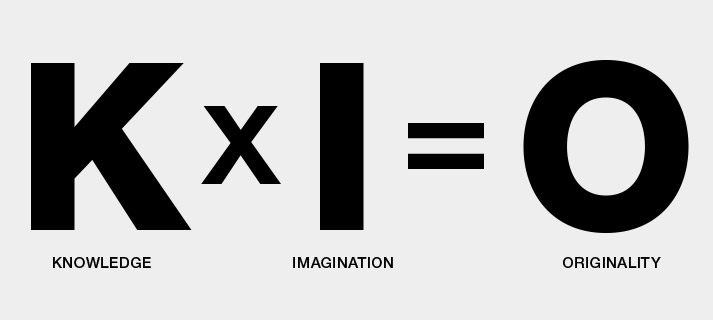
 I want to make the case for original music. What do I mean by “original?” In some ways, “ original” implies a unique approach, something breaking new ground, or something that revolutionizes a
musical genre or a group of musicians, or even a generation. That’s certainly a wonderful thing. However, I’m really just talking about new content. We can’t expect that everyone who writes a new song to reinvent the wheel. Furthermore, it’s oftentimes difficult to see the unique approach or new ground being broken upon the first hearing. Then, the word of this new approach has to permeate the musical society. Thelonious Monk was doing innovative things in the 1940’s, but the world did not really recognize this until 20 years after the fact.

But the desire for the new is a natural one. Those who never travel want to see “new places” and
have  “new experiences.” Many of us get excited about trying a “new restaurant” or going to a “new” bar, even if they get the same alcohol they drink at the “old” bar. We love babies because they are
“a new addition” to the family”, and some of us fall in love with a lover because it all feels “new.” Many game shows enthusiastically offer “ A BRAND NEW CAR!” as their prize; I think if the prize was “ A USED CAR WITH 70,000 MILES ON IT THAT NEEDS A NEW ENGINE BLOCK,” I have the inkling that the contestants would probably not jump up and down.

In order to have a stable life, when we “settle down” ( meaning marriage, family, house, job, community, etc…) we accept that many things in our lives, at least in an overall sense, will most likely not be new. For this reason, in our artistic life, or in our search for entertainment( music, visual art, food, travel, movies, TV, plays, books, shopping, etc…), we look for “ the new” because it is the safest way to experience newness. Movies and books and paintings and plays take us to new places, spend time with new people, allow us to “experience” new things, without all of the hassle of ACTUALLY going to new places and so forth.

This is why I love to compose new music, and why I am an advocate of new music. The idea of
creating something new from scratch is another natural need of man. Some people cook food, some people make beer, some people build model airplanes, some people write short stories or paint. I write music. I do it because I love the satisfaction of putting melody, rhythm, harmony, and structure together to make something that perhaps a few hours or even minutes before didn’t exist. Furthermore, musical composition is a world where no one can tell you you’re wrong (which is quite untrue of the real world). Even a composition teacher cannot tell you you are wrong. They can only give you advice. You are never wrong when you are composing music.

Also it is essential to note that, in jazz, a composition might seem like it’s not comparable to a Beethoven Sonata. However, the beauty of jazz is that our compositions are “ improvisational vehicles;” they are topics of conversation given to us by the composer where we can improvise our own take of the melody or harmony or rhythms. To be perfectly honest, I really see composing and improvising as interrelated; they are the same process at different rates. The fact that you can “improvise” within a “composition” but also develop a “ composition” while “improvising” is what makes it all come together. Furthermore, a new composition makes you improvise differently.

I can’t help but lament the fact that, while in some American genres like Country, Rock, Pop, and Hip-Hop, there is an assumption that 98 percent of the time, an artist in this genre will bring their original music to the show or recording session. If a band in this genre has a book of music with the majority being tunes that are already associated with artists, they are usually considered “cover bands.” A cover band, while often lucrative for musicians, is usually a band that will never rise beyond local success playing weddings, bars, and local outdoor festivals. You won’t see a Journey cover band performing on Saturday Night Live. It’s just not going to happen.

In Jazz today,  it seems as though there is this increasing trend of “tribute” concerts. A jazz artist today has arguably less opportunity if they insist on performing their own original music. Instead, the pressure is to present concerts called “ The Music Of [ Insert Famous Jazz Legend Here].” Perhaps this type of concert draws more crowds in a world where jazz is steadily losing what’s left of it’s popularity. Jazz listeners might not know Steve Wilson, but they would come to a concert called “Steve Wilson presents A Tribute to Cannonball Adderly,” simply because they have heard of Cannonball Adderly. Steve Wilson has some truly great compositions, however, the public will never get to know them if he is always doing tributes to ( meaning the music of) someone else.


What if Thelonious Monk only performed the music of Duke Ellington? What if McCoy Tyner only did tributes to Gershwin, or Cole Porter? What if John Coltrane couldn’t work unless he did “ A Tribute to Lester Young?” What if Wayne Shorter couldn’t work unless he did “ A tribute to Jerome Kern?” Back in our alternate world, an entire body of jazz composition has been wiped out. One of the hip things about the Hard Bop era is the efforts to return to the roots of the music ( blues, gospel, danceable rhythms) in order to have a wider appeal, and YET, the great Hard Bop composers like Lee Morgan, Horace Silver, Wayne Shorter, and Benny Golson never stopped creating their own music. What if they had only played jazz standards? We would missing a HUGE body of work.

Jazz is a living music. Jazz musicians improvise, and we write our own music, and we have our own concepts. it doesn’t have to reinvent the wheel; it’s having the freedom to make our own musical decisions. If jazz musicians can’t do that, then jazz will become like classical music: music which reminds us of history, a musical museum, a look back in time. I’m not anti tradition; indeed, I teach Jazz History at Portland State University, for crying out loud!Plus, I insist my students know other people’s tunes as part of their repertoire studies. I think that jazz, differently from American genres like Country, Rock, Pop, and Hip-Hop, uses the lessons of history to move forward. The question is, do we want to move forward?
"I wish I could get The Rite Of Spring played, but I'm too busy with these Mendelssohn tributes....."


Friday, January 1, 2016

New Year’s Resolutions II: Electric Boogaloo

New Year’s Resolutions 2016:

1. Read and Memorize all the works of Shakespeare. Be able to quote key verses at will, especially during faculty meetings, awkward dinner parties, and while buying groceries at Whole Foods. ( So when the Portland native cashier says , “How’s YOUR day going?” I’ll reply “We know what we are, but know not what we may be.” Hmm, maybe “ It is not in the stars to hold our destiny but in ourselves” is more appropriate….)

2. Memorize every song, tune or piece of music written between 1600 and 2016. (Actually, I’m going to make it easier on myself and just start at composers of the Baroque Era. I mean, If I’m leaving out Josquin De Prez, then I might as well leave out Constantijn Huygens, I mean, let’s be real, people!)
What? You Don't know any Constantijn Huygens tunes? Ok Let's play a blues....


3. Teach my 6 year old son and 1 year old son Latin, Greek, Spanish, German, Italian, Mandarin Chinese, Turkish, Urdu, Finnish, and Hungarian.
( Note to self: Teach myself Latin, Greek, Spanish, German, Italian, Mandarin Chinese, Turkish, Urdu, Finnish, and Hungarian.)


4. Get back into stand up comedy; maybe warm up with a few Portland open mikes, then schedule a tour of stadiums in North America, and then record my own one hour HBO comedy special by the end of 2016. Should be able to check that one off pretty quick….


5. Develop a 12 octave vocal range. I just bought renowned vocal coach Ingmar Hugenot’s 14 DVD series entitled “ How to Develop a 12 Octave Vocal Range in 13 Weeks.” The vocal warm-ups are a little odd; one of them involved sticking my head in a preheated oven….

6. Exercise: this is important because I think I need to balance cardio with strength training as well as flexibility. I’m determined to stick religiously to 7 cardio sessions a week, 8 weight training sessions a week, as well as two 90 minute yoga sessions a day every day. Since I belong to 24 Fitness, they will probably let me sleep in the men’s locker room.


7. I need to purify my diet. I think a no sugar, no salt, no fat, no meat, no fish, no dairy, no carb, no protein, no fructose, no gluten, no wheat, no calorie, no cholesterol, no soy, no nuts, no poultry, no starch, no yin, no yang, no fiber, no kosher, no halal, no frozen, no imported, no cooked, no raw, no sliced, no diced, no refrigerated, no spicy, no non- organic, no genetically modified, no flavor, and no pleasure diet would probably work wonders.

8. Find time for a second viewing of the cinematic treasures of our time, such as Dirty Dancing, Top
This won some Oscars, right?
Gun, Jaws 3, Battlefield Earth, Showgirls, and of course Plan 9 from Outer Space.

9. Figure out a solution to homelessness in America. Also, figure out how to use that solution to make an enormous profit.


10. OK, I’ll admit that last year, one of my resolutions was to solve the Israeli- Palestinian conflict And I’ll admit that I fell short on that one. Hey, I’m only human! You can’t win them all! I mean, clearly, the middle east is moving in a positive direction, and things are getting better, of course. With a little patience, and the power of positive thinking, I think that by this time next year, everything in the Middle East is going to be A-OK!

Happy New Year, everybody!

Sunday, November 29, 2015

Self Promotion?

When it comes to self-promotion, I'm probably the worst of all time. When I booked my Senior Recital at Peabody Conservatory, I didn't even put posters up in the halls; the only people who attended were my parents and some vagrants who wandered into the concert hall looking for free soup. ( I think the vagrants really liked the Hummel Trumpet Concerto, but they did not care for the heavy dissonance of the Hindemith Sonata.) I'm a pretty shy guy, although I've developed more confidence over the years; nevertheless, whenever I think about promoting myself as a musician, I always feel like I'm bragging. "Come down to the jazz club, see and hear how great I am and observe how others think I'm great, also..." Whereas some artists are natural born self promoters, and that gift has lead to their success, I've always put promotion low on my list of priorities. I'd rather practice than send out emails; I'd rather compose 10 new songs that no one will ever hear than book gigs and promote myself so that those 10 songs might actually be heard by an audience! (I hope they never ask me to teach a Business Of Music Class. " OK Class: Music Business. First lesson: FIND ANOTHER BUSINESS! See you next
week....)

I'm trying to come up with ways to promote my UPCOMING PERFORMANCE AT JIMMY MAK'S MONDAY DECEMBER 7th AT 8PM CD RELEASE. I've contacted local press, done some radio interviews, bought a Facebook ad (Lord knows who is seeing these ads) and put up posters( well, a grad student put up the posters.....) But I think maybe I need to do more. I'm sort of brainstorming on how to generate some last minute interest .  Some of my ideas include:

1. Buying a Megaphone and driving around Portland saying " HEY COME TO JIMMY MAK's ON MONDAY DECEMBER 7th AND SEE ME PLAY JAZZ MUSIC!" ( Hmm, maybe leave out the fact that it's jazz. Maybe if I say "COME SEE ME PLAY INDIE ROCK" and then maybe they just won't notice...)

2.  Coordinate my gig with Hanukkah celebrations( The 7th is the first day of this popular Jewish holiday. I could have a Menorah on the piano? Free dreidel when you buy a CD? Oy gevalt...)

3. Coordinate my gig with the anniversary of the bombing of Pearl Harbor. ( I wish I was joking, but most of my students did not know what happened on December 7th, 1941. I think some said, " stock market crash?" Oregon, are you teaching these kids ANY history? I guess December 7th is not currently living in infamy.)

4.  Coordinate my gig with basketball Hall Of Famer Larry Bird's birthday. That might not be a slam dunk- pun intended.

5. Tell all of my students that in order to pass their juries, it is a REQUIREMENT that they have to attend my concert ON DECEMBER 7TH AT JIMMY MAKS 8PM. If they ask why they didn't know about this requirement earlier in the term, I'll just yell condescendingly,  " IT'S IN THE SYLLABUS!" And then hope that they don't read the syllabus.

6. Maybe I can become a famous Hollywood actor by next week, and then use my fame to promote my gig! I don't know, that's been done, I think.....

7. Promote the show by touting " special guests": jazz stars like Chick Corea, Herbie Hancock, Keith Jarrett, and McCoy Tyner. Then, when Chick , Herbie, Keith and McCoy aren't there and people complain, just say something like, "Oh, their flight was delayed," or " they locked themselves out of their car," or " their babysitter never showed up." This actually just might work.

8. Maybe tell people that we'll show clips from " Chappelle's Show" between songs. This also might actually work...

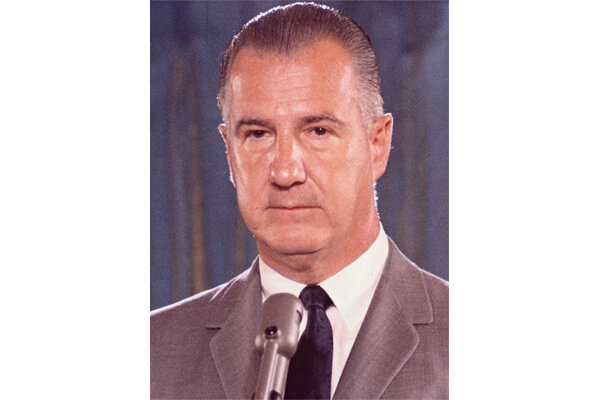
Spiro Agnew: One of the worst Vice Presidents, but very underrated as a composer
9. Bill the concert as " A Tribute To Spiro Agnew." Let me ponder that one...

10. Call Fred Armisen and Carrie Brownstein and tell them to mention my gig on the next Epidsode of "Portlandia." Hopefully it airs before next Monday.....Does anyone have their phone number?(Armisen is a drummer, maybe he will come down and sit in...)
 

At the very least I can post the fact that I'M PLAYING AT JIMMY MAK'S ON DECEMBER 7th AT 8 FOR MY CD RELEASE FOR "WRITE THEM DOWN" as much as annoyingly possible on Facebook. But, as all good advertising people know,  I need a good SLOGAN for my gig. What should it be?

" No Taxation Without George Colligan's CD Release at Jimmy Mak's"
"Proletariat Of The World, Go To Jimmy Mak's on December 7th and Unite!"
" Tippycanoe and George Colligan's CD Release, Too!"
"Ma? Ma? Where's My Pa? Gone To Hear George Colligan, Ha Ha Ha!"
" The Best Part Of Waking Up Is George Colligan's CD Release"
"54-40 or Go To George Colligan's CD Release at Jimmy Mak's!"
"George Colligan: The Pause That Refreshes..."
"George Colligan: Good To The Last Sixteenth Note..."
"Ask not what George Colligan's CD Release at Jimmy Mak's on December 7th can do for you.....Ask what YOU can do for George Colligan's CD Release at Jimmy Mak's on December 7th"
"Sic Semper Colligan...."
" Genius is 10% inspiration, and 90% GOING TO GEORGE COLLIGAN'S CD RELEASE AT JIMMY MAK's"
" We have nothing to fear but fear itself. ALSO, PLEASE GO TO GEORGE COLLIGAN'S CD RELEASE AT JIMMY MAK's ON DECEMBER 7th"

I think some of these are stronger than others. I'll tinker with these and let you know which one works the best. Maybe I should have been in advertising.......


Thursday, June 11, 2015

Originality


Chamber Music America is a wonderful organization which facilitates a boatload of grant money for independent jazz artists. The organization was founded in 1977 and was mostly focused on classical music for small ensembles. Jazz has been a big part of their work since 2000. The Doris Duke Charitable Foundation gives money to composers for new works and also money to presenters.
I actually won a Doris Duke grant in 2003, which allowed me to do a number of performances with a quartet featuring Gary Thomas, Drew Gress, and Ralph Peterson. ( We recorded a live record and I wish I could figure out a good way to put it out. There's some incredible stuff on there.)

Most jazz artists are independent these days; some are more independent than others. I'm extremely independent! So I've continued to apply for funding since 2003, and I haven't had any luck. I've applied with many different projects, and music that I thought was original. It's extremely competitive given how many jazz musicians need money out there. I've known extremely talented and able musicians who have applied every year and never gotten a grant. I think they only give 10 a year, so it's very selective. It also depends on who is judging, and that changes every year; some of the judges are more " avant garde" and some are more straight ahead in their tastes, judging from some of the recent winners.

Although I haven't won since 2003, I'm still very much in favor of grant opportunities for jazz musicians. However, I have to comment on the judging process. CMA has made it possible to hear what the judges said about your music and your proposal. Last year, I wanted to get feedback, and  I talked on the phone to a woman who works for CMA, and she read from the judges comments. ( She seemed a little nervous; I wondered how many musicians she had given feedback and if any of them had cursed at her....) I welcome constructive criticism because I want to continue learning and growing as a musicians, and also, maybe I'll learn something and then get a grant in the future. In last year's case, I didn't get much out of the comments; I mostly got the impression that the judges just didn't understand the work I submitted( I sent my "Persian Jazz Suite" which uses Persian scales that have non- western tuning; one judges comment was " The poor intonation really bothers me.").

For some reason, after receiving another rejection letter this year, I decided to ask for written summary feedback. I submitted my Theoretical Planets group( we released a CD on Origin last year.)
I'm very proud of this group, although it is a somewhat young group in terms of experience. Some of the feedback was leaning in that direction- saying that the group was "tight" but not as outstanding as some of the other submissions. It's hard to know what to do with that sort of feedback ( You're good, kid, but just not good enough...).

There was one comment that stood out to me. Panelist number 2 said:

 " Good playing. Derivative. Where is your originality?"


This is borderline insulting to me, as somebody who paid my membership fee to CMA, to get comments like this. Derivative? Because I play a conventional drum set? Because I play a swing beat? Because I've been influenced by earlier jazz music? Whose music is completely original, as in having no discernible influence? If you are going to throw out the word derivative, you really need to be more specific. Also, just because one's music doesn't reinvent the wheel doesn't mean it isn't original. Is Hank Jones original? Is he derivative? Is Kenny Kirkland derivative because he clearly checked out McCoy Tyner and Herbie Hancock? (If he is, I don't care because he's great!)These are extremely loaded words and it just sounds like Panelist number 2 was in a crappy mood and tired of listening to music all day. ( I feel that, after our third round of juries and auditions this year at PSU, which takes three days of listening to students-- CALGON TAKE ME AWAY!)

So in conclusion, I have a Brooklyn- style message for Panelist Number 2. YO! PANELIST NUMBER 2! WHERE IS MY ORIGINALITY? I'VE GOT YOUR ORIGINALITY RIGHT OVER HERE, RUBBERNECK!

Tuesday, May 5, 2015

High School Jazz Combos

I just returned to Portland from my third consecutive experience at the Reno Jazz Festival. It's a pretty amazing event; 8,000 students compete over 3 days in various categories of Middle School, High School and College Big Bands and Jazz Combos. It's been held for 53 years at the University of Nevada, Reno. They have a beautiful campus within a short walk of beautiful downtown Reno.
( Ahem.....) Well, I'd be lying if I said downtown Reno was picturesque, although there is a nice park near the Truckee River. Still, it's a great event and I always have fun. (This year, I had fun without alcohol! Yay!) It's cool to talk with other musicians and educators and of course hear some great students. They also have some great guest performers; this year, I got to hear the incredible Vertical Voices, and the amazing SF Jazz Collective. I got to play a jam session with saxophone greats Donny McCaslin and Jacam Manricks. There are a lot of clinics and performances throughout the day; as a judge, it can be just enough to get through the solid two days of judging, so I don't get to hear a lot of what I wish I could have heard.

 I've been one of the feedback clinicians the past three years, the past two for High School Jazz Combos.
( I still hate the word combo, but I reluctantly use it just so jazzers west of the Mississippi know what I'm talking about. It's like saying "Small Coffee" instead of "Tall Coffee" at Starbucks; I just don't have the energy to rebel against their system.) I've heard a wide range of levels coming from these high schools; some of the groups would rival a college group, maybe even a professional group, and others are more at a beginner level. I found this year hat I was able to be positive and constructive with even the most rudimentary groups, and I also was able to find way to improve with the most advanced groups. The "feedback" component of each groups performance is in some ways odd because I believe that the stress of preparing for Reno, traveling by bus or car all the way to Reno, warming up and playing for 20 minutes and being nervous is probably enough for some of these kids; at that point, their energy is spent, and they are ready for some R and R. That's when they head for the "feedback room," and I get to tell them what I liked and didn't like. I find it rewarding, because my goal is never to make people feel bad. ( This year and last, I had a student stand up in the middle of my critique and say, " Excuse me, but I think I'm going to be sick." Both times, it was when I was commenting on something they did. I asked of course, " Was it something I said?" Their fellow students, on both occasions,  said something like," No, they have a stomach bug or something....")

I always try to be positive, but I wouldn't be doing my job if I didn't call it as I see it. Overall, the fact that we still have music in any high school is probably a miracle, and the fact that young people are playing jazz is extremely hopeful. So right off the bat, just coming to an event like the Reno Jazz Festival is cause for celebration. However, I have noticed a few things that it seems like are common issues in high school jazz combos. I say this because I found myself saying the same things over and over during the feedback sessions. Here's a few things:

1. You cannot play small group jazz if you don't listen to jazz. Perhaps that sounds negative. Let's say it a different way; students should have a listening regimen in addition to a practice or playing regimen. In classical music, or playing in an orchestra or wind ensemble, or even a big band,  students are given 90 to 95 percent of the "material," which is that which is on the page; notes, dynamics, articulation, tempo, and so on. Small group jazz is totally different; the written material ends quickly, and at that point, the students are on their own.  In big band, the solo sections are in some ways an afterthought, but in small group, they are everything. Some of the groups were pretty good at playing the melodies of the tunes they had selected, but between the head in and the head out, it was more of a "go for it" approach rather than deliberate jazz phrasing and vocabulary. Believe me, I understand that some of the developing groups I heard are probably satisfied with "getting though the concert." However, if a small group is going to exist, the "material" between the melodic portions has to be addressed in some way. This might sound crazy but I would almost rather that students write out a solo, with the guidance of their instructor, than to just "go for it." The "going for it" approach would be comparable to a stand up comedian going up on stage with no material. Most comedians spend months if not years honing their material. It might take a very long time even to come up with 10 minutes of material. Young musicians need time to "develop their material," so to speak. In some ways, this lack of material it's almost like a classical musician showing up to a concerto competition without any sheet music.

Where does the material come from? Well, as the late great Clark Terry said, " Imitate, Assimilate, Innovate."The jazz language is what the students are learning to speak, and they have to hear it being spoken, as well as learn the theoretical knowledge of chord scales. Will all due respect to how hard band directors in the U.S.A. have to work, I think it's possible to spend a bit of time with chord scale theory appropriate to the selected repertoire. I also think it wouldn't be hard to have some kind of listening time or listening assignments. In this era, no one has to buy records or even go to the library; students can hear s many jazz recording for free on youtube or spotify. Students need to hear the
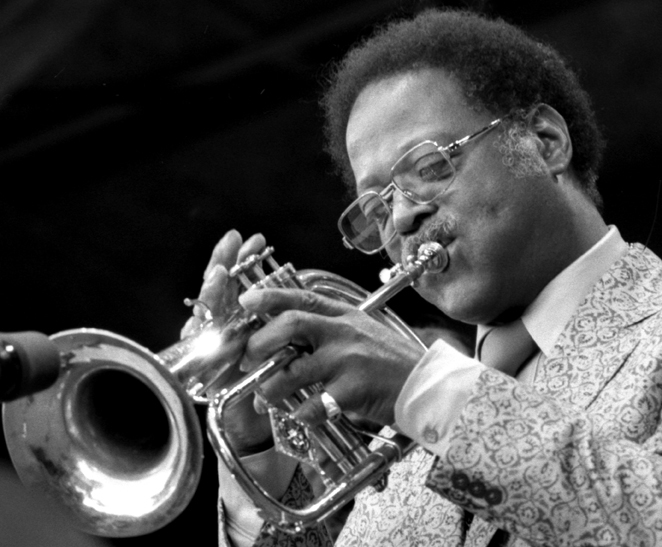
Clark Terry: " Imitate, Assimilate, Innovate."
language spoken in order to have any sort chance.

One frequent question I asked the students was "Who are your top five musicians on your instrument?" Some had a list, some had less than five, and some couldn't name any. I think having a top five is important in a jazz musicians' development. We have to have heroes. I ALSO recommended that students have a top five on an instrument other than their main axe; jazz musicians need to understand what the other instruments are doing in order to communicate properly on the bandstand. I don't assume that everyone will become a multi-instrumentalist. I would recommend to a young jazz muscian that he take one of his favorite jazz tracks and listen to it all the way through and focus on just the drums. Then do the same thing with the bass, and so on and so forth. I think it heightens the understanding of what the other improvising members of the band are doing. ( I also suspected that when I asked for "your top 5 in your instrument," some of the young musicians in Reno were telling me what they thought I wanted to hear. The top 5 list is actually for YOU, not ME! If you love Oscar Peterson, Bill Evans, Brad Mehldau, Keith Jarrett, and Robert Glasper, that's wonderful. If you said Liberace, Joe Sample, Hampton Hawes, Andre Previn, and Yanni, I'm cool with that, too! I was listening to trumpeters Maynard Ferguson, Harry James, Bunny Berigan,  and Jonah Jones as a kid; they aren't my favorites now, but at least I was listening to something.....

2. The ride cymbal is the most important part of a jazz beat. I would say that almost every other
group I listened to in Reno had the same issue; one a swing beat, the ride cymbal was being accented on 1 and 3, rather than 2 and 4, and the hi hat was being used as a crutch to keep the 2 and 4 prominent. Now, I'm not saying that 2 and 4 have to be super loudly accented on the cymbal, and that you should never play the hi hat on 2 and 4. It's more subtle. To my ears, a strong accent on 1 and 3 on the cymbal sounds less than optimal( i.e. not swinging). Every jazz drummer from Max Roach to Jimmy Cobb to Billy Higgins to Ralph Peterson to  Bill Stewart has a different way of riding on the cymbal. But I believe in all of the great jazz drummers, the ride cymbal beat is what makes them distinctive, and what makes the music flow the best. We can identify jazz drummers by their solo vocabulary around the kit also, but the great jazz drummers were and are in demand because of the feeling they gave the groove of the music, not because of their solos! ( I was on the road recently with
Bill Stewart, and I think we were talking about rudiments, and Stewart said something like, " You might know all the rudiments but if you don't get the ride cymbal together, nobody is going to call you!) So the point is, the ride cymbal has to feel good. Don't worry so much about the rest of the kit; I would rather have the ride cymbal be good than having someone play all around the kit without good time.

3. Please Don't Be Nervous!  I understand that it's normal, especially for young players to get the jitters before and during a performance: especially for a "competition" like Reno. However, I believe that the sooner in your career you can get over the "nervousness" factor ( not nervous as in " excited to play" but a more debilitating nervousness as in " I'm so afraid to go onstage!" ), the more you are going to enjoy making music. My belief is if you are prepared, there is no reason at all to be nervous. This is especially true in jazz, because in jazz, there are no mistakes. ( Philosophically, this is a very subtle area. I don't mean, as one of my Peabody classmates told me after our jazz performance,
" Wow, in jazz you can just play wrong notes and it doesn't matter!" That's different.) " Mistakes" are really just notes that are not the most optimal. It's a state of mind. The less than optimal notes are part of the process. Young musicians at a competition have a hard time slowing down their minds and actually listen to each other, let alone enjoy the performance. The less nervous you can be, the more you will enjoy every time you perform, which will make you want to keep playing and practicing, because you will be practicing so that you can have FUN!

4. Listen to your band mates, not yourself! We tell people to listen, and in small group jazz, listening to each other is imperative. But one of the things that makes people not listen to their bandmates enough is they are too caught up in listening to themselves! If students can focus less on themselves, they can really tune in to the rest of the band, and really get into the groove, rather than tapping their foot and following the chart and hoping that everyone stays together. Also, focusing on others makes you less self conscious, and therefore, less nervous. Sometimes when I'm playing, I just pretend I'm in the audience. That way, I pay more attention to the other musicians. This sort of thing cleans up all kinds of problems- keeping the form, keeping the time, musical interaction, overplaying, etc...

5. Bass players need to have a pro show them how to hold the upright bass. There were so many
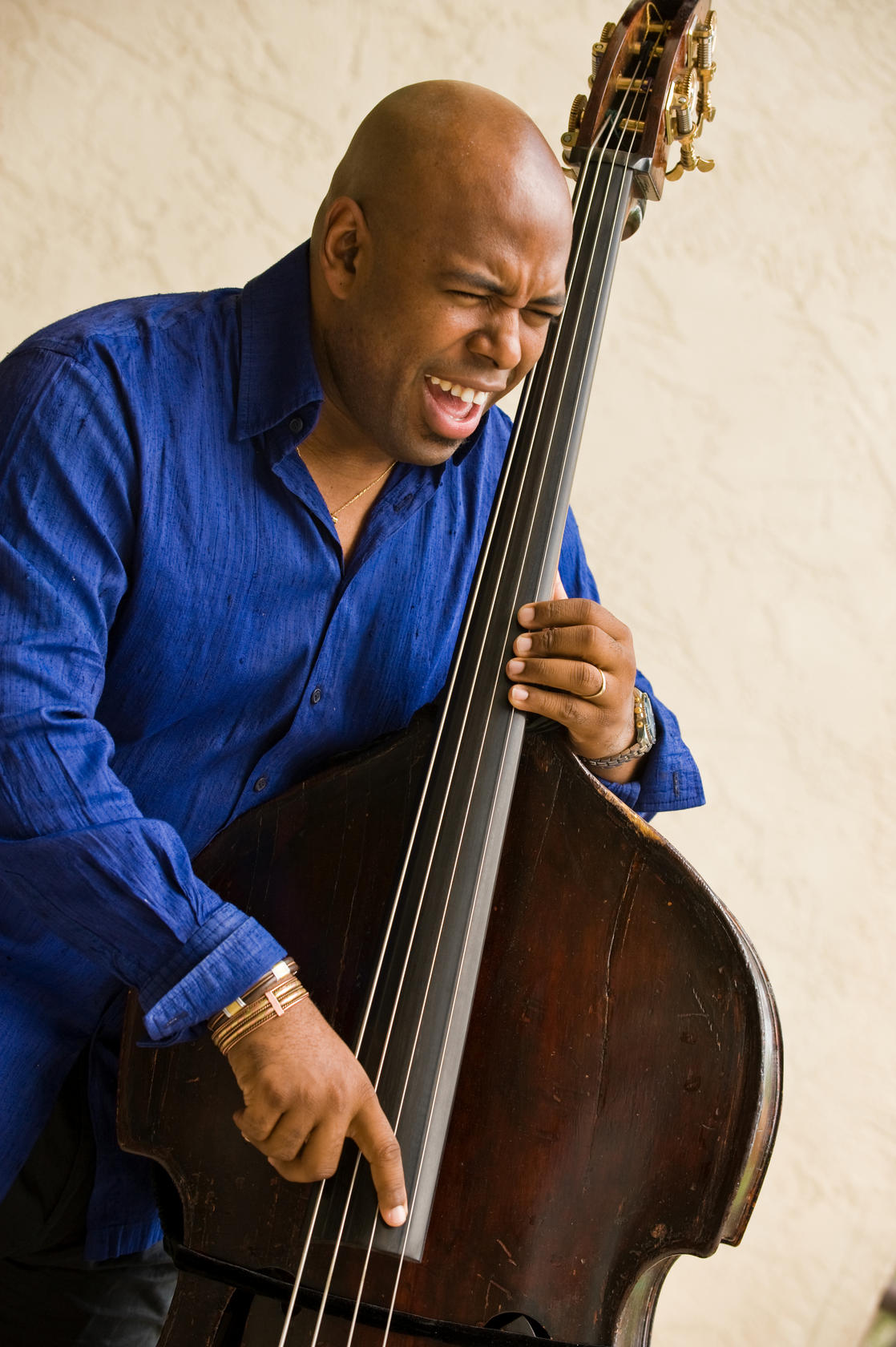
Christian McBride has pretty flawless technique
upright bass players that seemed like they had never had any solid instruction from a serious bassist. This might be an issue because many band directors tend to be from the Wind Ensemble side of things. I think it's important because upright bass is one of those things that if it's played incorrectly, one can develop serious tendon problems and it can ruin careers before they have started. If you have a young upright player who seems serious, please refer them to your local professional for at least a lesson or two. I also would add that, while some people really don't like the sound of a bass with a pickup through an amp, having amplification makes for less strain on a bass player. These are just common sense things to me; you wouldn't take a high school student who can bench press 200 pounds and make him try to lift 400 pounds off the bat.

6. There's really no reason why high school students couldn't write and play their own music! I'm always surprised when young jazz musicians tell me that they never write their own tunes. I think if you can improvise on chord changes, you can write at the very least a blues head or a rhythm changes head, or some kind of contrafact( melody over existing changes). Encourage your students to be composers! Composing and improvisation are really the same thing, if you think about it. Don't worry about whether or not your tunes are good. You'll get better as a composer if you keep doing it. If you don't write music, you won't develop your skills and creativity.

"Weren't you guys in the last jazz combo?"
7. It's important to look your best; however, I really don't like the "black shirt with matching ties" look. To me, 10 people with black shirts and matching ties don't look like a band, they look like a team of waiters at a 3 star restaurant in midtown Manhattan. I don't want to listen, I want to order the lunch special. In all seriousness, I'm not super picky on the dress code thing; I think every musician needs to put some thought into their look. If you think ripped jeans and a hoodie is your look, then feel free to rock ripped jeans and a hoodie. However, it might not work for a jazz group that plays Ellington and Basie. Tuxedos is a bit extreme for me; I feel like I'm at a wedding. At the very least, nice casual works, or suits with DIFFERENT ties and color schemes. Maybe big band is different. I personally don't like the idea of band uniforms. (Maybe it's because I worked at McDonald's...)

8. Keep some perspective. I love being a feedback judge because I believe that giving a young group
feedback is essential to their growth. If students are open to constructive criticism in addition to positive accolades, they can hopefully learn something; indeed, why would they submit to a feedback session if they didn't want to learn how to sound better next time? This is our lot as musicians; the learning and growing is never over. The more we can be honest with ourselves, the more rewarding our musical life can be.

I thought that some of the high school groups, especially the ones that brought all of their parents, extended family, friends, and essentially an entourage worthy of a major Rock group, seemed to view the competition almost like it was a football game. I understand the need to celebrate the success of the students, especially after a long drive to Reno, but even so, it's just one twenty minute performance. Music isn't like sports; it's art, it's subjective, and listening to jazz music isn't necessarily going to have a fist pumping moment like when the Junior Varsity running back scores the winning touchdown.

I couldn't help but feel as though some of the groups didn't really want a "critique" so much as a twenty minute celebration of their "greatness." While I like to talk about the good, I wouldn't be doing them any service at all if I just massaged their egos. ( I guess I probably thought I was hot stuff in high school as well, what with my three years of winning the "Louis Armstrong Jazz Award." If you heard me play trumpet in high school, you would probably want to run for the hills!) I couldn't help but wonder what sort of "feedback session" some of the groups and their respective entourages were expecting :

You guys sound great. I mean really great. I mean you guys are the best high school musicians I have ever heard. All of the other groups I've heard today were terrible next to you guys. Most college groups are crap compared to you guys. I wish I could study with you cats, if I'm being quite honest.

I usually suggest that you guys listen to the great jazz players of history, but you guys have clearly already mastered the history and are taking jazz into the 21st....well, maybe even the 22nd century! You guys have broken new ground in jazz. I wish Trane was alive to witness this miracle of musical genius. 

I would offer you guys scholarships, but I think what I should really be offering you is a Full Professor position with tenure and a six figure salary. Everyone in the band gets a University job! Also, I would offer you a recording contract but I don't run a label. But I do have Bruce Lundvall's home number. I know it's late on the east coast, but I'll wake him up; he needs to hear you guys and I'm fairly certain he will offer you a multi-album deal with Blue Note, plus unlimited tour support  and merchandising profits on top of a huge advance which you will never have to pay back.

Oh, wait, sorry, I'm getting a phone call. Hello. President Obama? Yes, they are here.....Guys, Barack Obama has heard about your triumphant performance at the Reno Festival and he is going to award you the Medal Of Honor. You are flying to the White House tomorrow on Air Force Two for a special ceremony. You'll also be given tax-exempt status for the rest of your lives. 

Again, you guys are essentially the greatest jazz musicians who have ever lived. Your performance was essentially flawless. It was the epitome of perfection. You all play like GODS! I'm just speechless. I'm probably going to quit playing music after this and go back to working at McDonald's.

Oh, one last thing.  I did take off a  few points for the black shirts and matching ties.........


Sunday, May 3, 2015

Crescent The Chromatic Bear: Joyce Kwon's Weird Children's Audio Book


Saxophonist Joe Manis turned me on to this video. Vocalist Joyce Kwon has done more than simply learn John Coltrane's solo on his classic "Crescent" recording; she put lyrics to almost every note. It's already impressive that she is making all of the notes and rhythms and phrasing. Her lyrics tell a very odd story, one which I would be more accustomed to seeing in one of my son's bedtime books than embedded within a Coltrane solo. The "Crescent" solo becomes " Crescent The Chromatic Bear:" it's kind of like the famous "Twisted," which is Annie Ross' lyrical treatment of Wardell Gray's tune and improvised solo.


Joyce Kwon's creation on "Crescent" is vocalese on steriods. Or perhaps crack cocaine. There's a lot of technical and creative brilliance in her arrangement, but I wondered as I listened if Kwon was a madwoman. There are a lot of great artists out there and it's always refreshing to find somebody who has the chops but also has that extra artistic gear, when they can tap into that deep place in their psyche and bring their music to that next "insane" level.

Kwon has some other cool arrangements on youtube; she did a "cover" of the Danish-Norwegian pop group Aqua's 1997 mega -hit " Barbie Girl." If you don't know the song, look it up on youtube. Check out Kwon's descent into madness at the end of the tune....


If you still aren't intrigued, check out this microtonal serenade to a poor sense of food combining:


http://www.joycekwon.com/ 

Thursday, January 1, 2015

Resolutions


Happy New Year,  everyone! I'm sure many of you have New Year's resolutions. It's great to have goals and get motivated and January 1st seems like the best excuse to have a new beginning. For example, I noticed that 24 Fitness is open today, so that folks can honor their resolution and start working out in the hopes that this is going to be the year that they finally lose that weight and get ready for those tight jeans everyone seems to love in Portland. Unfortunately, for some, January 1st might be the ONLY day they work out this year. This might be because we set our expectations way too high. I've always been one to have many goals, and this year is no different. I don't know, you tell me whether you think I'm setting myself for failure:

George Colligan's New Year's Resolutions:

1. Run a mile under 4 minutes.
2. Run a Marathon under 2 hours.
3. Run a 100 mile ultra marathon barefoot, on an empty stomach.
4. Improve my technical and improvisational skills on Piano, Organ, Drums, Trumpet, Upright Bass,
Electric Bass, and Marching Baritone.
5. Become technically proficient on Trombone, Clarinet, Bassoon, Flute, Guitar, Bass Trumpet, Alto Saxophone, Tenor Saxophone, C Melody Saxophone, Baritone, and Ukelele
6. Learn 5,000 new tunes in every key. That means all major AND minor keys. So if the tune is in Major, I'll learn it in minor, and then take it through the keys again.
7. Transcribe every recorded Herbie Hancock solo, every recorded McCoy Tyner solo, every recorded Chick Corea solo, every recorded Keith Jarrett solo, every recorded Kenny Kirkland solo, every recorded Mulgrew Miller solo, every recorded Wynton Kelly solo. ( I'll leave every Bill Evans solo until next year.
8. Learn the complete piano works of Bach, Chopin, Mozart, Beethoven, Brahms, Mendelssohn, and Scriabin. Transpose all of these pieces into every key. (Major AND minor....remember...from before?)
9. Become a master of tablas and Indian music. ( This I can probably knock out over the weekend...)
10. Memorize the complete works of Shakespeare.( It's already on my Kindle so this one, again, piece of cake!)
11. Bench press 589 pounds. On an empty stomach.
12. They say most of the muscles in your body are in the lower body, so I guess I will probably be able to deadlift double what I can bench. So let's round up and say 1200 pound deadlift. Should be cool.
13. 5,000 pushups and 5,000 pullups. If this doesn't get me on the cover of Men's Health, nothing will.
14. Write a Rock Opera based on the 1979 Iranian Hostage Crisis. Now, I know what you are thinking, "George, that writes itself!" Well, yes, it does. But I want it to be really really FUNNY as well as entertaining, informative, and life changingly transformatively inspiring. I want to take this one to Broadway!
15. Win a Tony Award for my Rock Opera based on the 1979 Iranian Hostage Crisis. I guess the awards won't happen until 2016, so.....OK, scratch that one off until next year. (Patience, Colligan....)
16. Become the best Jazz Educator in the world. If you've been following my blog, you are probably like, " But, George, haven't you already accomplished this? And isn't it also highly subjective?" Well the answer is Maybe, and MAYBE, MAYBE NOT! I'm working on the book called "The Absolutely Definitive Completely Complete Guide To Learning Jazz: Becoming the Greatest Jazz Musician Who Has Ever Lived And Getting Every Gig In The World." THIS book is going to be the one. When you read all 1,003 pages of My book, you'll say, " Aebersold, SHMABERSOLD! Bergonzi SHMERGONZI! Levine SHMEVINE!" Or something like that. Pick your favorite jazz instructional
author and put SHM in front of their name.
17. Become the Greatest Jazz Musician Who Has Ever Lived And Get Every Gig In The World. I know what you're thinking, " George, isn't this impossible and again highly subjective?" The answer is ABSOLUTELY NOT! If I'm going to publish a book called "The Absolutely Definitive Completely Complete Guide To Learning Jazz: Becoming the Greatest Jazz Musician Who Has Ever Lived And Getting Every Gig In The World," then I have to teach by example. If I can't do what I say in the book, who's going to buy it? Do you think anyone would have bought Napoleon Hill's "Think and Grow Rich" if he didn't actually THINK AND GROW RICH? You KNOW Napoleon Hill was ROLLING in cash money! ( I mean, I assume. I don't have any proof.)
18. Win the World's Greatest Dad award. Pretty sure I won that last year, if my coffee mug has any legitimacy.
19. Solve the Middle East Crisis. Now I KNOW what you are thinking. "George, so many have tried and failed in the past century. What ideas do you have that are different?" Well, my idea comes from this: the history of the longstanding feud between legendary entertainers and former partners Jerry Lewis and Dean Martin( from an article by Shawn Levy in The Guardian):

In the subsequent years, they literally didn't speak. Once or twice they collided on the back lot at Paramount or in some Vegas green room. But often they deliberately ducked one another. In 1960, when Dean went off Rat Pack-ing, Jerry was persona non grata, and it's a sign of his hurt and resentment that he responded to the Rat Pack's Las Vegas shoot of Ocean's Eleven by going to Miami and making a resort hotel movie of his own, The Bellboy. By 1970, Jerry's career had spun out of control in a haze of drug addiction and the changing fashions in comedy, but Dean was a bigger star than ever, with a smash hit weekly TV series and a film and recording career to rival Frank Sinatra's.
In 1976, Sinatra tried to mend fences between the estranged partners, surprising Jerry during his annual muscular dystrophy telethon by bringing Dean out from the wings. It was a truly spontaneous and emotional reunion - the two stood patting each other and smiling through tears as though a loved one had returned from the dead. But despite Jerry's entreaties after the show, Dean never rejoined him on stage or even for mere social interaction. Finally, in 1987, when Dean's golden son, Dean Paul Martin, died in a plane crash, Jerry reached out to him, instigating, at least by Jerry's account, a sporadic telephone relationship.

Maybe it's naive to think that we could erase centuries of hatred, war, hostility, and mistrust by bringing Jews and Palestinians out on stage to surprise each other on a telethon. Well, has anyone ever tried it? Could it really hurt? It's probably as good as any other idea out there....

20. Achieve total enlightenment. This might be a stretch. I think I need the right mantra. Or maybe the right chanting shoes. I'm sure they have some stuff over at REI.......


Monday, December 29, 2014

The 2014 First Annual Colligan Awards

Since I've been on the subject of movies lately, one great film I saw recently was "Birdman," an incredible vehicle for Michael Keaton, who plays a former action star trying to produce a darkly serious play while trying to keep his dark mental difficulties at bay. The acting by Keaton and co-stars which include Edward Norton, Zach Galafanakis, and Emma Stone, is solid. However, the cinematography and special effects are absolutely amazing. Furthermore, the musical score, which is mostly solo drum set, really blew me away. It sounds somewhat improvised, but it really fits the emotion of the story, as any good score should. ( When I think of my disappointment with "Whiplash," it's nice to hear truly great drumming in a movie.)

I recently discovered that jazz great Antonio Sanchez is responsible for the score for
"Birdman." I also discovered that his score was rejected by the Academy of Motion Pictures for consideration for an Academy Award. Sanchez' fans are wondering why. The reasons the Academy gives have to do with the amount of original music related to known songs, I think bottom line it's because the Academy is stupid. And racist. And just plain evil. Do I think the Academy and it's members are worse than Hitler? That would be pushing it a bit too far. So then the answer is yes. 

Antonio Sanchez is an incredible drummer, having played with Pat Metheny, Chick Corea, Miguel Zenon, and plenty more of the heavyweights. He's very successful as a musician, so I'm betting that he could probably care less about whether he is snubbed by the aforementioned Worse-Than-Hitler-Academy of Motion Pictures. However, since so many of these awards are so pointless and arbitrary, I'm starting my own Awards.

Good Evening And Welcome to the The 2014 First Annual Colligan Awards. I'm your host, Ellen DeGeneres. We have a really great show for you. We have many special guest, and so many great song and dance number. I have lots of great joke(Rim Shot)......ahem..... Moving right along, presenting the award for Best Musical Score is Jack Black.

Jack Black: ( In a loud, rock and roll type voice) Hey everybody, the nominees for Best Musical Score are:

Antonio Sanchez for "Birdman"(Roll Clip)
"Birdman," Antonio Sanchez (Roll Clip)
(Roll Different Clip)
" Big Momma's House 13," Kanye West ( Roll Clip.....Ugh..)
" Indian Jones and the Quest To Find A Good Hip Replacement Surgeon," John Williams( Roll Clip, I guess...)
Antonio Sanchez for "Birdman"(Roll Clip)

And the Colligan Award goes to......
Antonio Sanchez for "Birdman!" 

( This is Antonio Sanchez' first Colligan Award....)

Anyway, I have a vivid imagination. I recommend the film, Antonio Sanchez got robbed, and F the Academy. 


“What's with all these awards? They're always giving out awards. Best Fascist Dictator: Adolf Hitler.”
Annie Hall (1977) – Alvy Singer (Woody Allen)


“Awards are like hemorrhoids. Sooner or later every asshole gets one.”
Swimming Pool (2003) – Sarah Morton (Charlotte Rampling)


Sunday, December 28, 2014

There Is No Theory......Only Sound


"Man those cats be playing some THEORY!"
I'm finding that one of the huge challenges for teaching jazz at the higher levels is as follows; how do you teach skills, the history and the rules while also getting students to think for themselves, think outside the box, and be creative? I find that all of us may tend towards one side of the brain or the other. I'm left handed, so they say that I'm most likely more right brained, which is the creative side of the brain. I've always felt that the piano for me was more of a vehicle to find something new rather than try to play all of the existing repertoire. I try to practice classical pieces, but lately, they just make me think about how to let those pieces inspire me to write my own music. Yet I find myself stressing skills to many of my students. I have so many students that need to focus on sound, reading, knowing tunes, jazz vocabulary, rhythm. A lot of these things are pretty concrete. I believe that the skill side is needed as a foundation for creativity. However, I acknowledge that it's possible to get bogged down in the technique and never learn or love to be truly creative.

Music theory is not music. Theory is how we analyze and understand music. How do we get beyond the rules? Sometimes breaking the rules is not only acceptable, it's essential to making good music.
This recent video made me think about this:
Ok, Marta Altesa is cute, let's move on from that. The cool thing about this Jamiroquai song is what? Well, the bass line is killing for sure. The groove is great, it's got a nice melody and a catchy hook. But it occurred to me that the harmonic movements are actually the best part about it for me.
The song starts in D minor and simmers there for a while. Then we jump to Fminor, with one of those sort of reverse progressions you hear in R&B often: F minor, C minor,7 Bb minor7,  Gbmaj7, Fmaj7, Bb minor 7 Eb7, Abmin7, Db7, Gmin 7, F#7( or C7 at the end of the phrase). And then it jumps back to Bb7 to D minor. Later the verse has the progression G-7 to A7 ( altered I think) and then F min7. This really lifts the song for me.

But wait a minute. A7 to F minor7. When was the last time you studied a progression like that in theory class? Usually we spend so much time on ii V I's and their variations. Everything has to be justified as a substitution of something. A7 to F minor 7 is a pretty jagged movement. It's particularly jagged because many of the other chords are rather functional. But for me, it's the best part of the song. It's the hippest part of the whole thing, for me.

So why don't we teach that in theory class? Why don't we start with A7 to F minor?


Saturday, December 27, 2014

Letter from Richard Dorsey


Couldn't find any photos of Richard, but this is his family business  where we worked for years
Richard Dorsey, a wonderful tenor sax player Baltimore native was the first great jazz saxophonist with whom I got to play. He recently sent me this written recounting our first meeting in the late 80's.


Recently I came across a blog post about George Colligan's first gig. I was amused and entertained by his well-written recollection. What a surprise to find out the first time he and I played together was his first job as a pianist. As I read about it didn't take long to start wondering if I had  tapes of any of those nights. I knew I recorded at least the first night at J-K's Pub in Columbia, Md., a place I characterized as a "fern bar", regardless of whether it had ferns or not. That term was still in use in 1988, referring to attractive places just like J-K's Pub. Clean walls. Neon lights. Up-scale pick-up bars in upscale areas, with background music like Christopher Cross and Journey. I have not much against all that....not entirely, anyway. But it seemed an unlikely place to have a welcome mat out for the brew of music I was carrying in the front door.

I recall those gigs at J-K's Pub pretty clearly. It was the first time meeting George and bassist David Ephross. I had met drummer Chris Perry socially, and always liked him, but had never played with him.


I'm pretty sure David secured that playing job, then got my number from someone in town and called me. When David phoned he said he couldn't decide which of two pianists to get. He said one guy was a pianist. I thought to myself, "That's good, isn't a pianist what we need?". David made even less sense when he stated the second option, saying that the other choice was a trumpet major at Peabody Conservatory who was learning piano. OH MY GOD! I had visions of a serious crash and burn gig. Not only did it sound like there was this trumpeter, someone who might not actually play piano, but also that the bassist, the leader David, might not know the difference whether this trumpeter could play piano. The scene was highly suspect at that moment.

At that point on the phone I said to Dave, kind of firmly, "NOOOOOOOOO! Get the first pianist, not someone just starting !" or something like that, something driven by deep fear from the way I heard David present the options. It seemed apparent to me that David was going through a thought process involving me looking toward getting the answer he wanted. It was evident that Dave had made the decision for George to command the piano chair.  As my phone call with David was coming to a close he held his ground for George as the pianist, sticking with it so firmly that he convinced me of the choice.

Arriving at the gig I saw drummer Chris Perry. I decided no matter what happened we would lock in and keep it together. George and Dave seemed friendly and confident.  We started with Coltrane's "Moment's Notice". I thought in case there might not be much piano solo time taken I would stretch out from the start and assure a reasonable song length. Perhaps I did play 25 choruses. Then everything rolled along smoothly. George played without incident, the way it always was thereafter. It sure seemed like he'd done this all before. I wasn't wiser, just somewhat older. I quickly realized not only his skill, but David's bass playing acumen as well. We played that same gig, well, perhaps three, four times. That was at least more than I thought we were going to. Termination came not as much of a surprise as being there at all. After all, though, we jazz musicians play wherever we get the chance.

Starting shortly after this, I was happy and fortunate to play with George over the next four-five years with a group that included Alex Norris called the Peabody Underground. On and off. The usual opportunities. We had a year-long weekly (mostly) gig at Chambers in Baltimore that people seemed to like and talked about. Of course, not like they talk about George nowadays. And along the way I learned another thing: George could also play the trumpet pretty darn well.


Richard Dorsey

December 11th, 2014
Baltimore, Maryland

Thursday, December 25, 2014

Jazz Is The Worst: LMAO


Musicians have been telling me about jazzistheworst for a while. I've read it a few times, but the one I read today made we want to comment on it. "How To Become A Successful Jazz Musician in 2015" is presented with bone dry sarcasm; it made me laugh, although it's so funny because it's so true. This blog, somewhat reminiscent of Seattle based jazz pianist Bill Anschell's hilarious " Mr. P.C.'s Guide Jazz Etiquette and Bandstand Decorum" column, is anonymously written, although some jazz insiders claim it's author is the brilliant trumpeter Ambrose Akinmusire, possibly because the first review on the blog was Akinmusire's CD. I only have hearsay and conjecture as evidence. Be that as it may, "How To Become A Successful Jazz Musician in 2015" , for somebody like me who would love to be successful in 2015, is right on point. 

jazzistheworst calls out Nicholas Payton for alienating his audience, Steve Lehman for his "Liminality as a Framework for Composition: Rhythmic Thresholds, Spectral Harmonies and Afrological Improvisation" being too abstract for audiences, Vijay Iyer for his "selfies with famous people,", and various successful female musicians for, well, being female. The anonymous author also skewers the posers who

 "adopt a southern accent, a soulful old timey persona and just go back to being as 'roots' as you can.  Talk about "The Tradition" as much as possible.  Bring up 'The Blues' until people start becoming annoyed with you.  Ignore any cultural, musical or societal changes that have occurred in the last 60 years." 

Finally, he mentions "publicists," affirming my belief that 

"Regardless of your musical ability, you can still become a famous Jazz musician if you have enough money.  Unfortunately most people don't have enough money to afford a career in Jazz.  You'll just need the right publicist(there's actually only one.)"
 Regardless of your musical ability, you can still become a famous Jazz musician if you have enough money.  Unfortunately most people don't have enough money to afford a career in Jazz.  You'll just need the right publicist(there's actually only one.)

Whoever this blogger is, I suspect he or she is someone who is inside the industry in some capacity. 
 Whether this is true or not, I appreciate the honest perspective. I'm going to go back and check out some other posts from this blog.


Saturday, December 6, 2014

Everything is Great!


The older I get, the less I care about what others think of me. I'm not saying I don't care at all; I'm saying that it concerns me a lot less than in years past. It's also kind of a relief to accept that there are always going to be people that just don't like you and never will, regardless of how many Hallmark cards you send them. Although my 4,967 friends on Facebook( ha!) might make you think I'm universally well liked, I do think some folks think I'm somewhat negative at times. I wouldn't consider myself to be a negative person in general, although I do go on about negative things, whether in my blog, on facebook, or even in conversation. Hey, why spend the time and money whining to a therapist when I can whine to the person I'm talking to right now!

I suppose it would be logical to say that we don't tend to gravitate towards negative people. Indeed, the Saturday Night Live sketch " Debbie Downer" shows the epitome of this type of person. You might be enjoying your birthday at Disneyland, and Debbie Downer can't stop talking about the nuclear disaster in North Korea......( Actually, this sketch is great not only because of the character and the great performance by Rachel Dratch, but also because of the trombone sound effect, plus the fact that Dratch and company couldn't stop laughing...)

I suppose we have all had friends like this. It's never really bothered me. I would rather talk about reality than try to pretend that life is always a bowl of cherries. Obviously, we want to acknowledge our good fortunes. I think it's only human nature to see both sides of the coin.

I remember one tour where one of my band mates chastised me for being too negative. " Man, you are always talking s*$t about something." OK. I decided then that my friend would only see the "positive" side of me....

Hey, good morning! I slept so well, did you? You look rested. Have you been outside? It's such a beautiful day. We are so blessed to have the sun shining today. I'm so glad we are on the road together. You are one of my favorite drummers, did you know that? Do you realize how lucky we are to get to play music together? I'm so glad we are friends. Here, come here, I want to give you a hug.....

After a few hours of that, the consensus all around was that I should " go back to being normal."

I think negativity is normal. But don't just take it from me. The New York Times recently ran an article called " The Problem With Positive Thinking."  According to the research done by author Gabriele Oettingen, women who tried to think positively about themselves lost less weight than ones who were less positive about their ability to lose weight.

Fantasizing about happy outcomes — about smoothly attaining your wishes — didn’t help. Indeed, it hindered people from realizing their dreams.

Positive thinking fools our minds into perceiving that we’ve already attained our goal, slackening our readiness to pursue it.

The article doesn't recommend a Debbie Downer approach; actually, the hybrid approach is better. Think about your goals, clearly see what stands in the way, and figure out what you can do to remove the obstacles. I think of this as "honesty" or "realism." The truth shall set you free. Some people can't handle the truth. I think it's better to get to the truth sooner rather than later. To solve problems and improve, we must be honest with ourselves.

This is how I approach teaching. This week, I was a guest teacher and performer at the Birmingham Conservatoire in the U.K. I told the student ensembles that I would be positive first, and then give them the bad news. All of the students were very cool with it, and it made for an incredibly satisfying performance. It's not negativity, it's just honesty. I don't want to bum anyone out the way Debbie Downer does. However, I will continue to "be real" with things as much as I can. Of course, someone may give me constructive criticism about this. I'm willing to take the lumps.

Monday, November 17, 2014

Skyscrapers


GC: Son, let's work on the alphabet. Let's take a break from TV and work on our letters, OK?
LC: Daddy, NO! I DON'T WANT TO WORK ON LETTERS! I NEVER WANT TO WORK ON LETTERS!
GC: Why not? We've watched a lot of shows, let's just take a five minute break! What's the problem?
LC: I DON'T WANT TO TAKE A BREAK TO WORK ON LETTERS!
GC: But son, you need to work on letters so you can learn to read! 
LC: I DON'T WANT TO LEARN TO READ! (sobbing)
GC: OK, OK.....what's the problem? Son, come and talk to me.
LC: Daddy, I'm only good at some of the letters! I can sing the alphabet song, but some of the letters I'm not good at....
GC: Ok, listen, daddy is going to explain. So, let's not think about letters for a minute. Let's think about construction workers for a second. Let's imagine construction workers building a skyscraper. How long do you think it takes to build a skyscraper?
LC: ....Mmmmmm, I don't know?
GC: A day? Two days?
LC: Maybe..... one hundred days!
GC: Maybe even longer than that. And, this doesn't take into account how long it takes to build the materials for the skyscraper. So, do you think that the construction workers give up if they can't finish the project in a day?
LC: No....
GC: Of course not. They work all day, and then they go home at night, and then they come back and keep working on it. Plus, during the day, they work, and they take breaks. And they know that eventually, they will finish the job. They don't get mad because it didn't get finished in a day. They didn't cry. It's what we call a LONG TERM PROJECT. Or we call it A WORK IN PROGRESS.
LC: Oh.
GC: So I'm trying to make what is called an ANALOGY.
LC: But I'll never have an analogy....
GC: No, you don't.....I mean I'm telling a story that relates to your letters. You are doing great with letters. It's a WORK IN PROGRESS. We don't get upset if you aren't perfect right away. We just do a little every day, and then eventually, you'll be able to read. How are you going to teach your little brother Ruger to read if you can't read?
LC: (laughs)....his name won't be RUGER!
GC: Ha, ha, maybe it will be....MILLARD!
LC: NO!
GC: OK, do you feel better now?
LC: Yes. We can work on letters now.
GC: Son, I'm so proud of you, and I love you so much.
LC: Can I have pumpkin pie?
GC: Yes, you can have pumpkin pie.....AFTER we do letters.
LC: (sighs)....OK, Daddy.........