Showing posts with label jazz festivals. Show all posts

Tuesday, May 5, 2015

High School Jazz Combos

I just returned to Portland from my third consecutive experience at the Reno Jazz Festival. It's a pretty amazing event; 8,000 students compete over 3 days in various categories of Middle School, High School and College Big Bands and Jazz Combos. It's been held for 53 years at the University of Nevada, Reno. They have a beautiful campus within a short walk of beautiful downtown Reno.
( Ahem.....) Well, I'd be lying if I said downtown Reno was picturesque, although there is a nice park near the Truckee River. Still, it's a great event and I always have fun. (This year, I had fun without alcohol! Yay!) It's cool to talk with other musicians and educators and of course hear some great students. They also have some great guest performers; this year, I got to hear the incredible Vertical Voices, and the amazing SF Jazz Collective. I got to play a jam session with saxophone greats Donny McCaslin and Jacam Manricks. There are a lot of clinics and performances throughout the day; as a judge, it can be just enough to get through the solid two days of judging, so I don't get to hear a lot of what I wish I could have heard.
 I've been one of the feedback clinicians the past three years, the past two for High School Jazz Combos.
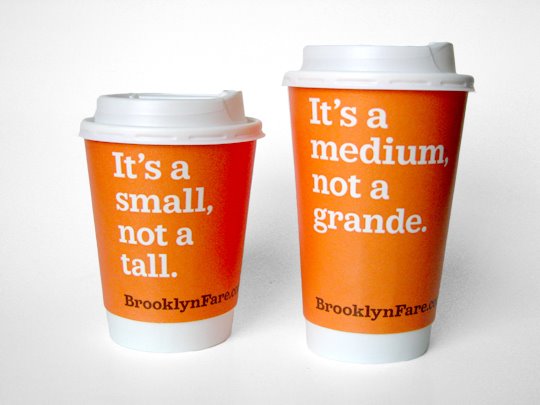
( I still hate the word combo, but I reluctantly use it just so jazzers west of the Mississippi know what I'm talking about. It's like saying "Small Coffee" instead of "Tall Coffee" at Starbucks; I just don't have the energy to rebel against their system.) I've heard a wide range of levels coming from these high schools; some of the groups would rival a college group, maybe even a professional group, and others are more at a beginner level. I found this year hat I was able to be positive and constructive with even the most rudimentary groups, and I also was able to find way to improve with the most advanced groups. The "feedback" component of each groups performance is in some ways odd because I believe that the stress of preparing for Reno, traveling by bus or car all the way to Reno, warming up and playing for 20 minutes and being nervous is probably enough for some of these kids; at that point, their energy is spent, and they are ready for some R and R. That's when they head for the "feedback room," and I get to tell them what I liked and didn't like. I find it rewarding, because my goal is never to make people feel bad. ( This year and last, I had a student stand up in the middle of my critique and say, " Excuse me, but I think I'm going to be sick." Both times, it was when I was commenting on something they did. I asked of course, " Was it something I said?" Their fellow students, on both occasions,  said something like," No, they have a stomach bug or something....")

I always try to be positive, but I wouldn't be doing my job if I didn't call it as I see it. Overall, the fact that we still have music in any high school is probably a miracle, and the fact that young people are playing jazz is extremely hopeful. So right off the bat, just coming to an event like the Reno Jazz Festival is cause for celebration. However, I have noticed a few things that it seems like are common issues in high school jazz combos. I say this because I found myself saying the same things over and over during the feedback sessions. Here's a few things:

1. You cannot play small group jazz if you don't listen to jazz. Perhaps that sounds negative. Let's say it a different way; students should have a listening regimen in addition to a practice or playing regimen. In classical music, or playing in an orchestra or wind ensemble, or even a big band,  students are given 90 to 95 percent of the "material," which is that which is on the page; notes, dynamics, articulation, tempo, and so on. Small group jazz is totally different; the written material ends quickly, and at that point, the students are on their own.  In big band, the solo sections are in some ways an afterthought, but in small group, they are everything. Some of the groups were pretty good at playing the melodies of the tunes they had selected, but between the head in and the head out, it was more of a "go for it" approach rather than deliberate jazz phrasing and vocabulary. Believe me, I understand that some of the developing groups I heard are probably satisfied with "getting though the concert." However, if a small group is going to exist, the "material" between the melodic portions has to be addressed in some way. This might sound crazy but I would almost rather that students write out a solo, with the guidance of their instructor, than to just "go for it." The "going for it" approach would be comparable to a stand up comedian going up on stage with no material. Most comedians spend months if not years honing their material. It might take a very long time even to come up with 10 minutes of material. Young musicians need time to "develop their material," so to speak. In some ways, this lack of material it's almost like a classical musician showing up to a concerto competition without any sheet music.

Where does the material come from? Well, as the late great Clark Terry said, " Imitate, Assimilate, Innovate."The jazz language is what the students are learning to speak, and they have to hear it being spoken, as well as learn the theoretical knowledge of chord scales. Will all due respect to how hard band directors in the U.S.A. have to work, I think it's possible to spend a bit of time with chord scale theory appropriate to the selected repertoire. I also think it wouldn't be hard to have some kind of listening time or listening assignments. In this era, no one has to buy records or even go to the library; students can hear s many jazz recording for free on youtube or spotify. Students need to hear the
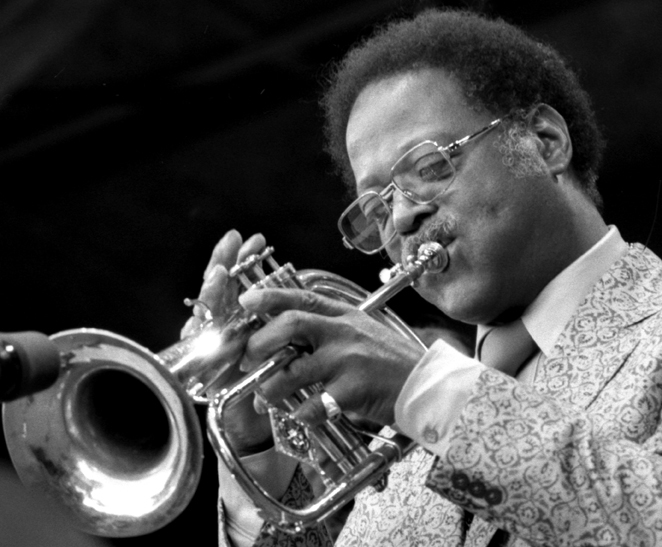
Clark Terry: " Imitate, Assimilate, Innovate."
language spoken in order to have any sort chance.

One frequent question I asked the students was "Who are your top five musicians on your instrument?" Some had a list, some had less than five, and some couldn't name any. I think having a top five is important in a jazz musicians' development. We have to have heroes. I ALSO recommended that students have a top five on an instrument other than their main axe; jazz musicians need to understand what the other instruments are doing in order to communicate properly on the bandstand. I don't assume that everyone will become a multi-instrumentalist. I would recommend to a young jazz muscian that he take one of his favorite jazz tracks and listen to it all the way through and focus on just the drums. Then do the same thing with the bass, and so on and so forth. I think it heightens the understanding of what the other improvising members of the band are doing. ( I also suspected that when I asked for "your top 5 in your instrument," some of the young musicians in Reno were telling me what they thought I wanted to hear. The top 5 list is actually for YOU, not ME! If you love Oscar Peterson, Bill Evans, Brad Mehldau, Keith Jarrett, and Robert Glasper, that's wonderful. If you said Liberace, Joe Sample, Hampton Hawes, Andre Previn, and Yanni, I'm cool with that, too! I was listening to trumpeters Maynard Ferguson, Harry James, Bunny Berigan,  and Jonah Jones as a kid; they aren't my favorites now, but at least I was listening to something.....

2. The ride cymbal is the most important part of a jazz beat. I would say that almost every other
group I listened to in Reno had the same issue; one a swing beat, the ride cymbal was being accented on 1 and 3, rather than 2 and 4, and the hi hat was being used as a crutch to keep the 2 and 4 prominent. Now, I'm not saying that 2 and 4 have to be super loudly accented on the cymbal, and that you should never play the hi hat on 2 and 4. It's more subtle. To my ears, a strong accent on 1 and 3 on the cymbal sounds less than optimal( i.e. not swinging). Every jazz drummer from Max Roach to Jimmy Cobb to Billy Higgins to Ralph Peterson to  Bill Stewart has a different way of riding on the cymbal. But I believe in all of the great jazz drummers, the ride cymbal beat is what makes them distinctive, and what makes the music flow the best. We can identify jazz drummers by their solo vocabulary around the kit also, but the great jazz drummers were and are in demand because of the feeling they gave the groove of the music, not because of their solos! ( I was on the road recently with
Bill Stewart, and I think we were talking about rudiments, and Stewart said something like, " You might know all the rudiments but if you don't get the ride cymbal together, nobody is going to call you!) So the point is, the ride cymbal has to feel good. Don't worry so much about the rest of the kit; I would rather have the ride cymbal be good than having someone play all around the kit without good time.

3. Please Don't Be Nervous!  I understand that it's normal, especially for young players to get the jitters before and during a performance: especially for a "competition" like Reno. However, I believe that the sooner in your career you can get over the "nervousness" factor ( not nervous as in " excited to play" but a more debilitating nervousness as in " I'm so afraid to go onstage!" ), the more you are going to enjoy making music. My belief is if you are prepared, there is no reason at all to be nervous. This is especially true in jazz, because in jazz, there are no mistakes. ( Philosophically, this is a very subtle area. I don't mean, as one of my Peabody classmates told me after our jazz performance,
" Wow, in jazz you can just play wrong notes and it doesn't matter!" That's different.) " Mistakes" are really just notes that are not the most optimal. It's a state of mind. The less than optimal notes are part of the process. Young musicians at a competition have a hard time slowing down their minds and actually listen to each other, let alone enjoy the performance. The less nervous you can be, the more you will enjoy every time you perform, which will make you want to keep playing and practicing, because you will be practicing so that you can have FUN!

4. Listen to your band mates, not yourself! We tell people to listen, and in small group jazz, listening to each other is imperative. But one of the things that makes people not listen to their bandmates enough is they are too caught up in listening to themselves! If students can focus less on themselves, they can really tune in to the rest of the band, and really get into the groove, rather than tapping their foot and following the chart and hoping that everyone stays together. Also, focusing on others makes you less self conscious, and therefore, less nervous. Sometimes when I'm playing, I just pretend I'm in the audience. That way, I pay more attention to the other musicians. This sort of thing cleans up all kinds of problems- keeping the form, keeping the time, musical interaction, overplaying, etc...

5. Bass players need to have a pro show them how to hold the upright bass. There were so many
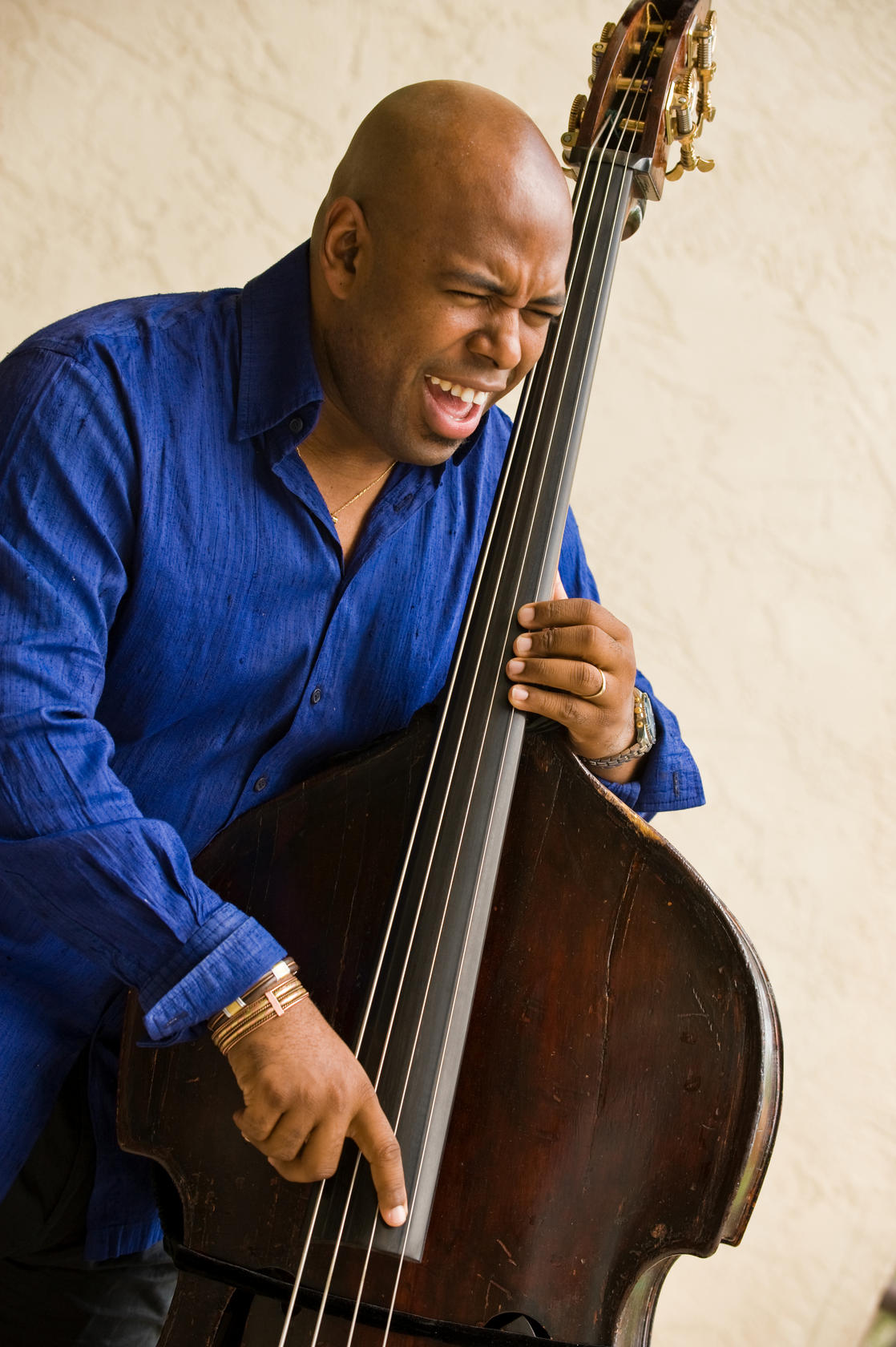
Christian McBride has pretty flawless technique
upright bass players that seemed like they had never had any solid instruction from a serious bassist. This might be an issue because many band directors tend to be from the Wind Ensemble side of things. I think it's important because upright bass is one of those things that if it's played incorrectly, one can develop serious tendon problems and it can ruin careers before they have started. If you have a young upright player who seems serious, please refer them to your local professional for at least a lesson or two. I also would add that, while some people really don't like the sound of a bass with a pickup through an amp, having amplification makes for less strain on a bass player. These are just common sense things to me; you wouldn't take a high school student who can bench press 200 pounds and make him try to lift 400 pounds off the bat.

6. There's really no reason why high school students couldn't write and play their own music! I'm always surprised when young jazz musicians tell me that they never write their own tunes. I think if you can improvise on chord changes, you can write at the very least a blues head or a rhythm changes head, or some kind of contrafact( melody over existing changes). Encourage your students to be composers! Composing and improvisation are really the same thing, if you think about it. Don't worry about whether or not your tunes are good. You'll get better as a composer if you keep doing it. If you don't write music, you won't develop your skills and creativity.

"Weren't you guys in the last jazz combo?"
7. It's important to look your best; however, I really don't like the "black shirt with matching ties" look. To me, 10 people with black shirts and matching ties don't look like a band, they look like a team of waiters at a 3 star restaurant in midtown Manhattan. I don't want to listen, I want to order the lunch special. In all seriousness, I'm not super picky on the dress code thing; I think every musician needs to put some thought into their look. If you think ripped jeans and a hoodie is your look, then feel free to rock ripped jeans and a hoodie. However, it might not work for a jazz group that plays Ellington and Basie. Tuxedos is a bit extreme for me; I feel like I'm at a wedding. At the very least, nice casual works, or suits with DIFFERENT ties and color schemes. Maybe big band is different. I personally don't like the idea of band uniforms. (Maybe it's because I worked at McDonald's...)

8. Keep some perspective. I love being a feedback judge because I believe that giving a young group
feedback is essential to their growth. If students are open to constructive criticism in addition to positive accolades, they can hopefully learn something; indeed, why would they submit to a feedback session if they didn't want to learn how to sound better next time? This is our lot as musicians; the learning and growing is never over. The more we can be honest with ourselves, the more rewarding our musical life can be.

I thought that some of the high school groups, especially the ones that brought all of their parents, extended family, friends, and essentially an entourage worthy of a major Rock group, seemed to view the competition almost like it was a football game. I understand the need to celebrate the success of the students, especially after a long drive to Reno, but even so, it's just one twenty minute performance. Music isn't like sports; it's art, it's subjective, and listening to jazz music isn't necessarily going to have a fist pumping moment like when the Junior Varsity running back scores the winning touchdown.

I couldn't help but feel as though some of the groups didn't really want a "critique" so much as a twenty minute celebration of their "greatness." While I like to talk about the good, I wouldn't be doing them any service at all if I just massaged their egos. ( I guess I probably thought I was hot stuff in high school as well, what with my three years of winning the "Louis Armstrong Jazz Award." If you heard me play trumpet in high school, you would probably want to run for the hills!) I couldn't help but wonder what sort of "feedback session" some of the groups and their respective entourages were expecting :

You guys sound great. I mean really great. I mean you guys are the best high school musicians I have ever heard. All of the other groups I've heard today were terrible next to you guys. Most college groups are crap compared to you guys. I wish I could study with you cats, if I'm being quite honest.

I usually suggest that you guys listen to the great jazz players of history, but you guys have clearly already mastered the history and are taking jazz into the 21st....well, maybe even the 22nd century! You guys have broken new ground in jazz. I wish Trane was alive to witness this miracle of musical genius. 

I would offer you guys scholarships, but I think what I should really be offering you is a Full Professor position with tenure and a six figure salary. Everyone in the band gets a University job! Also, I would offer you a recording contract but I don't run a label. But I do have Bruce Lundvall's home number. I know it's late on the east coast, but I'll wake him up; he needs to hear you guys and I'm fairly certain he will offer you a multi-album deal with Blue Note, plus unlimited tour support  and merchandising profits on top of a huge advance which you will never have to pay back.

Oh, wait, sorry, I'm getting a phone call. Hello. President Obama? Yes, they are here.....Guys, Barack Obama has heard about your triumphant performance at the Reno Festival and he is going to award you the Medal Of Honor. You are flying to the White House tomorrow on Air Force Two for a special ceremony. You'll also be given tax-exempt status for the rest of your lives. 

Again, you guys are essentially the greatest jazz musicians who have ever lived. Your performance was essentially flawless. It was the epitome of perfection. You all play like GODS! I'm just speechless. I'm probably going to quit playing music after this and go back to working at McDonald's.

Oh, one last thing.  I did take off a  few points for the black shirts and matching ties.........



Sunday, October 19, 2014

Exercises in Sleep Deprivation, Part II

My son Liam was born December 19, 2009. I did not sleep again until December 19, 2010. Those of you with children can relate; some babies sleep, but some don't. Liam was a kid who just did not want to sleep. I was so sleep deprived that I started taking the bus to school after falling asleep at traffic lights. I thought that maybe I would never sleep again in life, that it was just a 39 year lucky streak and my luck had run out for the next few decades. When we went back to New York for the summer, we hired a sleep consultant, which worked out great for some lady who convinced me to give her 400 bucks in exchange for "sleep" information I could have found for free on the internet. Even at age 4 and a half, Liam still has lots of energy at night, but he sleeps pretty well( although he does com into our room during the night on occasion) once he gets to sleep.

I remember musicians who had kids always said they got more sleep on the road. I never could understand that until I had a son. When I travel, I miss my family, but it is nice to have a bit of a break from irregular sleep patterns. In fact, I think that the period after my son's birth has made me handle sleep deprivation a lot better than I did when I first started traveling. I remember after a few years of being jet lagged every time I went to Europe thinking, "Wow, this is not all that it's cracked up to be!" I don't sleep on planes- which is surprising, since trying to sleep sitting upright with a jet engine under your seat surrounded by strangers seems like it would just knock you right out.....

I always tell my students in my 9 am class, " If you are lucky enough to become a professional musician, you'll be getting up at all hours to make flights, trains, buses, and so forth. Missing a flight is an expensive lesson that you don't want to have to experience." I find I am better at mentally pushing myself through sleepiness. It can be tricky if I need to drive.

This past Friday, I had a good test of my tolerance for sleep deprivation. My son kicked me awake at 3:30 AM, which beat my alarm by 30 minutes. I left my house in Portland at 4: 15 and picked up bassist and former PSU student Jon Lakey at 4:30. We were planning on participating in Eugene based saxophonist Adam Harris' live recording; however, I wanted to make some recruiting stops along the way. We arrived at South Eugene High School at 6:45. I worked with Director Steve Robare's jazz band for about 30 minutes and then Lakey and I played some duo and we talked about the program at PSU. After a nice leisurely breakfast of omelettes, waffles, and gallons of coffee, we headed over to the University of Oregon to crash their Friday jam session. This was obviously not a recruiting stop but more of a chance to observe what goes on at other programs in the area. Lakey and I were invited to play a few tunes, which was of course a lot of fun.

I started to fade a bit, so I head over to saxophonist Joe Manis' house to try to nap on his couch for a few minutes. Lakey and I didn't so much nap, but we did play with Manis' 2 year old for a while. "George......Piano......Jon......Bass...." Ellery is a smart kid and we were having fun, but then it was time for a recruiting stop at Lane Community College. One of my combos from PSU, The Park Avenue Group, met us there, and we played some tunes and answered questions. The kids at LCC are very enthusiastic and it was a really good vibe. I took the PSU students for dinner at a small cafe in downtown Eugene, right before the soundcheck for the live recording, which was taking place at The Jazz Station, a wonderful non-profit venue. I was surprised at my ability to get through the concert, since around 10 pm I started to feel like I was running on fumes. After some quick goodbyes, Lakey and I got back in the car and drove back to Portland. I got home around 1:47 AM. I felt like I had just flown around the world and back.

Ironically, I am about to do something to that effect; tomorrow night, I begin my voyage to
Novasibirsk
Novasibirsk for one concert with the Lenny White Group. My flight path is Portland-New York-Moscow-Novasibirsk. Most of my trip will be on an airplane. I'm trying to bring as much reading, listening and watching material as I can. I'll keep you posted on whether I get any sleep or not. Wish me luck and I promise to take a lot of pictures.

Saturday, September 27, 2014

The Matt Jorgensen Interview


Drummer and Record Label Entrepreneur Matt Jorgensen is a Seattle native who lived in New York for a number of years before moving back and settling in Shoreline, Washington. I've known Jorgensen for over a decade, and since my arrival in the Pacific Northwest, we've gotten many opportunities to work together. I also got to record for his label, Origin Records, which is one of the best indie jazz labels in the world. I recently sat down with Jorgensen to talk about how he got started and his thoughts on music and the jazz biz.

GC: What are your earliest memories of music?

MJ: I started out playing piano in the first grade. My mom always wanted to play and we had one at home. Then there was a kid who would babysit me when I was around 8 and he would bring over records or browse my parents’ collection. My mom had lots of Beatles records and the White Album was my first musical exploration. I’d  listen to side after side, transfixed. High school was the next musical era for me. Freshman year I started drum lessons with John Bishop.The next year, I began playing in marching band, concert band and formed a rock band with my friends.

GC: How did you get into Jazz?

MJ: My senior year of high school they started a jazz band at the school. I can't lie, it was awful and I  later, he went to the New School and convinced me to go with him.
didn't really know what I was doing. The summer between high school and college, my Dad signed me up for a Tuesday night community big band at Shoreline Community College where I was planning on attending that Fall. I went to the first rehearsal only able to play a swing beat and that was it. The band director Jeff Sizer came to and said, “I can pretty much tell you don't know what's going on.” He summed up, from a director’s standpoint, how to play big band drums in 4 minutes. I called John Bishop for a crash-course lesson on reading big band charts and spent the summer practicing. In the fall, I auditioned for the big band [for music majors] and got in. I met a bunch of musicians; one of them was bassist Tom Abbs. A year and a half

GC: If you decide to go to the New School, people there KNOW they're going to be a jazz musician or at least try. Where in your short amount of time did you KNOW you wanted to do that for your life? Or did you have no other option like the rest of us?

MJ: Looking back on it, I don’t really know. It’s funny, I've always been really driven on certain things and music became one of those things. And it slowly became what I did.

GC: That was your identity.

MJ: Yeah, I don’t know if it was set yet though. My friend Tom went to New York and I tagged along because that sounded like fun. I auditioned for both William Patterson and the New School but was waitlisted for both. I already committed to moving to New York though and Tom got an apartment on 30th and Lexington. I moved there two weeks before the term started at the New School and showed up to update my address. Fortunately, a spot had opened up and they let me in. When I went in for auditions at the school, I got placed in one of the higher up combos. The summer between my audition and the start of school I had started to figure out what I was doing on the drums. Then meeting all the great students at school, playing in groups, it was exciting and new. After a while it [music] was just what I did.


GC: You didn't graduate?

MJ: No. I had a certain amount of money saved up and I knew if I went there part time, I could get through two years before it ran out. My mission in school was to meet people, play, and be in the city. I knew when I was about to go that I wasn't going to graduate. Then I stayed in New York, played gigs and took odd jobs.

GC: How long were you in NY?

MJ: 10 years from 1992-2002.

GC: And we never played together.

MJ: No, that was after I moved back to Seattle. Pretty much everyone I work with now on gigs, with Origin or the [Ballard Jazz] Festival, I met during the time I was in New York and the New School. I've always said to kids who are in school that you need to meet people and be active because throughout your career you maintain relationships with all these people.

GC: Do you regret not having a bachelor's degree? Do you think it's important?

MJ: Part of me wishes I had finished, but I don't teach and I don't envision myself teaching. I'm not going to get fired from Origin Records for not having a Bachelor's degree! But, if it was my kid, I'd say, “Yeah, you should finish.” But everyone will have their own path. One of my friends wanted to be a musician and when he was young his mantra was, “do anything possible you can to be a musician.” For him that translated into living as cheaply as possible and doing whatever it took to get by and keep making music. Since school is so expensive now, I don’t think it matters if you go to one of the most expensive schools. I went to Shoreline Community College for two years first, which had an incredible music department. If it wasn't for the band director, Jeff Sizer, I wouldn't have a career in music. He showed me so much.

GC: Let's talk about drumming. The first things I hear when I listen to you play is Philly Joe, Jimmy Cobb, and Bill Stewart. Who are your top 5 drum heroes?


MJ: Everyone you mentioned are my heroes. If you asked me top 5 of yesteryear it would be Philly Joe, Jimmy Cobb, Elvin, Tony Williams, and Arthur Taylor. If you asked me today it would be Bill Stewart, and Brian Blade. Also, I've listened to a lot of John Bonham and Keith Moon-

GC: And you've listened to a lot of Ringo Starr.

MJ: [Laughs].  Bernard Purdie and  Motown records. The big thing for me, which didn't happen in Seattle but did in New York, was that people hung out and listened to records. As a drummer, it's important to listen to as much as you can. People who play chordal instruments learn the changes, while drummers learn the arrangements and song forms. So if you're playing Moment's Notice, which version of the first two bars are you going to play? And knowing the different arrangements on different records by different guys is important. I was lucky enough that John Bishop was my instructor in Seattle. Before I moved to New York, I read an interview with Kenny Washington in Modern Drummer about him being a hardass as a teacher. I looked at the New School faculty and saw he was on the list. My first semester there I called him up told him I wanted to take lessons from him. People told me that I was crazy and that he was super tough. Kenny was really cool but very demanding that you do the work and listen to the records. He has an amazing record collection and an encyclopedic mind. But what stuck me was that he was teaching me what John Bishop had been teaching me, I just wasn’t ready for it yet.


GC: Do you think that some of the trends in jazz education are leading kids away from listening to records and having things under their belt to execute? Do you think jazz is moving away from that [listening] tradition? Is there a way to move jazz forward without chucking the tradition away?

MJ: I think there are different ways to approach it, depending on what instrument you play. As a horn player, you're usually out front leading groups. As a rhythm section player, you're hired by a lot of different people to be a sideman and you need to be familiar with a lot of music history as well as different ways of playing. It's tough because there's so much music to check out and you need to do it or else you limit yourself to only playing certain gigs. I've done a gig where it's bebop one night and the next night is John McLaughlin fusion stuff where I was playing like Billy Cobham. You need to move from gig to gig; I personally like to be able to play the music in a way that would be appropriate. There's no real substitute to listening and checking out the music. It’s like explaining a foreign language, right? You can learn French from a book but until you hear it spoken, you're not going do it right. You can learn music by the numbers, but until you hear someone else and see them play- that's the most important part. When I was in New York, Arthur Taylor, Max Roach and Elvin Jones were still alive and I got to see how they execute things I've heard on records and that always gave me new things to practice.

GC: You also said you've been inspired by fellow-students like Joe Strasser, who was maybe more advanced than you at the time. Do you think it's really important to draw inspiration from the people around you?

MJ: When I got to the New School I was just amazed at the level of drummers and I also realized there was a lot I needed to learn. My first semester I show up and there was Joe Strasser, Stefen Schatz, Ali Jackson, Chad Taylor, Brian Floody, and I think Adam Cruz was there or he had just left. But there was always a cool vibe between everyone. I remember hanging at Strasser's place and talking drums while listening to records I'd never heard. Watching Strasser and seeing how he comp'd was different than what I was doing, so I applied what he and others were doing and it opened up my playing. I also took a couple of lessons with Bill Stewart - he’s so creative how he works an idea to the infinite possibilities and he got me thinking more creatively.

GC: Do you miss New York?

MJ: Certain parts for sure. I like going back and playing but I knew after I’d been there for just a couple weeks that I wouldn't be there forever. It changes you. There are certain things I miss, but there are a bunch of ex-New Yorkers in Seattle and we commiserate. The thing I miss is the consistent high level of playing. You’re also able to call some of your musical heroes to see if they want to play a session. You have to be the best all the time there, or else there are people who will take your gig out from under you. When everyone is of such high caliber, it naturally brings you up to that level.

GC: Ok so you came back to Seattle and what happened then?

MJ: In 1997 John Bishop started Origin Records when there were five different projects he was involved with where he both played drums and was designing the album cover. He decided to put the recordings under one record label. I was talking to him on the phone and told him I was getting into building websites. At the time, I had a project that I was doing with saxophonist Alex Graham, pianist Whitney Ash, and Gary Wang on bass. We had a CD we were going to put out and I traded doing the cover art [with John] for doing the website and that was the start of my involvement with Origin Records.

By 2002 the label was building a lot of momentum. I moved back to Seattle and we got our first office. John and I were doing everything for the label and in 2003 we started the Ballard Jazz Festival. From there we've been doing the same thing every day and everything keeps growing.

GC: How do you balance the music with the entrepreneurship? You were saying last night that it's a new thing for musicians to be doing everything. How do you negotiate that?

MJ: We started doing everything for ourselves because no one would do it for us. I think the balance for us is we do what it takes to make the music happen. If guys are coming through town, I usually help set up some gigs and make a tour happen. We had an opportunity in front of us with an organization that wanted to put money behind the Ballard Jazz Fest and we reverse engineered what it would take to make the festival happen. Once things get going for us, it’s hard to stop. I don’t know if I truly have balance between the two but I do the record label and festival stuff to be able to make music. For me there’s no real line between the business or music side, it all goes hand-in-hand.

GC: Do you think that’s the way of the future for all musicians?

MJ: Unfortunately I do and I tend to think that’s not a good thing. There are people that have specialties in all kinds of things. Look at Spike Wilner who is an amazing piano player and had the opportunity of taking over Small’s. What he’s done with it is great. Not all of us can do all of those things well.

GC: Or do them well. I know for myself, sometimes it’s like I need to slow down and focus on one thing but it’s life in the 21st century. You can kiss goodbye the idea that you can do anything well because there’s so many things that need to get done.  And nobody is going to do them but you.

MJ: Yeah and I think the danger in that is you’re going to burnout. For years there were record labels and radio promoters and now that’s all fallen on independent artists. Those artists don’t necessarily have all the experience or know how to do it. Fortunately with Origin, we have 16 years of experience and we know how to get from point A to point B. There has been a lot of frustration along the way, as well as success, but I feel fortunate to have John Bishop to share the burden of the business side.

GC: When you and I were coming up, everything was compartmentalized. I came up at a time where people that put out their own records were seen as going around the system and couldn’t get on a label. It telegraphed that they couldn’t make it in the real world. Now, no matter how good you are, from bottom up, it’s a completely different story. Sonny Rollins has his own label. Artists you’d never think would have to do [independently release] are. With me, coming from this era and transitioning to the new era it’s hard to catch the new paradigm. If you present this new paradigm to young musicians from the jump, do you think that will yield better results?

MJ: If you’re teaching music business in a college course with a textbook that’s more than 2-3yrs old, you’re teaching useless info. Things are changing all the time and I don’t know where things are going to be filtering out in the next couple of years. I don’t know if everyone can do it all. Sometimes I just want to write tunes or play the drums and not do all of this other crap. But you can’t now. I don’t know what the answer is. Part of it goes into technology. You can pay $5 a month for Spotify or $0 for Spotify and have commercials. As musicians, we should have conversations about giving away our music for fractions of pennies. Overall, the amount of money we’ve gotten paid has gone down and the infrastructure has gone away. Is that good? These things are not set in stone and there are discussions about royalties. If Spotify can charge $5 a month for music, then as musicians we should decide what a fair wage is and demand it. I think the future is obviously in flux and it’s changing week by week, month by month. If we’re churning out these kids in jazz school and not making them aware of what the future has in store for them, we’re doing them a disservice. Music business class in college needs to be rewritten every year. But I also think kids need to know that while there are a lot of avenues to market yourself, I keep coming back to rule number one: sound good on your instrument and do everything possible to make the music happen. 


Tuesday, August 19, 2014

First Annual Montavilla Jazz Festival


Ryan Meagher, one of the organizers of the Montavilla Jazz Festival
I wanted to just say a quick word about a new jazz festival in Portland: The Montavilla Jazz Festival, which enjoyed it's inaugural run this past weekend. Montavilla is a neighborhood in Southeast Portland which is very near the North side of Mt. Tabor( close to where I live, actually). It's not at hip as the Mt. Tabor/ Hawthorne area, but it is an up and coming neighborhood( maybe the fact that it's less hip than Hawthorne makes it more hip? Maybe especially because I, a non-hipster, thinks it's not as hip, that would make it ironically way more hip? Oy....)The festival was a two day celebration of Portland's finest jazz musicians. I performed with two groups, my own Theoretical Planets featuring Joe Manis and Nicole Glover on Tenor saxophones, and Jon Lakey on bass( I play drums in the group). I stayed on drums with the next group, pianist Kerry Politzer's quintet featuring again Lakey, Glover, and trumpeter Thomas Barber. I got to hear a bit of the PJCE Core Sextet, which featured guest artist and  my Portland State University colleague pianist Darrell Grant on some fiery odd meter solos( after hearing him tear up the piano, I was glad I was a drummer for the day!)

Organizers Fritz Hirsch, Ryan Meagher , Aaron Heyman, and  Neil Mattson did an incredible job. The venue was packed with enthusiastic and attentive listeners, and everything was very smooth and well thought out. I was pleasantly surprised that for a grass roots effort and especially a first go around, there was a check in desk, badges, a green room, and a stage manager! I hope that this is the start of something great and I hope the Montavilla Jazz Festival will be around for a long time in Portland.

Tuesday, July 22, 2014

Catching My Breath


Joe Manis and Nicole Glover at the Cathedral Park Jazz Festival
Hey everyone. Last week was incredible; we had our third successful "The Shed" PSU Summer Jazz Camp( partnering with the Portland Jazz Composer's Ensemble) featuring special guests Alex Norris and David Ephross, as well as Portlanders Darrell Grant, David Valdez, Javier Nero, Jason Palmer, Dan Balmer, and Ryan Meagher. It was a intense, full week of masterclasses, rehearsals, and jam sessions; 9 in the morning until almost 8 pm every night. I enjoyed hearing the students as well as the faculty, and we got some great positive feedback. Admittedly, there's no pleasing everyone, and a few folks had complaints, but this is to be expected; this is only our third year, and we are still learning. Nevertheless, it was by and large a positive experience and I look forward to next year's "The Shed."

It would have made sense to plan a weekend vacation in the Bahamas, but alas, I had 5 gigs scheduled for the weekend; three on Saturday and two on Sunday. Saturday started with playing keyboard on a 4 hour wedding gig with bassist Cary Miga's group; then I hightailed it over to St. Johns to play drums with Kerry Politzer, Jon Lakey, and Nicole Glover. I was supposed to play organ after that with Joe Manis, but there was an issue with the pay, so we decided to cancel. The gigs were part of the Cathedral Park Jazz Festival; it was supposed to be a sort of after hours series. I believe that the issue was that the cover charge would pay the band, but when the venue tried to collect a cover charge at the door, no one would enter the bar!  More on that in a minute.

Sunday, I got to play twice in a row on the big stage at Cathedral Park. It was really crowded and the weather was beautiful. First, I played piano with the Jeff Baker group featuring David Valdez, Thomas Barber, Jason Palmer, and Andrea Niemiec. After that, I sat behind the drums for a great set with my band Theoretical Planets featuring Nicole Glover, Joe Manis, and Jon Lakey. It's always great to play for a big crowd in a great outdoor venue. I was pretty much running on fumes after such a long week, but I left the festival satisfied and looking forward to a quiet week of relaxation.

Again, it's always great to play music, and the Cathedral Park Jazz Festival is a great institution which I hope will continue to exist. But there were two issues which I think are worth discussing constructively. One is the idea that musicians are supposed to be paid.  In the case of the Saturday night  gig, where no one would pay 10 dollars to hear music,  I don't blame the venue( which is merely a neighborhood bar) and I certainly have nothing but kudos for the organizers of the festival ( Mary Sue Tobin, Farnell Newton and Arthur Marx, respectively) who did a lot of work to keep the Cathedral Park Festival alive. I have been told that Portland has always been a town which has trouble getting folks to pay any sort of cover charge for music. I am constantly reminding people that in New York City, you basically cannot do anything without paying at least 20 dollars. Portland, you need to accept the fact that musicians need to get paid! When you watch how much money Portlanders spend on artisanal chili dogs and then people say a 10 dollar cover charge is too much, I get a little depressed, to say the least.

Another issue was the sound during the main stage concerts. I've had years of experience playing on stages with sound people of all types. It seemed to me, on Sunday, as though the atmosphere with getting the sound, as well as people on and off the stage and so forth, was a little tense. I tried to get what I needed in the monitors, and then I just put my earplugs in and tried to get through it. I did see that David Valdez was trying to get the mixing guy's attention during the set, and I could see from where I was sitting that the mixing guy was either not hearing David, or purposely ignoring him, which is really unprofessional, no matter how you slice it.

Sound people and musicians have to work to together respectfully; we know this! Musicians cannot be rude to sound people, and sound people need to respect us as well. It's a two way street, for sure. I know for myself, in the 20 years I've been traveling internationally, I always try to be as polite as possible to the sound guys, but sometimes things like quick stage changeovers can make the atmosphere tense.(Sometimes the language barrier can make it even more challenging!) I don't know what David Valdez did to make the sound guy think that he was being disrespected. Asking for certain specific sound things in the monitor or in the house, while possibly time consuming and annoying, is not disrespectful in and of itself. However, tit for tat on the part of the engineer in this case is just juvenile. I hope there will be a different, more cooperative and less egotistical sound company next time.

I'm reminded of the first tour I did with Cassandra Wilson in 1999. Our first performance was at the Ocean Blue Jazz Festival in Japan. I remember that there were probably 20 or 30 stagehands during the sound check. They were all sprinting back and forth across the stage, making sure every musician had what they needed to hear in the monitor, making sure musicians had water, towels, or whatever they needed for optimal performance. The next week, we were in Torino, Italy. I remember  for that sound check, there were 20 or 30 stagehands, all standing around smoking cigarettes..........

Monday, April 21, 2014

Chehalis, Persia, Philadelphia, Ballard

Persian Jazz Collective
I just arrived back in Portland after an extended weekend run up to Seattle. I combined an invitation to perform at the Ballard Jazz Festival with a Portland State University Jazz Program recruiting trip. I've been looking for opportunities to bring our Persian Jazz Collective(members are Nicole Glover on tenor saxophone, Jon Lakey on bass, Monica Rabii on santur and violin, and percussionists Mario Sandoval and Trina Shagafi) out to perform my "Persian Jazz Suite" and give folks a chance to see this group before Monica Rabii moves to Denmark! Plus, we are trying to raise awareness of our program beyond Oregon and hopefully in the years to come we will become more of a destination for out of state students. We began our journey in Chehalis, Washington at WF West High School. Band director Adam Campagna put us in a nice little theater to perform for his music students. It was a good warm up gig for our group; although we had not had a chance to rehearse before the tour, I asked the musicians to have their music memorized. (Of course, then I realize that I would have to find time to practice the music in order to memorize it myself and set a good example...)

Our next two performances were the next day in Edmonds, a suburb a bit north of Seattle. We hit at Mountlake Terrace High School at 7:20 am( there was actually a class before us at 6:20! Wow!). Although we were all a bit drowsy, we had a good show and an attentive audience. Band Director Darin Faul mentioned that violinist Mark O'Conner attended Mountlake Terrace, so there is clearly some good history there. After a stop at the local IHOP( no carbs for me, I had an omelette), we then went over to Edmonds-Woodway; Director Jake Bergevin heartily welcomed us into a lovely theater for our third run of our show.

Later that evening, we headed into the Ballard section of Seattle to Egan's Ballard Jam House for our
final performance with the Persian Group. It's a small venue, but festival directors Matt Jorgensen and John Bishop really got the word out about the festival. It was nice to play for a packed house, and I'm assuming that no one there had ever heard any "Persian Jazz" before! I'm confident that it was also a great performing experience for my students. After another short break, we did two sets of "regular jazz" with Nicole Glover, Jon Lakey, and drummer Matt Jorgensen. After such a long day, it was time to sleep, but instead, I went down to hear Chad McCullough's band with an all Chicago line up of Geoff Bradfield on tenor, Clark Sommers on bass, and Dana Hall on drums. I ended up buying Hall's latest release( on the Origin label) "Into The Light;" It was nice to have something awesome to listen to on my drive back to the hotel in Edmonds.

Chano Dominguez
Sonny Fortune
The last night of the festival was a momentous occasion; alto great Sonny Fortune and Flamenco jazz piano legend Chano Dominguez on a double bill. I had met Dominguez in Spain many years ago and he's a really great guy and a wonderful musician; his unique piano style is as if Bill Evans was from Andalucia( the southern region of Spain where flamenco has it's origins). Joining Dominguez on the concert was Marino Albero, who began her segment of the set with a haunting solo on hammer dulcimer; after that, she played vibraphone with Dominguez with incredible sympatico. I was truly inspired after hearing them play, and it gave me energy to play with Sonny Fortune. I certainly needed it, because even at age 74, Fortune was not messing around! I noticed that most of the real Philly musicians that I've been fortunate to play with have a certain intensity about how they approach the bandstand. It's a very no-nonsense way to play, and you have to be ready to lay it down. I was happy to have bassist Jeff Johnson and drummer John Bishop in the rhythm section; they both have a lot of musical wisdom as well as supportive drive. It turned out to be a great combination. I felt like I got a little taste of East Coast jazz for a change. Overall, it was a great mini tour and I look forward to next year's Ballard festival.

Monday, April 14, 2014

I Shot A Man In Reno Just To Watch Him Play A Bb Blues

This year was my second time as an adjudicator at the Reno Jazz Festival. Running for over 50 years, this festival is one of the biggest student jazz competitions in the U.S. Over 300 groups from middle school, high school, and college compete and are coached by jazz educators and professionals. This year, like last year, was a great experience for me; I got to hear many high school and college musicians and give them my perspective on how to improve. I also got to see some old friends as well and meet some new ones; I also got to play a bit with some musicians I had never played with before. One of my alternate goals of being a part of a festival like this is recruiting; I tried to make sure that the prospective jazz students I met were aware that Portland State University is an option for them for Bachelor's or Master's. There are so many options for studying jazz, however, I think a lot of folks are curious about Portland as a city and whether it has a jazz scene and opportunity to study. ( I keep hearing that half a million people will move to Portland in the next 5 years. I guess we shall see.)

I got to hear some good music also; I heard a concert which began with The Collective, which is
Peter Epstein, who Directs the Jazz Program at UNR
actually the faculty ensemble of the University of Nevada in Reno( which is where the festival is held). Trumpet phenomenon Avishai Cohen joined them and blew the roof off the concert hall; it's amazing to hear Cohen's fluid lines, beautiful sound, and endless ideas. I also got to hear jazz super group Kneebody in a huge auditorium( it felt more like a rock concert than a jazz performance). Kneebody is a very special group; they've been together for over a decade, and it shows in how in sync they are as a band.

After listening to student bands for two days straight, it was fun to actually participate. I played as a sideman for two concerts; one was with UNR graduate Brian Landrus, who is a talented baritone saxophonist and composer. The second concert was with Clay Jenkins, a really great trumpeter who has played with many of the greats and now teaches at Eastman School of Music. Both concerts featured drummer Mark Ferber, who is one of my all time favorite musicians with whom to collaborate. Ferber and I just seem to really communicate well musically. I hope I can play with him more in the future. Another highlight of the festival is the Friday Late Night Adjudicator Jam Session. It's held in a bar in the middle of the Circus Circus Casino, which is not optimal; however, despite the less than desirable acoustics, it's still a lot of fun, and all of the educators and musicians come out to play a bit.


Larry Engstrom, Director of the Reno Jazz Festival
I really do enjoy working with the small groups. I think I am better at working with them then last year. It's always a bit rushed, but I have improved my bedside manner and getting to the heart of the matter. As Larry Engstrom, the Director of the UNR School Of The Arts and the Director of the Festival likes to say, rather insist, at the welcome meeting, "Be Postive!" Truthfully, none of these kids, some of whom drive for half a day to get to Reno, want to perform their hearts out only to be ripped apart. Constructive criticism is the name of the game. I got the impression that it was a positive experience for most of the kids I worked with. That is not to say that I sugar coat anything. (Like I say to my students at PSU, "If I'm not telling you something, you aren't getting your money's worth!")

Congratulations to Dr. Engstrom and Peter Epstein for another great festival. Maybe I'll see you next year!

Monday, March 3, 2014

5 Times In One Night

Crepuscule With Portland
The PDX Jazz Festival is still happening. Last year, I was doing one of the many Jazz Conversations with the great George Cables, and we were talking about hearing music in New York; I wanted to make sure that the Portland folks understood that as impressive as the sheer number of acts during the PDX festival seems to be, this is what New York is like every night of the week! It's great to be here in Portland with so much going on. I amazed myself when I told somebody that I was going to five events in one evening in Portland! Although Portland has a jazz scene which is impressive for a city of it's size, and it is arguably more happening than many other cities, it's still not like New York. Be that as it may, the PDX Festival combines the big stars along with the local musicians fairly well, in a way that shows that there is a lot of potential here to get closer to the feeling of having a year round scene ( as opposed to feeling like it's just two months in February.)

I had to step out of town for a minute earlier in the week. Immediately after teaching my Jazz History class, I drove to Seattle to perform for two nights in a row with Buster Williams and Something More(which humorously was announced the first night as "Something New!") featuring Cindy Blackman-Santana, Julian Preister, and Benny Maupin. I always have fun playing with Buster
Cindy Blackman-Santana
Williams; the band used to include Steve Wilson on alto and Lenny White on drums, so this incarnation was somewhat different, but in a refreshingly good way. (After the second night, I made my escape back to Portland, keeping myself awake on the 3 hour drive back by listening to three contrasting selections: Method Man's "Tical," Rush's "2112", and comedian Aziz Ansari's "Dangerously Delicious.")

This past Friday was hectic in a great way; the festivities began with a "Jazz Conversation" with pianist Helen Sung in our 75 Recital Hall at Portland State University. I've known Sung for over a decade, and it's delightful to see the success she has had as a sideperson as well as a bandleader. The interview was quite informative, and there were some excellent questions from our students. Normally, the Jazz Conversations don't include performing, but I wanted to try a duo with Sung, and it turned out to be a good idea; we jammed on an impromptu version of "Woody N' You". (I hope to have that interview transcribed and it will appear in a future jazztruth post.)

Later that day, I went down to the Hilton and in the bar of Porta Terra was a duo featuring saxophonist Nicole Glover and bassist Jon Lakey. They are two of my best students; normally, they sound really great, but what struck me was that this evening they seemed to have a really intense rapport, more so than usual. It was nice that they invited me up to sit in; I happened to have my trusty melodica with me. Lakey and Glover are graduating this year; I look forward to seeing them transition into becoming real professionals, whether it be in Portland or elsewhere.

Next, after Lakey and I met Helen Sung for a quick dinner of Japanese Curry, I headed back to Lincoln Hall 75 for a concert by the Oregon Guitar Quartet. This was not a PDX Jazz event, however, the group is led by the director of the Portland State University School Of Music, Bryan Johanson. A legend in the classical guitar world, Johanson is a prolific composer as well as a virtuoso on his instrument. The concert featured works from the group's latest CD, entitled "World Tour," which features innovative arrangements of folk music from countries like Japan, Russia, Greece, and Zimbabwe. I find the tone of classical guitar extremely soothing, although the arrangements set many different moods, including an extremely daring arrangement of the jazz standard, "My Funny Valentine."

After the concert, I went over to Ivories to check out the Jeff Baker Quintet. Baker is not only a highly skilled jazz vocalist, he's also an extremely passionate educator, and we are proud to say he is a member of our faculty at Portland State University. In fact, this is the second term that we have had a Vocal Jazz program, which is already wildly successful. As a performer, Baker is highly confident, and always features interesting arrangements.There were some great solos from pianist Justin
Jeff Baker
Nielsen, a Boise native who has tons of chops and a great sense of how to accompany a vocalist.

As Baker ended his set with a funky arrangement of "All Blues," I decided to run over to the Mission Theater and catch the end of the Portland Jazz Composer's Ensemble Showcase. I always enjoy hearing drummer and composer Barra Brown's band. The group featured saxophonist Nicole Glover once again, as well as trumpeter Thomas Barber and guitarist Adam Brock. Brown's music is very simple and triadic, although it's interesting to hear Barber play modern jazz lines over the placid chord progressions. Brown's drumming is solid and tasteful, and fits the compositions well.

After their set, I ran back to Ivories for a PDX Festival Jam Session hosted by alto saxophonist and PSU faculty David Valdez. Ivories was packed with a who's who of Portland Jazz; Helen Sung came by, and trumpeter Marcus Printup also showed up fresh off his gig with the Lincoln Center Jazz Orchestra. It was a great way to end an exhausting yet inspiring evening of music. Yes, I went to five concerts in one night, not including my jazz conversation with Helen Sung; many are remarking on how jazz seems to be thriving in Portland, and I think this night proves them right. I think Portland is better than many cities in regards to jazz; however, I think we have a ways to go before we realize our true potential. I'm hoping that within the next few years, Portland will become a mecca for jazz and live music and be one of the best places for jazz in the U.S.A., if not the world.

Monday, February 24, 2014

PDX Jazz Festival

The PDX Jazz Festival is well underway. I've been performing a lot in the past week; our area recital at PSU on Tuesday with the Persian Jazz Collective and the Colligan Men's Tribute to Dr. Martin Luther King, my new steady gig at Jo Bar and Rotisserie with Jon Lakey on Bass and Chris Brown on drums, a sold out show with my group Theoretical Planets at Camellia Lounge, my Quintet at Ivories, and finally the Newmark Theater with Buster Williams featuring Cindy Blackman, Bennie Maupin and Julian Priester. I also did a cool Jazz Conversation with Buster Williams on Saturday afternoon. It's great to play music, but the PDX Jazz  Festival this year is bigger than ever, and there is a lot happening that I won't get to see. However, I was able to check out the Jazz Conversation with Darrell Grant and piano legend Amhad Jamal. I also went down to the Hotel Monaco and checked out the Club Room performance of Nicole Glover, Jon Lakey, and 14 year old drummer Jordan Goldblatt. Not only did I find this young trio to be playing music on a high level, I was impressed with the venue, and wondered why Portland jazz musicians don't try to do jazz events in this location more frequently.

Last night, I was able to get backstage and listen to the Spring Quartet, which featured drummer Jack
Leo Genovese. I think he is a keyboard player.....
DeJohnette, bassist Esperanza Spalding, pianist Leo Genovese, and  tenor saxophonist Joe Lovano. Although everyone in the group played impressively, I was most impressed with Genovese, who not only played the acoustic piano with fluid and prodigious technique and rhythm, but also did some cool detuned upright piano explorations using the array of various keyboards which surrounded him on the stage. He also plays a decent soprano saxophone ( another surprise was that Spalding, known as a bassist and vocalist, midway through the show pulled out an alto saxophone and played along with Lovano and Genovese!)

For more information on upcoming PDX Jazz festival events, please check out the Portland Jazz Festival website.

Tuesday, April 30, 2013

Reno Jazz Festival 2013


Last weekend, I flew to Reno, Nevada. No, I didn't go to gamble or see Sawyer Brown in concert. (Anybody remember Sawyer Brown? Winners of Star Search?Are they still touring? Seems like a band that would play Reno once a year.....)I was asked to be an adjudicator at the Reno Jazz Festival. This festival, hosted by the University of Nevada Reno, has been running for 51 years, and is primarily a competition for middle school, high school, and college jazz bands. It's a huge event, and it's remarkably well organized considering there are usually around 300 bands, 9,000 participants, and 60 judges/adjudicators. There are also some professional performances; this year the featured acts were Dave Douglas and Matt Wilson. There are also some additional clinics and performances; I gave a piano clinic, participated in an adjudicator jam session, and also one afternoon concert. Other than that, it was wall to wall adjudication for me.

So far in my career, I haven't done that much judging of competitions. I was rather surprised that the good folks at University of Nevada Reno had asked me to come. I ended up having a really wonderful time. I was assigned to be the feedback judge for high school combos. I didn't give any scores, but I gave constructive commentary for each group that I listened to. I alternated between listening to a band for 25 minutes, bringing them to the "feedback" room, talking to them for 25 minutes, and then running back to the concert hall to hear the next band. It was back and forth all day for both days. I actually had a lot of fun listening to the high school kids at all different levels and critiquing them. Most , if not all, of the students and their directors were very receptive to my feedback. I think it's important to stay positive in these situations; after all, I could barely play at all in high school, so already most of these kids are in a better situation than I was at their age.

I have to give it up to the folks who organized this festival. When I imagine all of the work that it would take to do something like that at PSU, I shudder to think of the magnitude of responsibility. School of the Arts Director David Ake and trumpet professor and festival organizer Larry Engstrom did a wonderful job of making sure everything ran as smoothly as it could. It's kind of an odd place to host a jazz festival; Circus Circus, the main hotel where everyone stays, is part of a Vegas like casino complex which has almost nothing to do with a jazz. I participated in an adjudicator jam in a Mexican bar/restaurant right in the middle of the casino. I'm not sure if our uptempo version of "Lover" made us any friends besides the jazz festival participants.

Portland State University brought two excellent groups to Reno. One of our groups, a quartet called Reverse Mermaid, tied for third place among college groups. I didn't get to hear either group because I was busy judging the high schoolers, but I heard that they both did really well. I had coached both groups and contributed some arrangements to the second group. The Reno Jazz Festival  are great about sending mp3 files with and without comments. When I have the time, I'll listen to them and give them my own feedback.

I happened to find this set of videos from the faculty concert that took place on the Saturday afternoon of the festival. It was rather impromtu, but I had fun playing after listening to so much music for two days. You'll hear Tom Wakeling on bass, Don Aquilo on tenor saxophone, and the fabulous Mark Ferber on drums. Enjoy the videos and maybe I'll see you in Reno next year!